New feasibility study ports of Rotterdam and Duisburg strengthen cooperation on hydrogen
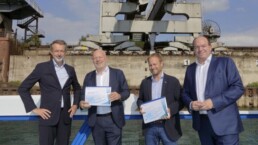

Inland port duisport and the port of Rotterdam announce the next step in their partnership towards and leadership of the development of European hydrogen chains with a new feasibility study
- Collaboration prepares a key hydrogen corridor for the increase in demand for green hydrogen expected until 2045
- Feasibility study conducted by the ports highlights their significant roles as future hubs for the hydrogen market
- Study underlines need for scaling up of infrastructure and transport routes, with demonstration of hydrogen corridor in action planned with partner OCI Global
The study shows the combined role the two portshave to play in supporting the growing demand from the industry for hydrogen and its derivatives, and acting as a conduit between the governments, industry, and future players in the hydrogen market.
OCI Global, the Dutch listed global leader in ammonia, methanol and hydrogen, is partnering with the ports to demonstrate that the planned hydrogen corridor between Rotterdam and duisport is already in place and in a strong position to meet the high demand for low carbon and renewable hydrogen from the industrial cluster in the Ruhr region.
OCI Global and the Port of Rotterdam Authority already have a longstanding partnership, working together on a number of decarbonization initiatives. OCI Global operates the port of Rotterdam’s only ammonia import terminal, which it is in the process of expanding to triple its throughput capacity, in anticipation of growing demand for ammonia as cleaner fuel for hard-to-abate sectors. OCI also operates a methanol import terminal and earlier this year, the company announced two new green methanol partnerships in the port of Rotterdam: with Unibarge to develop the world’s first dual-fueled bunker barge powered by OCI HyFuels green methanol, and with X-Press Feeder Lines to supply green methanol for their new-build methanol dual-fueled common feeder ships. Both projects will be deployed next year. Last month, OCI completed Europe’s first bunkering of green methanol onto the world’s first green methanol powered containership, owned by A.P. Moller – Maersk, in the port of Rotterdam.
Contribution to market activation and acceleration of the energy transition
The feasibility study highlights that in North Rhine-Westphalia, a significant increase in the demand for low carbon hydrogen of more than 3 million tonnes per year is expected until 2045. The demand for methanol is also expected to increase significantly, to more than 2.5 million tonnes per year. However, more clarity is needed on supply and demand, and duisport and the Port of Rotterdam Authority are mediating between the political and business worlds to match supply and demand and provide the necessary clarity to help speed up the decision-making on investments and subsidies. The ports are supported by the hydrogen initiative ‘Hy.Region.Rhein.Ruhr e.V.’, co-founded by duisport, which the port of Rotterdam has now also joined.
Need for infrastructure advancement
To meet expected demand, it will be crucial to scale up relevant infrastructure and provide suitable areas. The study shows that the first hydrogen pipeline between the two ports should be completed by 2027 to meet the growing demand for green hydrogen in North Rhine-Westphalia in the medium term. Hydrogen derivatives pipelines and pipelines for the export of CO2 should follow. Inland shipping and rail transport will also remain essential elements in getting the hydrogen chains up and running, and facilitating the first imports. According to the study, several hydrogen pipelines will ultimately be needed to meet the demand in North Rhine-Westphalia and beyond.
Europe’s largest sea port – the port of Rotterdam – and the world’s largest inland port – duisport – have been interconnected for decades by rail, inland shipping, trucks and pipeline connections. The existing collaboration was expanded last year with a MoU on digitalisation and energy transition, to jointly explore the possibilities for green hydrogen, methanol and ammonia.
Local hydrogen production in Duisburg from 2025
Both ports are already taking action to develop the necessary infrastructure to support the hydrogen economy. One central building block for a resilient supply to the industry is the expansion of tank storage capacities for hydrogen derivatives in Duisburg. duisport recently announced its intention of building a storage facility for tank containers with green energy sources and a tank farm for liquid renewable fuels and raw materials such as ammonia in the port of Duisburg. The construction of a first hydrogen plant is planned for mid-2025.
Together with the city of Duisburg and the Essen power plant, the first hydrogen training centre in the region is currently being built. From 2025, staff from across the hydrogen value chain will be educated and trained here to meet the growing demand for skilled personnel.
In the port of Rotterdam, several projects have been announced for hydrogen import terminals and local hydrogen production, including the expansion of OCI Global’s ammonia terminal, and the building of a 200MW electrolyser by Shell. Space has been reserved for several electrolysers that will produce green hydrogen from North Sea wind energy. Gasunie recently made the decision to invest in the national hydrogen network, the construction of which will start in Rotterdam.

Rotterdam’s Vice Mayor Simons: “The relationship between the largest inland port duisport and the largest seaport Rotterdam demonstrates the importance of cooperation in the energy transition for industry in Northwest Europe.”
Martin Murrack, Duisburg’s city director and the department head responsible for the port: “With its participation in this further hydrogen project, the port of Duisburg is once again impressively demonstrating its innovative strength and charisma. Nowhere is the structural change from a heavy industry dominated by coal and steel to a green technology more noticeable and urgent than here in the Ruhr region. That is why it is particularly important for Duisburg that appropriate impulses from this key technology emanate from here to support the path to decarbonisation of the economy and industry.”
Boudewijn Siemons, interim CEO and COO of Port of Rotterdam Authority: “This study confirms the important role that both ports play as hubs, matchmakers and drivers of the energy transition. It shows which forward-focussing activities are needed in both ports to build the hydrogen economy of the future.”
“We want to bring suppliers, users and political players together at one table to develop concrete solutions for a sustainable path of hydrogen production and use. That is how we make an impactful contribution to activating the market and accelerating the energy transition,” says duisport CEO Markus Bangen.
CEO of OCI Global Ahmed El-Hoshy: “As a Dutch listed company with partners and customers across Europe, we are pleased to be partnering with duisport and our longstanding partner the port of Rotterdam to further develop Europe’s hydrogen value chain. Collaboration between ports and industry, as well as with regulators and other key stakeholders, is crucial in kickstarting the hydrogen economy and delivering the energy transition.”



Related News.
Beyond Technical Skills: WISTA Cyprus explores the human side of leadership
WISTA Cyprus hosted The Art of Leadership & Emotional Mastery, an interactive workshop held on 15 October at the Alasia Hotel in Limassol,…
The human cost of sending merchant mariners into war zones extends far beyond the immediate danger of missiles and drones. It raises a harder question: who is really protecting the seafarer?
Who protects the seafarer? I have spent much of my professional life at sea. I am a Master Mariner. I have stood on the bridge, made decisions…
Loss of bridge control: Human failure is normal – context is key
When bridge control is lost in a functioning system, it can be easy to blame human error. But accidents rarely happen because of one mistake…
Danish Shipping announces the transport of live animals by sea new rules should improve safety for animals, seafarers and the environment
Revised rules on the transport of live animals by sea are being negotiated in the EU. Danish Shipping wants to ensure good animal welfare,…
Japan’s flawed shipping proposal leaves developing countries adrift
A new analysis by Opportunity Green warns governments of the wide-ranging risks posed by Japan’s proposal at the International Maritime Organization…
Intermodal Report Week 42 2026
Pls find below the Intermodal Report - Week 42 2026 Intermodal Report Week 42 2026
Allied Weekly Market Review Week 42
Pls find below the Allied - Weekly Market Review - Week 42 ALLIED - Weekly Market Report- Week 42
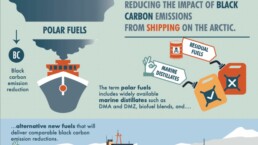
EU Arctic Strategy NGOs welcome EU ambition on on cutting shipping’s Arctic Black Carbon Emissions
Responding to today’s publication of the EU’s Arctic Strategy, which definitively states the EU’s intention to support International Maritime…
The final quarter of 2026 is expected to see softer bauxite flows
Chinese front-loading is expected to have run its course, pointing to softer bauxite flows in 2026 Q4. Global bauxite flows increased by 2.8% y/y…
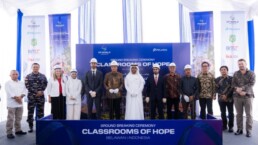
DP World Foundation and Belewan new container terminal mark groundbreaking of AED 3.7 million school project in Indonesia
Classrooms of Hope initiative expands to Belawan, Medan with a new junior high school designed to provide modern learning facilities and greater…
Subscribe to our newsletter!
if you dont want to swim alone in the ocean of news, sign up for the newsletter, and you will receive daily all the important news of world shipping!
