Shipping industry faces two alternative decarbonisation paths with hydrogen based fuels and biofuels vying for prominence

Lloyd’s Register Maritime Decarbonisation Hub analysis shows that e-ammonia could emerge as the most highly adopted maritime fuel amongst hydrogen-based fuels, whilst liquefied bio-methane dominates amongst biofuels.
In view of the maritime sector’s strengthened commitments to reduce GHG emissions to net-zero by 2050, the Lloyd’s Register Maritime Decarbonisation Hub’s “The Future of Maritime Fuels” report presents a review of a wide range of fuel mix projections and has identified two alternative paths that will steer shipping’s course – hydrogen-based fuels scenarios and biofuels scenarios. The report analyses the dynamics of the energy supply system within these scenarios, accounting for the expected supply as well as demands from other sectors for these fuels.
In the hydrogen-based fuels scenarios, e-ammonia is projected to emerge as the most highly adopted maritime fuel in the long-term, with an average share of 35% of the shipping fuels market by 2050. Such adoption yields significant energy demands, which will potentially drive the shipping industry to be the largest user of ammonia worldwide. It is projected that blue and e-ammonia will capture between 20% to 60% of total shipping fuels by 2050, with total consumption by shipping increasing on average from 0.79 exajoules (EJ) in 2030 to 6.06 EJ in 2050.
In the biofuels scenarios, liquefied bio-methane is projected to capture on average 34% of total shipping fuels by 2050, with total consumption by shipping increasing from 0.5 EJ in 2030 to 4.58 EJ in 2050. However, the expected supply of bio-methane needed for shipping is projected to vary between 0.3 EJ to 2 EJ during the time period under review, which will fall short of demand. This demonstrates that production will be insufficient to supply the total shipping demand for bio-methane.
The report also finds that methanol is projected to have a lower market share of the shipping fuels market than ammonia and bio-methane, which runs counter to current trend of ordering dual-fuel methanol vessels in today’s shipping market. Combined bio- and e-methanol fuels are projected to capture on average a market share of 13.4% of total shipping fuels by 2050.
These fuel mix projections underscore the industry’s pivotal role in driving alternative fuel adoption while grappling with unique challenges in balancing demand, supply, and investment in alternative fuel pathways.
Carlo Raucci, Decarbonisation Consultant, LR Maritime Decarbonisation Hub, commented: “Our scrutiny of fuel mix projections shows that investors and shipowners will face the dilemma of choosing from different alternative fuel pathways. It is uncertain if one category of fuel will dominate the maritime fuel mix in the short and long-term, and investors face risks, such as stranded assets, which have limited the investment readiness level of low to zero-carbon fuels. Therefore, first movers’ initiatives such as green shipping corridors, will be pivotal in reducing the uncertainty by scoping out multi-sector fuel supply projections that could potentially help to aggregate demand and lower risks.”
Charles Haskell, Director, LR Maritime Decarbonisation Hub, said: “For meaningful progress, stakeholders across the maritime supply chain need to take on leadership in shaping alternative multi-fuel strategies and catalyse investment cases through strategic partnerships and collaborations. The uncertain dominance of a single fuel category underscores the importance of exploring the potential future interaction of the shipping industry with the broader energy demand system.”
Following the analysis of different fuel mix projections, the report identifies avenues for further exploration, such as deeper examination of fuel supply dynamics and their integration with existing fleet models, as well as cross-sector collaboration to enrich the industry’s understanding of shipping’s multifaceted fuel transition as it navigates towards greener horizons.



Related News.
Beyond Technical Skills: WISTA Cyprus explores the human side of leadership
WISTA Cyprus hosted The Art of Leadership & Emotional Mastery, an interactive workshop held on 15 October at the Alasia Hotel in Limassol,…
The human cost of sending merchant mariners into war zones extends far beyond the immediate danger of missiles and drones. It raises a harder question: who is really protecting the seafarer?
Who protects the seafarer? I have spent much of my professional life at sea. I am a Master Mariner. I have stood on the bridge, made decisions…
Loss of bridge control: Human failure is normal – context is key
When bridge control is lost in a functioning system, it can be easy to blame human error. But accidents rarely happen because of one mistake…

Danish Shipping announces the transport of live animals by sea new rules should improve safety for animals, seafarers and the environment
Revised rules on the transport of live animals by sea are being negotiated in the EU. Danish Shipping wants to ensure good animal welfare,…

Japan’s flawed shipping proposal leaves developing countries adrift
A new analysis by Opportunity Green warns governments of the wide-ranging risks posed by Japan’s proposal at the International Maritime Organization…

Intermodal Report Week 42 2026
Pls find below the Intermodal Report - Week 42 2026 Intermodal Report Week 42 2026
Allied Weekly Market Review Week 42
Pls find below the Allied - Weekly Market Review - Week 42 ALLIED - Weekly Market Report- Week 42
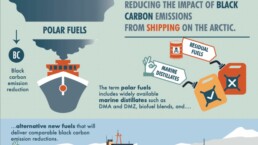
EU Arctic Strategy NGOs welcome EU ambition on on cutting shipping’s Arctic Black Carbon Emissions
Responding to today’s publication of the EU’s Arctic Strategy, which definitively states the EU’s intention to support International Maritime…
The final quarter of 2026 is expected to see softer bauxite flows
Chinese front-loading is expected to have run its course, pointing to softer bauxite flows in 2026 Q4. Global bauxite flows increased by 2.8% y/y…
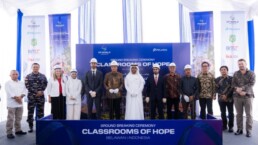
DP World Foundation and Belewan new container terminal mark groundbreaking of AED 3.7 million school project in Indonesia
Classrooms of Hope initiative expands to Belawan, Medan with a new junior high school designed to provide modern learning facilities and greater…
Subscribe to our newsletter!
if you dont want to swim alone in the ocean of news, sign up for the newsletter, and you will receive daily all the important news of world shipping!
