Xeneta container rates alert Amid record low Trans Atlantic trade rates shippers must seize opportunities before market rebounds


Spot rates on the Trans-Atlantic fronthaul trade from North Europe to the US East Coast are plummeting rapidly. According to Xeneta’s platform data, the monthly average rate for a 40-foot standard container has dropped dramatically, falling from USD 5,298 in January to a mere USD 809 in August. This significant decline serves as a reminder that markets can shift suddenly. It’s worth noting that just as these rates have dropped, they could also rise swiftly, as has been the case recently for other main trades.
The trans-Atlantic trade’s whopping fall of 85% is a serious loss-maker for carriers. Taking out THC narrows in on the ocean freight rate, which by mid-August was priced at almost the same level.
“This is a major meltdown for a trade that was steady and ‘dull’ for decades before suddenly becoming the poster boy of the container freight market in 2022, defying gravity with elevated rates for a long time after the rest of the market had crumbled,” says Xeneta Chief Analyst Peter Sand.
Shippers in the driving seat but maybe not for long
Shippers on the trade are taking full advantage of this new reality, regaining the upper hand after the 2021-2022 pandemic period delivered dramatically high freight rates. Xeneta’s real-time data, crowd-sourced from leading global shippers shows the strongest are now paying less than USD 475 per FEU for spot business, which Sands point out is an all-time low.
Sand sharply warns and advises shippers: “Don’t wait around – jump on those deals while you can. Just like we’ve seen with fronthauls from Asia to the US and EU, carriers will be dead set on boosting the Transatlantic spot market once again. They’re not keen on bleeding cash in yet another trade. You must stay on your toes and constantly monitor rates to know when to go to market.”
“The data also shows that the number of long-term contracts coming into force in 2023 is significantly down on past years, indicating that shippers are clearly not happy with the rates on offer nor being drawn into the kind of closer relationship carriers are seeking,” he adds.
However, at USD 2,000 per FEU (excluding THC), North Europe to USEC long-term rates are still 2.5 times above spot levels, meaning this is the only fronthaul trade where long-term business remains above short-term rates; all other key trades have normalized in this respect. But this too can change rather quickly.
So, what is behind the spot-rate collapse?
Tanking volumes
Transport volumes on the trade were down by 13.6% in the first half versus last year (source: CTS), with April alone scoring a 23% year-on-year fall. This is clearly visible from Xeneta data showing a spot-market slide from USD 3,875 per FEU at the end of March to USD 2,450 per FEU by 1 May.
“The second quarter was worse than the first, and looking ahead Xeneta expects demand to fall short of 2022 during every month in the second half as well,” says Sand.
Capacity sinkhole
Secondly, carriers have used this trade lane as a “parking lot” for excess capacity not deployed on other corridors. Data from Sea-Intelligence indicates that capacity on the North Europe to North America East Coast trade rose by 23.6% in the first half versus 2022 (and by more than 30% just in February and April). “This leaves shippers wondering how much longer they should wait for carriers to start offering long-term rates that mirror underlying market conditions – in other words, much lower than today,” says Sand.
Pre-pandemic contract levels were hovering at USD 1,300 to USD 1,400 per FEU (excluding THC), with very few dollars separating them from spot rates. This was despite the fact that there are major differences between long-term and short-term contracts.
“Carriers, for their part, can see as clearly as ever the impact of a fundamentally weak trade resulting in spot-rate warfare. Those selling space at the current level are bleeding cash for every box they bring on board. Hence keeping cosy with key shippers is essential, but everything has its price.
The shipping market’s unpredictability underscores the importance of diligent market monitoring and strategic timing. While aiming for absolute rock-bottom rates is challenging, inching closer remains achievable if done at the right time, especially when armed with the right data insights,” Sand concludes.



Related News.

Intelligent Skies, Secure Seas: Navigating Connectivity, Cyber Resilience, and AI Liability at the 5th CSN Greece ICT Conference
The 5th CSN Greece ICT Conference, held on 19th November 2026 at the Ploes Floating Venue in Paleo Faliro, Athens, successfully convened maritime…

EU moves to ban tankers insured in Russia, repair services at Russian refineries
EU targets Russian-insured tankers, refineries Von der Leyen announces 22nd sanctions package All 27 member states must approve new…

IMO tackling fraudulent registries together
Strong national systems and international information sharing are crucial to tackling fraudulent registries and fraudulent ship registration…
Open letter on freedom of navigation and the protection of seafarers
Dear High Representative Kallas, Dear Foreign Affairs Ministers, European Shipowners | ECSA, BIMCO, the Cruise Lines International Association…

Davies Turner warns of Rising Asia-UK Container Disruption and European Port Congestion
Davies Turner, one of the UK’s largest independent freight forwarding and logistics companies, says that disruption to container shipments from Asia…

Disruptions still dominate tanker market outlook
"This year, tanker markets have been affected by disruption to transits through the Strait of Hormuz, the Houthi blockade of Saudi Arabian Red Sea…

Panama’s President called on to match COP31 Heroism with action at shipping climate talks
As a series of crucial meetings tasked with cutting greenhouse gas emissions from global shipping takes place this week and next, environmental NGOs…

Trafigura appoints Helio Cumbi as Executive Director, Mozambique
Trafigura has appointed Helio Cumbi as Executive Director, Mozambique, and Business Development Lead for East and Southern Africa Oil. Helio is a…

“K” LINE holds FY2026 Global Dry Bulk Meeting
Kawasaki Kisen Kaisha, announces that it held a global meeting for its dry bulk business at the company’s head office on November 9 and 10. The…
MOL launches ‘AQuA’ safety and quality improvement initiative
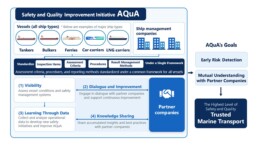
Standardizing Group-wide Safety and Quality Assessment Criteria to Enhance Vessel Safety and Quality Mitsui O.S.K. Lines, announced the launch of…
Subscribe to our newsletter!
if you dont want to swim alone in the ocean of news, sign up for the newsletter, and you will receive daily all the important news of world shipping!
