Sesame mission accomplished but let’s dive deeper

Laying the ground for the digital transformation of European space rocket manufacture and launch
When most people think of space rockets, they think big – enormous intricately-engineered structures, high-tech futurism and massive brains spring to mind. What they don’t necessarily notice is the attention to detail and extraordinarily high production and operational standards involved. These exacting requirements do their job, but are time-consuming, labor intensive, and expensive. Set against this, cost and time savings are becoming critical, with launch customers wanting deployment ASAP and at minimum cost.
Most modern industries have driven efficiency by adopting digital ways of working, underpinned by agile test-and-learn methodologies and data automation. The launch industry has tended to take the view that while digital transformation is great, it was just not feasible in this low-volume, high-standards environment.
Enter SESAME, an initiative which has provided proof, within the most quality-exacting of conditions, that data driven solutions can indeed reduce launch costs and timescales – which means better access to space for Europe and businesses.
SESAME (‘Smart European Space Access through Modern Exploitation of data science’) was a three-year project to bring the best digital technologies into the heart of European launcher manufacturing and operation. It was part of the European Union’s Horizon 2020 research and innovation framework program. Overseen by coordinator ArianeGroup, eight partners worked together to propel the space age into the digital era.
In previous articles we have told you about some of the details of the SESAME project as it was on-going, but now that it has reached its conclusion we would like to give an overview of the findings.
The European Commission has just released its evaluation of the concluded project, with an impressive assessment: “the project has delivered exceptional results with significant immediate or potential impact”, the report notes.
SESAME tested capabilities in realistic operations scenarios, with a data management framework to proactively deal with risks in new automated production and operations environments, and employing AI, machine learning, and IoT.



Related News.

Beyond Technical Skills: WISTA Cyprus explores the human side of leadership
WISTA Cyprus hosted The Art of Leadership & Emotional Mastery, an interactive workshop held on 15 October at the Alasia Hotel in Limassol,…
The human cost of sending merchant mariners into war zones extends far beyond the immediate danger of missiles and drones. It raises a harder question: who is really protecting the seafarer?
Who protects the seafarer? I have spent much of my professional life at sea. I am a Master Mariner. I have stood on the bridge, made decisions…
Loss of bridge control: Human failure is normal – context is key
When bridge control is lost in a functioning system, it can be easy to blame human error. But accidents rarely happen because of one mistake…

Danish Shipping announces the transport of live animals by sea new rules should improve safety for animals, seafarers and the environment
Revised rules on the transport of live animals by sea are being negotiated in the EU. Danish Shipping wants to ensure good animal welfare,…

Japan’s flawed shipping proposal leaves developing countries adrift
A new analysis by Opportunity Green warns governments of the wide-ranging risks posed by Japan’s proposal at the International Maritime Organization…

Intermodal Report Week 42 2026
Pls find below the Intermodal Report - Week 42 2026 Intermodal Report Week 42 2026

Allied Weekly Market Review Week 42
Pls find below the Allied - Weekly Market Review - Week 42 ALLIED - Weekly Market Report- Week 42
EU Arctic Strategy NGOs welcome EU ambition on on cutting shipping’s Arctic Black Carbon Emissions
Responding to today’s publication of the EU’s Arctic Strategy, which definitively states the EU’s intention to support International Maritime…

The final quarter of 2026 is expected to see softer bauxite flows
Chinese front-loading is expected to have run its course, pointing to softer bauxite flows in 2026 Q4. Global bauxite flows increased by 2.8% y/y…
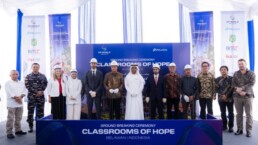
DP World Foundation and Belewan new container terminal mark groundbreaking of AED 3.7 million school project in Indonesia
Classrooms of Hope initiative expands to Belawan, Medan with a new junior high school designed to provide modern learning facilities and greater…
Subscribe to our newsletter!
if you dont want to swim alone in the ocean of news, sign up for the newsletter, and you will receive daily all the important news of world shipping!
