EU member states agree to the “FuelEU Maritime” regulation
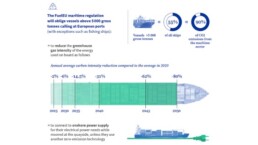

EU Member States cleared the way to bring sustainable renewable fuels into maritime transport. They approved the “FuelEU Maritime” regulation. On 12 July, the EU Parliament had also voted in favour of the agreement reached in the trilogue procedure.
The new requirements will apply to ships with a gross tonnage of more than 5,000 entering, leaving or staying in ports in the territory of an EU Member State. In addition, shore-side electricity will be mandatory for container and passenger ships from 2030. The use of synthetic fuels from renewable energies will be specifically promoted for shipping.
Federal Minister of Transport Dr Volker Wissing:
After we were recently able to achieve a breakthrough for maritime climate protection at UN level, we are now pushing the actual transformation towards climate-neutral shipping at European level with the “FuelEU Maritime” initiative. The draft regulation is open to technology and takes into account the special competitive conditions in the maritime transport sector. The main objective is to increase the demand for renewable and low-carbon fuels and their consistent use, thereby decisively reducing greenhouse gas emissions in maritime transport. The initiative is thus expected to play a fundamental role in the implementation of the European Climate Change Act for shipping.
Federal Environment Minister Steffi Lemke:
Today the EU has set a decisive course for more climate protection and the use of renewable fuels in maritime transport. Shipping companies will continue to rely on fuels in the future, because electric drives are not yet an option for long-distance transport. In maritime transport, e-fuels from renewable energies are therefore a sensible climate-friendly alternative. With the new requirements, the EU is giving manufacturers and shipping companies the necessary planning security, driving forward the development of modern technologies and making renewable fuels for maritime transport ready for the market. But there are also shadows: The fact that fuels from fossil sources and nuclear energy are also permitted as a compliance option is regrettable. The German Federal Ministry for the Environment, Nature Conservation, Nuclear Safety and Consumer Protection (BMUV) will continue to advocate the use of predominantly synthetic fuels from renewable energy sources in order to make maritime transport climate neutral.
FuelEU Maritime lays down uniform EU-wide rules for limiting the greenhouse gas intensity of the energy used on board a ship, and thus above all the fuels. The regulation from the Fit for 55 package stipulates that shipping in the EU must reduce its emissions by 2 percent from 2025, 6 percent from 2030, 14.5 percent from 2035, 31 percent from 2040, 62 percent from 2045 and 80 percent from 2050. The GHG intensity reduction targets are set against the 2020 average GHG intensity of energy consumed on board ships. The greenhouse gas emissions of all fuels are assessed on the basis of a life cycle assessment (so-called well-to-wake (WtW) approach that includes the greenhouse gases carbon dioxide, methane and nitrous oxide). All fuels are permitted as a compliance option; the legislative initiative is thus technology-neutral.
The use of synthetic fuels is encouraged by a special mechanism: if the share of synthetic fuels from renewable energy sources (so-called “renewable fuels of non-biological origin, RFNBO) in the fuel mix does not exceed one percent in 2031, a mandatory minimum quota of two percent for these RFNBO fuels will automatically come into force from 2034. Beyond the use of alternative fuels, the FuelEU Maritime Regulation obliges container and passenger ships in ports in the territory of a Member State to use shore-side electricity or alternatively zero-emission technologies for on-board energy supply.
This Regulation shall enter into force on the twentieth day following that of its publication in the Official Journal of the European Union. It shall apply from 1 January 2025, with the exception of certain Articles which shall apply from 31 August 2024.



Related News.

Beyond Technical Skills: WISTA Cyprus explores the human side of leadership
WISTA Cyprus hosted The Art of Leadership & Emotional Mastery, an interactive workshop held on 15 October at the Alasia Hotel in Limassol,…
The human cost of sending merchant mariners into war zones extends far beyond the immediate danger of missiles and drones. It raises a harder question: who is really protecting the seafarer?
Who protects the seafarer? I have spent much of my professional life at sea. I am a Master Mariner. I have stood on the bridge, made decisions…
Loss of bridge control: Human failure is normal – context is key
When bridge control is lost in a functioning system, it can be easy to blame human error. But accidents rarely happen because of one mistake…
Danish Shipping announces the transport of live animals by sea new rules should improve safety for animals, seafarers and the environment
Revised rules on the transport of live animals by sea are being negotiated in the EU. Danish Shipping wants to ensure good animal welfare,…

Japan’s flawed shipping proposal leaves developing countries adrift
A new analysis by Opportunity Green warns governments of the wide-ranging risks posed by Japan’s proposal at the International Maritime Organization…
Intermodal Report Week 42 2026
Pls find below the Intermodal Report - Week 42 2026 Intermodal Report Week 42 2026
Allied Weekly Market Review Week 42
Pls find below the Allied - Weekly Market Review - Week 42 ALLIED - Weekly Market Report- Week 42
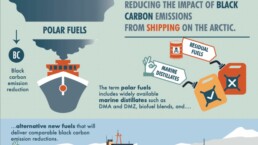
EU Arctic Strategy NGOs welcome EU ambition on on cutting shipping’s Arctic Black Carbon Emissions
Responding to today’s publication of the EU’s Arctic Strategy, which definitively states the EU’s intention to support International Maritime…
The final quarter of 2026 is expected to see softer bauxite flows
Chinese front-loading is expected to have run its course, pointing to softer bauxite flows in 2026 Q4. Global bauxite flows increased by 2.8% y/y…

DP World Foundation and Belewan new container terminal mark groundbreaking of AED 3.7 million school project in Indonesia
Classrooms of Hope initiative expands to Belawan, Medan with a new junior high school designed to provide modern learning facilities and greater…
Subscribe to our newsletter!
if you dont want to swim alone in the ocean of news, sign up for the newsletter, and you will receive daily all the important news of world shipping!
