PortXchange navigating the tides of change
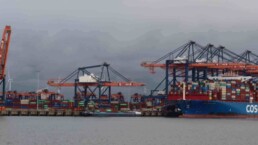

Evaluating the Effectiveness of IMO’s Commitments to Net-Zero Emissions and PortXchange’s Pioneering Role in Accelerating Decarbonization
The International Maritime Organization’s recent deliberations at the MEPC80 highlighted both the opportunities and challenges confronting the shipping industry as it charts a course towards decarbonization. While the commitments made are a positive step, they fall short of the urgent action needed to effectively mitigate climate change. Many industry stakeholders are calling for stronger, faster action to exceed the IMO’s baseline commitments, with ports and technological innovation emerging as key drivers in achieving this.
The IMO’s revised greenhouse gas (GHG) strategy, agreed upon at MEPC80, has set the goal for net-zero emissions by around 2050, with intermediate targets for 2030 and 2040. However, some stakeholders question the organization’s pace and the efficacy of its proposed measures. Countries such as China, Brazil, and Argentina have resisted more ambitious actions like a carbon levy, contributing to a perceived lag in the IMO’s responsiveness to the urgency of the climate crisis.
Consequently, industry players are adopting more aggressive emission reduction goals independently. In this climate, ports are being recognized as crucial change agents, providing the necessary bridge between policy and practice. Ports like Rotterdam exemplify this proactive stance, demonstrating how collaboration, data-sharing, and a commitment to efficiency and competitiveness can catalyze progress towards decarbonization.
To this end, PortXchange has emerged as a key partner for ports seeking to accelerate their emission reduction strategies. Its innovative software solution, EmissionInsider, has been effectively utilized in the Port of Rotterdam*, Europe’s largest seaport. This tool simplifies and automates transport-related emission data collection and establishes a customized baseline emissions inventory for each port.
Through EmissionInsider, Rotterdam has successfully established a comprehensive emissions profile and made significant strides towards achieving its decarbonization targets. This practical demonstration of technology supporting emission reduction offers a compelling template for other ports worldwide, regardless of IMO decisions.
PortXchange EmissionInsider provides port authorities with data to make strategic decisions on targeted decarbonization strategies. Such decisions can include adopting mechanisms and incentives that encourage and promote sustainable shipping practices, such as speed optimization, which can significantly reduce emissions.
The shipping industry’s path towards decarbonization is increasingly reliant on digitalization. As demonstrated by PortXchange, collaborative, technology-driven solutions can help the industry surpass the IMO’s emission reduction goals. The rapid uptake and implementation of such solutions will be crucial in driving the industry’s transition towards a sustainable future.
While the post-MEPC80 landscape brings its share of challenges, it also opens doors for greater collaboration and innovation, but only if they recognize the part that ports must play in meeting their targets. By harnessing the power of technology and committing to robust decarbonization strategies, the shipping industry can effectively navigate these uncharted waters.



Related News.

Poland’s additional national requirements distort competition says Danish Shipping
Poland has introduced a national survey requirement for smaller foreign-flagged vessels operating in Polish waters. This creates significant…

Battery Vessels could help electrify most of Global Shipping Emissions
Battery-electric ships are economical only if the pack is cycled frequently, so they have been confined to short-sea, ferry and harbour vessels…

Mintra and Ledgid explore collaboration to connect Maritime digital identity, learning and workforce development
Mintra® and LEDGID are exploring opportunities to bring together complementary capabilities in digital learning, maritime training, professional…

World Shipping Council calls for global agreement on shipping emissions as industry investment surpasses $200 billion USD
The World Shipping Council (WSC) is calling on governments to agree on binding global greenhouse gas regulations for international shipping without…

What happened to the ITF whistleblower’s complaint?
In January 2026, a whistleblower complained that International Transport Workers’ Federation (ITF) General Secretary Stephen Cotton had manipulated…

Growing regulatory scrutiny puts seafarer wellbeing firmly on maritime safety agenda, VIKAND warns
Seafarer wellbeing is coming under greater regulatory scrutiny as international rules and guidance increasingly recognise crew health and welfare as…

Good Times Bad Times the Premium Stays with the Strait
In October, we wrote that if the transfer network off Oman kept pace, Gulf crude would carry China's refill and keep drawing tonnage east,…

Allied Weekly Market Review Week 47
Pls find below the Allied - Weekly Market Review - Week 47 ALLIED - Weekly Market Report- Week 47


Climate TRACE releases September 2026 Emissions Data
Climate TRACE reported that global greenhouse gas (GHG) emissions for the month of September 2026 totaled 4.7 billion tonnes CO₂e. This remains…
Subscribe to our newsletter!
if you dont want to swim alone in the ocean of news, sign up for the newsletter, and you will receive daily all the important news of world shipping!
