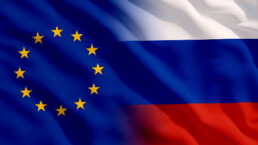

On 23 June 2023 the EU Council adopted the 11th package of economic sanctions against Russia to prevent their circumvention and further erode Russia’s revenues.
The most notable measures are summarised below.
STS transfers and AIS manipulation
As of 24 July 2023, it shall be prohibited to provide access to EU ports and locks for vessels that engage in ship-to-ship (STS) transfers if the competent authority of the EU Member State has reasonable cause to suspect that the vessel is either in breach of the ban on importing seaborne Russian crude oil and petroleum products into the EU, or is transporting Russian crude oil or petroleum products in breach of the relevant price cap. The prohibition applies to all vessels, irrespective of their flag of registration, and to any STS transfers carried out at any point during the voyage to a port or lock in the EU. In any event, vessels will be prohibited from accessing ports and locks in the EU if they do not notify the competent authority of the EU Member State where the vessel is seeking access to the port/lock at least 48 hours in advance about a STS transfer occurring within the Exclusive Economic Zone of an EU Member State or within 12 nautical miles from the baseline of that EU Member State’s coast. Similar prohibitions apply to vessels suspected of transporting Russian crude oil and petroleum products that illegally interfere, switch off or disable their shipborne automatic identification system (AIS), in breach of SOLAS Regulation V/19, point 2.4. Exemptions are provided for to allow such vessels access to ports and locks in the territory of the EU for maritime safety, including environmental concerns, for saving life at sea and for humanitarian purposes.
Transport by road
The EU extended the prohibition to transport goods into the EU by road to trailers and semi-trailers registered in Russia, including when hauled by trucks registered outside of Russia.
Anti-circumvention
The packages introduces a new anti-circumvention tool that allows the EU to restrict the sale, supply, transfer or export of specified sanctioned goods and technology to certain third countries whose jurisdictions are considered to be at continued and particularly high risk of circumvention. The “anti-circumvention tool” would be used as an exceptional and last resort measure, only when other individual measures and outreach by the EU to concerned third countries have been insufficient to prevent circumvention. Such measures may include individual designations or other measures, such as adding entities to Annex IV to Regulation (EU) No 833/2014.
Import-export controls and restrictions
The 11th package expands the list of restricted items that could contribute to the technological enhancement of Russia’s defence and security sector to include electronic components, semiconductor materials, manufacturing and testing equipment for electronic integrated circuits and printed circuit boards, precursors to energetic materials and precursors to chemical weapons, optical components, navigational instruments, metals used in the defence sector and marine equipment.
It also further tightens export restrictions by requiring importers of sanctioned iron and steel goods listed in Annex XVII of the Council Regulation 844/2014 that have been processed in a third country to prove that the inputs used do not come from the Russian Federation.
Transit ban
The package also extends bilateral and multilateral cooperation with third countries to impede sanctions’ circumvention by adding the transit prohibition for certain sensitive goods exported from the EU to third countries. This means it is prohibited to transit via the territory of Russia, goods and technology which may contribute to Russia’s military and technological enhancement or to the development of the defence or security sector, or goods and technology for use in the aviation or space industry including jet fuel and fuel additives, which have been exported from the EU to third countries.
Energy
The temporary derogation granted to Germany and Poland for the supply of crude oil from Russia through the northern section of the Druzhba oil pipeline ends on 23 June 2023. However, oil which originates in Kazakhstan, or another third country will be able to continue to transit through Russia and to be imported into the EU via the Druzhba oil pipeline.
The exemption in relation to the Sakhalin-2 (Сахалин-2) Project, located in Russia, will be extended until 31 March 2024 to ensure Japan’s energy security needs. To guarantee the adequate maintenance and operation of the Caspian Pipeline Consortium (CPC) infrastructure, certain targeted derogations have been introduced to the existing prohibitions on the sale, supply, transfer or export of certain goods or technology, including the provision of related financing or financial assistance, which are strictly necessary for that purpose This is subject to strict conditions to avoid the risk of circumvention.
Trade involving Russia is now subject to significant legal restrictions. Members are reminded that cover is not available for trade that breaches applicable sanctions and are advised to conduct thorough due diligence on the parties, cargoes and trade involved before engaging in trade to, through or from Russia.
Source: Skuld



Related News.

Navigating the Multi-Orbit Era: In Conversation with Intellian’s Jon Harrison at SMM 2026
At SMM 2026 in Hamburg, the rapid evolution of maritime satellite communications took centre stage. Across the exhibition halls, discussions among…
Cyprus ports need joint energy and investment strategy, shipping agents chief says
Cyprus needs a coordinated strategy for shipping, energy and environmental protection to support port investment and modernisation, Cyprus shipping…

MASO Public Affairs introduces MASO Regulatory Intelligence
A new subscription service helping businesses understand what is changing and what it means for them MASO Public Affairs introduces MASO Regulatory…
Anglo-Eastern helps turn CMBTECH’s ammonia ambition into an operational reality
From early feasibility study and risk-based design to newbuilding supervision, crew readiness and technical management, Anglo-Eastern drew on its…

Escalation of attacks threatens to derail recovery in Middle East oil exports
World oil demand is forecast to fall by 2.5 mb/d y-o-y in 4Q26 and 2.6 mb/d on average in 2026. As the Iran war manifests itself through restricted…
New study finds shipping pays twice its share to EU ETS earmarked revenues should triple to help build market for sustainable fuels and technologies
Shipping is responsible for around 10% of EU ETS emissions but pays almost 20% of the ETS bill. Unlike other sectors, it has never received free…

MSARC strengthens maritime mass rescue readiness through training and national live exercise off Dakar, Senegal
Joint MSARC–FHAS programme combines three days of SAR training with a national multi-agency live exercise The Maritime Search and Rescue Council ,…
Sogese report deliveries are still being delayed as container freight rates fluctuate
FOR IMPORTERS Spot rates into the Mediterranean are back at January levels, Far East to Europe reliability sits at pandemic lows, and nearly…

Glencore begins trading on Australian Securities Exchange
Glencore has begun trading on the Australian Securities Exchange under the ASX code GLC. Gary Nagle, Glencore’s CEO, said it was an exciting day for…
BIMCO Shipping Number of the Week
Suez Canal container ship transits exceed 50% of pre-disruption levels "During the first two weeks of October, weekly container ship capacity…
Subscribe to our newsletter!
if you dont want to swim alone in the ocean of news, sign up for the newsletter, and you will receive daily all the important news of world shipping!
