SAP rated top three in IDC’s sustainability index


SAP’s strategic commitment to sustainability and the comprehensiveness of its commercial offerings were highlighted in the IDC Sustainability Index for Software Providers: SAP , placing SAP in the top three of 23 software vendors that were assessed using IDC’s sustainability framework.
IDC reviews the roles of major ICT players’ environmental, social, and governance (ESG) impacts across three pillars: Technology as an Enabler, Technology Vendor Performance, and Technology for Good. During its assessment of software vendors, IDC has found that SAP performs exceptionally well compared to its peers. SAP’s strong performance stems from its commitment to making sustainability an integral part of its mission. This is reflected in the company’s customer offerings and the skills it is incorporating into the organization at global and regional levels.

SAP placed among the top three in the Technology as an Enabler pillar, outperforming the market average in all five main categories – monetization, sustainable software features and practices, ESG management reporting software, software for operational optimization, and advisory services and sustainable ecosystems. One of the main reasons for the placement is the efficient internal product standards that ensure applications or services are both cost efficient and resource efficient. SAP complies with several industry standards, including ISO/IEC 27001, ISO 9001, ISO 22301, ISO/IEC 27018, and ISO 10012.
SAP Cloud for Sustainable Enterprises is the umbrella cloud-based solution for a comprehensive package that can provide insights into organizations’ sustainable performance and can enable them to record, report, and act on their respective sustainability goals. Flagship solution SAP Sustainability Control Tower can provide customers with holistic steering and ESG reporting along the three main sustainability areas: climate action, circular economy, and social responsibility.
SAP Sustainability solutions deliver company-wide functionality and industry-specific features that can help you incorporate sustainability in business at scale by embedding operations, experience, and financial insights into your core business processes.
One clear example is SAP’s commitment to helping companies track carbon accounting with more precision and control by using actual data across their business operations and supply chains in sync with financial flows. In a recent interview with The Wall Street Journal about carbon accounting, Sebastian Steinhaeuser, chief strategy officer at SAP, shared his thoughts on why companies need carbon accounting: “We need to standardize how we do carbon accounting globally because, today, companies still take different approaches based on individual solutions, which aren’t easy to compare. We need carbon accounting with the same accuracy, detail, and transparency as financial accounting and standardizations like the SEC or ISSB so that we also operate all on the same common framework of rules like we do in financial accounting today.”
The Technology Vendor Performance pillar comprises five categories – governance, social sustainability, supply chain for company operations, operational sustainability, and environmental sustainability. SAP outperformed the market average and was among the top five performers across these categories.
Sustainability has always been embedded as a part of SAP’s governance. Strong evidence of SAP’s commitment to sustainability is the inclusion of sustainability KPIs in all Executive Board members’ compensation plans. Additionally, every quarter, SAP reviews sustainability practices, publishes financials, and selects sustainability KPIs. SAP adheres to various non-financial reporting standards, such as the Global Reporting Initiative (GRI), Sustainability Accounting Standards Board (SASB), Taskforce for Climate-Related Financial Disclosure (TCFD), Climate Disclosure Project (CDP), and European Corporate Sustainability Reporting Directive (CSRD).
SAP supports programs such as Targets for Women in Management, Women to Watch, Inclusive Mindset Challenge, Fair Pay Initiative, Business Women’s Network, Black Employee Network, and Pride@SAP to promote diversity and inclusion. SAP is one of the few companies that impose an internal carbon tax, although that carbon tax applies solely to new projects and activities that require the consumption of fossil fuels. SAP also charges an internal carbon price for business flights in most countries they leave from, thus incentivizing the use of eco-friendly alternatives, such as traveling by train.
SAP was placed in the top five in the Technology for Good pillar. SAP achieved a maximum score due to a strong global corporate social responsibility (CSR) and volunteering presence. SAP employees contributed over 117,000 hours of pro bono time and committed 27.6 million euros globally to common good causes. Employees’ understanding of social and environmental issues is deepened through the 614 virtual and on-site volunteering opportunities.
As IDC points out in the report, the importance of sustainability in SAP’s strategy and business model can be traced to the company’s mission statement: “[Our purpose is] to help the world run better and improve people’s lives. We strive to achieve this as both an enabler and an exemplar of sustainable business. In addition, we want our own business operations and practices to be intelligent, sustainable, and inclusive.” SAP is committed to multiple sustainability milestones, including carbon neutrality in its own operations by the end of 2023 and achieving net-zero emissions along its value chain by 2030.
About the IDC Sustainability Index
IDC evaluated SAP’s performance against more than 130 parameters present in IDC’s Technology for Sustainability and Social Impact (TSSI) framework for software vendors. IDC’s TSSI Index offers a view of the current state of the European ICT industry regarding sustainability and social impact. The assessment focused on SAP’s three core areas – ESG achievements, sustainability portfolio of products and solutions, and altruistic initiatives that provide technological solutions.
IDC selects vendors for profiles based on their overall sustainability performances measured against a predefined criterion, their proactivity on sustainability issues, and their provision of information in a transparent manner. Some of the other vendors like Adobe, Benchmark ESG, BMC Software, Eset, Genesys, Goby, IBM, IFS, Logo, Microsoft, MobileXpense, NetApp, OneTrust, Oracle, Persefoni, Sage, Salesforce, ServiceNow, SoftwareAG, Sphera, TietoEvry, and Wolters Kluwers were also assessed.
IDC’s Sustainability Framework is built on three pillars – Technology Vendor Performance, Technology as an Enabler, and Technology for Good. SAP performed exceptionally well, outperforming the industry average on each of the three pillars and all 15 major categories that were assessed.



Related News.

Beyond Technical Skills: WISTA Cyprus explores the human side of leadership
WISTA Cyprus hosted The Art of Leadership & Emotional Mastery, an interactive workshop held on 15 October at the Alasia Hotel in Limassol,…

The human cost of sending merchant mariners into war zones extends far beyond the immediate danger of missiles and drones. It raises a harder question: who is really protecting the seafarer?
Who protects the seafarer? I have spent much of my professional life at sea. I am a Master Mariner. I have stood on the bridge, made decisions…

Loss of bridge control: Human failure is normal – context is key
When bridge control is lost in a functioning system, it can be easy to blame human error. But accidents rarely happen because of one mistake…
Danish Shipping announces the transport of live animals by sea new rules should improve safety for animals, seafarers and the environment
Revised rules on the transport of live animals by sea are being negotiated in the EU. Danish Shipping wants to ensure good animal welfare,…

Japan’s flawed shipping proposal leaves developing countries adrift
A new analysis by Opportunity Green warns governments of the wide-ranging risks posed by Japan’s proposal at the International Maritime Organization…
Intermodal Report Week 42 2026
Pls find below the Intermodal Report - Week 42 2026 Intermodal Report Week 42 2026
Allied Weekly Market Review Week 42
Pls find below the Allied - Weekly Market Review - Week 42 ALLIED - Weekly Market Report- Week 42
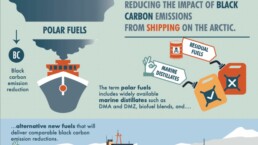
EU Arctic Strategy NGOs welcome EU ambition on on cutting shipping’s Arctic Black Carbon Emissions
Responding to today’s publication of the EU’s Arctic Strategy, which definitively states the EU’s intention to support International Maritime…
The final quarter of 2026 is expected to see softer bauxite flows
Chinese front-loading is expected to have run its course, pointing to softer bauxite flows in 2026 Q4. Global bauxite flows increased by 2.8% y/y…
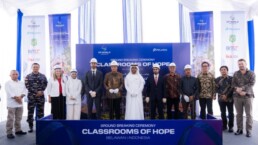
DP World Foundation and Belewan new container terminal mark groundbreaking of AED 3.7 million school project in Indonesia
Classrooms of Hope initiative expands to Belawan, Medan with a new junior high school designed to provide modern learning facilities and greater…
Subscribe to our newsletter!
if you dont want to swim alone in the ocean of news, sign up for the newsletter, and you will receive daily all the important news of world shipping!
