Ports play a major role in reducing shipping emissions, highlighting the limitations of slow-steaming
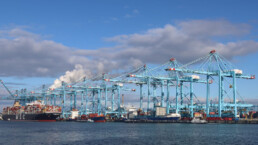

The International Maritime Organization (IMO) has long been committed to reducing the industry’s carbon footprint, aiming for a minimum 50% reduction in GHG emissions by 2050 through stricter regulations and improved energy efficiency. However, recent discussions at the Green4Sea Forum in Athens have highlighted IMO’s challenges in developing credible plans and policies. Suppose the IMO fails to provide effective solutions. In that case, there is a risk that regional and national authorities will take unilateral actions to regulate emissions, potentially fragmenting the global shipping industry’s operations.
In the quest to reduce the shipping industry’s greenhouse gas (GHG) emissions, it has become increasingly evident that slow-steaming, a commonly employed strategy, may not be the ultimate solution everyone thought. Recent studies by Simpson Spence & Young and Clarksons have cast doubt on the effectiveness of slow-steaming, a widely employed strategy. These studies suggest that the benefits of slow steaming may have been overestimated due to unrealistic assumptions about fuel consumption and ship speed. Real-world evidence indicates that the relationship between ship speed and fuel consumption is more nuanced than previously believed, challenging the assumptions underlying the International Maritime Organization’s (IMO) Carbon Intensity Indicator (CII) regulation. This calls for a re-evaluation of strategies.
Instead, a greater focus on the role of ports in achieving emission reduction goals is beginning to be recognized and their role in helping shipping lines achieve emission reduction targets. Acknowledging ports as key partners in the fight against emissions highlights the need for a comprehensive approach to environmental sustainability in the maritime sector.
This recognition highlights the need for a comprehensive approach to environmental sustainability in the maritime sector, with ports serving as vital partners in the fight against emissions. So as the industry navigates these complexities, there is an urgent call for holistic approaches encompassing the entire logistics chain, with ports playing a pivotal role in achieving emission reduction targets.
The maritime sector is also increasingly turning to data-driven decision-making and digital solutions to address these challenges and accelerate the industry’s adaptation to a changing world. One notable example that brings these two ways of thinking together is the Port of Rotterdam, which has embarked on a sustainability journey to minimize its environmental impact. However, obtaining accurate real-time data on transport emissions proved to be a significant hurdle for the port, hampering the implementation of targeted improvement strategies.
To overcome this challenge, the Port of Rotterdam employed PortXchange Synchronizer developed by PortXchange, a spinoff of the Port of Rotterdam, a digital solution designed to align all stakeholders in a port call, reduce emissions and facilitate just-in-time arrivals.
In addition to the implementation of PortXchange Synchronizer, the port Port of Rotterdam implemented PortXchange EmissionInsider, a newly launched solution to provide ports with a holistic view of their transport-related emissions.
Through the implementation of PortXchange Synchronizer in the port of Rotterdam, there was increased data-sharing cooperation and improved connectivity among the port stakeholders. It also enabled enhanced collaboration with shipping companies that were able to promote greener practices and improved their reputations as leaders in sustainable port operations.
In addition, the implementation of PortXchange EmissionInsider, enabled the port to gain unprecedented visibility into its transport emissions, standardize reporting and identify areas with the greatest potential for decarbonization.
The maritime industry is at a critical juncture where embracing digitalization, data-driven decision-making, and collaboration between ports and shipping lines are vital. By leveraging innovative technologies and taking a comprehensive approach to emissions reduction, the industry can pave the way for a greener and more sustainable future.



Related News.
India joins ISF Verify, bringing trusted digital certification within reach of 30 per cent of the global seafarer workforce
Agreement with the world’s second-largest seafarer supply country marks a major milestone for global digital certification. The Directorate General…

OpenGate Capital to acquire Maersk Training, the Global Safety Training and Gas-Safety Services Business of Maersk
OpenGate Capital, a global private equity firm, announced today that it has signed a definitive agreement to acquire Maersk Training and its…

Can AI Save the Planet? Planet Classroom examines AI’s Climate Impact, Energy Demands and Clean Energy Solutions
C. M. (Cathy) Rubin and The Nest Campus CEO Peter Gilmer explore AI's growing environmental footprint, billions in climate investment, and the…

Smart Port Market Size to be valued at USD 23.10 Billion by 2034; Increasing Volume of International Maritime Trade to Boost Market Development: Fortune Business Insights™
The global smart port market size was valued at USD 3.4 billion in 2025 and is expected to be worth USD 4.2 billion in 2026. The market is projected…

Closer cooperation with India can strengthen Danish shipping
Minister of Business and Competitiveness Martin Lidegaard is leading a Danish business delegation to India. Green shipping is among the…

IRClass Academy and PIP Makassar strengthen Executive Maritime Capability through IMPDP 2026
Indian Register of Shipping , through its professional training and development arm IRClass Academy, has further strengthened its engagement in…

MOL, Sharp, IOM Implement Solar Panel Donation Project
Move Will Enhance Living Conditions in Power-short Areas of Kenya Mitsui O.S.K. Lines, announced the donation of solar power panels to communities in…

Intermodal Report Week 44 2026
Pls find below the Intermodal Report - Week 44 2026 Intermodal Report Week 44 2026

Allied Weekly Market Review Week 44
Pls find below the Allied - Weekly Market Review - Week 44 ALLIED - Weekly Market Report- Week 44

Nor-Shipping partners with Marketing in Maritime to deliver Marketing & Communications day and awards in 2027
Nor-Shipping is partnering with Marketing in Maritime to deliver a dedicated Marketing & Communications Day and awards initiative at the 2027…
Subscribe to our newsletter!
if you dont want to swim alone in the ocean of news, sign up for the newsletter, and you will receive daily all the important news of world shipping!
