Human presence in navigation is vital despite digitalisation

Digitalisation can only go so far in protecting safe navigation in busy shipping lanes with human involvement essential in guarding against electronic failure, according to a leading provider of Aids to Navigation in the Middle East Gulf.
While there are clear benefits associated with the advancement of digital technology and Artificial Intelligence, organisations like the Middle East Navigation Aids Service , firmly believe that human presence remains essential, especially in cases of electronic failure onboard.
In recent years, the maritime industry has witnessed a significant shift towards digitalisation, with advanced navigation systems and automated technologies becoming prevalent on ships. While digitalisation offers numerous advantages, such as improved efficiency and enhanced safety features, MENAS highlights the inherent limitations of relying solely on electronic systems.

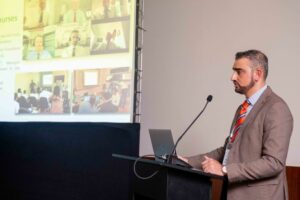
During the 20th IALA Conference in Brazil, Mahdi Al Mosawi, MENAS General Manager, spoke to delegates on the core challenges associated with digitalisation and how Aids to Navigation (AtoN) technicians navigate the current challenges in a digital world. He said: “Digitalisation is transforming the maritime sector, bringing unparalleled benefits in terms of navigation accuracy and operational efficiency and low cost. However, it is crucial to acknowledge that electronic systems are not infallible. In the event of an electronic failure or malfunction, human intervention and expertise is essential to ensure the safety of vessels, crew, and cargo.”
Accredited by IALA and Trinity House as a training organisation, MENAS emphasised the importance of well-trained technicians and AtoN engineers onboard ships who can provide maintenance to prevent AtoNs failures and accidents. In situations where electronic systems may experience glitches, technicians can make informed decisions to fill these gaps, ensuring ships navigate safely. The combination of human judgement and technological support remains a vital aspect of reliable and secure navigation.
Additionally, MENAS highlights the role of human operators in interpreting and contextualising data provided by digital systems. While automation offers real-time information and predictive analytics, it is the experience and intuition of human navigators that allow for a comprehensive understanding of complex maritime environments. These skilled professionals possess the ability to identify potential hazards, adapt to changing circumstances, and mitigate risks effectively.
Mr Al Mosawi concludes: “At MENAS, we believe that a harmonious integration of digital technologies and human expertise is the best approach to ensure the highest level of safety. While digitalisation brings undeniable advantages, it is vital to recognise that humans remain an indispensable element in maritime operations.”
As the maritime sector continues to evolve, MENAS remains at the forefront of championing the effective integration of digitalisation while recognising the crucial role of training to contribute to a safer and more secure maritime environment.



Related News.

Poland’s additional national requirements distort competition says Danish Shipping
Poland has introduced a national survey requirement for smaller foreign-flagged vessels operating in Polish waters. This creates significant…

Battery Vessels could help electrify most of Global Shipping Emissions
Battery-electric ships are economical only if the pack is cycled frequently, so they have been confined to short-sea, ferry and harbour vessels…

Mintra and Ledgid explore collaboration to connect Maritime digital identity, learning and workforce development
Mintra® and LEDGID are exploring opportunities to bring together complementary capabilities in digital learning, maritime training, professional…

World Shipping Council calls for global agreement on shipping emissions as industry investment surpasses $200 billion USD
The World Shipping Council (WSC) is calling on governments to agree on binding global greenhouse gas regulations for international shipping without…

What happened to the ITF whistleblower’s complaint?
In January 2026, a whistleblower complained that International Transport Workers’ Federation (ITF) General Secretary Stephen Cotton had manipulated…

Growing regulatory scrutiny puts seafarer wellbeing firmly on maritime safety agenda, VIKAND warns
Seafarer wellbeing is coming under greater regulatory scrutiny as international rules and guidance increasingly recognise crew health and welfare as…

Good Times Bad Times the Premium Stays with the Strait
In October, we wrote that if the transfer network off Oman kept pace, Gulf crude would carry China's refill and keep drawing tonnage east,…

Allied Weekly Market Review Week 47
Pls find below the Allied - Weekly Market Review - Week 47 ALLIED - Weekly Market Report- Week 47


Climate TRACE releases September 2026 Emissions Data
Climate TRACE reported that global greenhouse gas (GHG) emissions for the month of September 2026 totaled 4.7 billion tonnes CO₂e. This remains…
Subscribe to our newsletter!
if you dont want to swim alone in the ocean of news, sign up for the newsletter, and you will receive daily all the important news of world shipping!
