Jacob Clausen MD of NAVTOR gives five keys for understanding and improving vessel CIIs

Jacob Clausen, Managing Director, NAVTOR Denmark, cuts through the confusion regarding CII compliance and optimisation with some simple words of advice.

CII ratings are shaking up shipping. The arrival of the A to E vessel rating system on 1 January 2022, and the update of regulations on 1 January 2023, has been met with almost equal amounts of celebration and consternation. On one hand a far-reaching framework for measuring and continually improving vessel carbon intensity has been born – essential for an industry targeting enhanced sustainability – while on the other owners and operators now have to learn how to understand and navigate an approach with (potentially) major operational implications. And all this while conducting core business in an ever more complex regulatory, economic and geopolitical landscape.
It doesn’t sound easy, does it? But it doesn’t have to be so frustrating either. Here’s some headline insights to help you get to grips with a new regulatory reality.
- The value of C
On the A to E scale, the target for every vessel is C or higher. Any rating is compliant with IMO regulations, but a failure to attain a C will have implications for your vessel’s Ship Energy Efficiency Management Plan (SEEMP) – in other words, there’ll be work to do.
There’s good news if your vessel can hit the heights of A (and not just in terms of lower OPEX, enhanced environmental performance, and reputational/market advantage) as its asset value will, on average, be 7% higher than if it had attained a C-rating. On the flip side, if a vessel plumbs the depths of an E rating, the ship’s value will drop by 12% compared to a C-rating. So, it really does pay to perform.
- Continual improvements
Ambitious environmental targets create a need for continual improvement rather than one-off efforts. This is reflected in the fact that the targets for achieving a C rating get 2% stricter every year. This creates the need for on-going, accurate and intelligent monitoring, analysis and optimisation of environmental performance, with a broad range of measures to drive down carbon intensity. So, what can be done?
- Pick and mix approaches
There’s no one size fits all answer to optimising CII ratings – since vessel types and operating patterns are obviously different – but thankfully there’s a diverse menu of strategies to choose from. Slow-steaming is an obvious start, as is reducing auxiliary energy consumption and taking measures to ensure efficiency in your vessel’s main engine performance.
Poorly performing hulls are a drag – in more ways than one – so a proactive approach to hull cleaning, optimisation of the hull, and advanced hull coatings can make a major difference to fuel consumption, costs and environmental efficiency.
In addition, there’s a vast array of energy saving innovations available (for many different vessel areas/functions), while intelligent weather routing can, in some cases, shed percentage points off fuel consumption. Accessing shore power is a smart move when conducting port side operations, while the adoption of alternative low carbon fuels (e.g., biofuels, methanol and ammonia/hydrogen) translates to obvious gains.
Aside from these measures, changes to the distances travelled by vessels, the time at sea versus idling, and utilization, amongst other key operational factors, also make significant impacts… as we’ll see here:
- The impact of owner and operator decision-making
There’s some fundamental operational choices owners and operators can make that, while seemingly small, can have major impact on a vessel’s attained CII.
Using a 50K DWT tanker, travelling at 12 kn, spending 50% of its time at sea as a case study, we see that a 1 kn speed reduction (raising time at sea to 54.5%) can make a CII difference of 9%. Potentially bringing a CII rating of D down to C. A 10.9 kn speed and 55% at sea makes a CII difference of 10%. Maintaining 12 kn but raising time at sea to 55%, meanwhile, makes a 2% impact.
The same vessel, operating on the same parameters, with a 20% reduction in basic load will enjoy a 4% CII gain, while a 10% improvement in hull cleaning will translate to an 8% CII advantage. Add the two together and that’s a 12% positive impact in terms of CII.
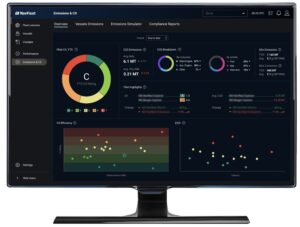
So, there’s plenty that can be done if you work to understand, monitor and analyse the performance of your fleet with an advanced solution, such as NAVTOR’s NavFleet offering.
- Remember your corrections
Finally, MEPC 78 saw some voyage adjustments and ‘correction factors’ added to the CII formula. Although, at first glance, this may appear to complicate calculation, it’s important to bear these in mind to ensure that your data is accurate and that you don’t overstate your carbon intensity, getting unfairly penalised in the process.
Deductions can be made across a broad range of criteria, including for certain voyages, energy consumed for a range of activities, such as cargo loading, discharging and cargo cooling/heating, as well as shuttle tanker operations, ship to ship transfers, and so on.
CII may seem daunting, but there’s opportunity inherent in the challenge; with a powerful framework to cut costs, as well as emissions, while improving overall fleet efficiency and understanding. With the right partners, and smart shipping solutions, CII will not only help us in decarbonizing the shipping industry, but can also be genuinely positive for your business – a Commercially Intriguing Initiative.



Related News.

Island Oil evolves into Island Energies
A new identity that honours the Island Oil legacy and moves the Group forward with confidence Island Oil Limited introduces its new corporate…

Crewing 5.0: How AI is Rewriting the Rules of Maritime Travel – Exclusive Interview with Crewpoint’s Marko Saul
Crew logistics has long been one of the most complex and manually intensive components of ship management, often reliant on travel systems designed…

WISTA International launches new Associate Membership category
WISTA International has introduced a new Associate Membership category, opening its global network to maritime organisations that are unable to…

Dr. N Reuben Paul meets Indian Ambassador in Athens on Seafarers’ Welfare and Maritime issues
On the occasion of World Maritime Day, 24 September 2026, Dr. N. Reuben Paul, Chairman of the Merchant Navy Welfare Board (India) and…

Iran Says It Won’t Soften Demands as Trump Rejects Hormuz Offer
Iran stuck to its seven-day proposal for reopening the crucial Strait of Hormuz, saying it won’t soften its conditions, while…

xclusiv S&P Report 28th September 2026
Pls find below the [xclusiv] S&P Report 28th September 2026 [xclusiv] 2026_09_28

JINGDONG property establish advanced logistics facility in KEZAD
Company to build a 150,000 square-metre logistics facility that will strengthen Abu Dhabi’s logistics ecosystem Khalifa Economic Zones Abu Dhabi –…
Shipping’s transition being hampered by policy uncertainty
The shipping industry is at greater risk than ever of missing its 2030 zero-emission fuel targets, according to a new report. The latest edition of…

New cargo securing guidance prioritises personnel safety and reduces damage risks
The revised guidelines aim to protect personnel, reduce cargo damage and improve port efficiency. Lloyd’s Register has worked with Jurong Port in…

MSI forecasts firm dry bulk market into 2027, driving further newbuilding orders
Strong and volatile freight earnings are likely to continue into next year, supporting owners’ investment appetite in new tonnage Dry bulk vessel…
Subscribe to our newsletter!
if you dont want to swim alone in the ocean of news, sign up for the newsletter, and you will receive daily all the important news of world shipping!
