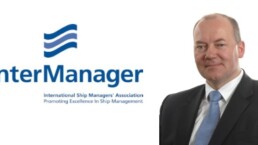

Ship managers are urging the European Commission to follow the ‘polluter pays’ approach when finalising legislation intended to reduce greenhouse gas emissions from shipping in European waters.
They have highlighted concerns that proposed legislation could miss its mark if it holds ship management firms accountable for emissions reductions rather than target the parties who control key pollution-related aspects of ship operation such as fuel, machinery and vessel speed.
The Commission is set to finalise legislation which will include GHG emissions from maritime transport within the EU Emissions Trading Scheme (EU-ETS) and ship management association InterManager, which represents 80% of the world’s largest ship management companies, has submitted a position paper to inform this discussion. Its concerns centre on the definition of the entity responsible for ETS compliance.
In it’s submission InterManager stated: “The huge financial risk imposed on ship managers by the revised ETS Directive is disproportionate to the negligible influence managers have in respect of the emissions generation by maritime transport. By directing compliance and enforcement measures at a party which is neither the polluter nor able to exert significant influence on the polluter, the current form of the revised ETS Directive significantly dilutes the incentives for polluters to reduce emissions. This is in direct conflict with the “polluter pays” principle, which is a key tenet of EU environmental policy.”
InterManager stressed that it recognises the importance of reducing greenhouse gas emissions from maritime transport and welcomes regulations designed to enable the shipping industry to decarbonise, including revisions to the EU-ETS to include maritime transport emissions within its scope.
However, it urged the Commission to word the regulation carefully to ensure the correct parties are in focus: “Under a Polluter Pays Scheme such as EU-ETS, the default responsible party should be the one controlling the highest number of emissions relevant aspects, not the one with the lowest.”
“As technical ship managers we take care of repairs, maintenance and crewing for, and on behalf, as agents of our customers the shipowners. Most of a vessel’s emission relevant key aspects are outside our remit – the speed, predominantly determining the consumption, as well as the trading area of the vessels are contractually agreed between shipowner and charterer in the Charter Party Contract, without involvement of the technical ship manager. The type of fuel used, the engines and other machinery installed on the vessels are decided by the shipowner when ordering or buying the vessel, also outside our remit,” it wrote.
InterManager Secretary General, Captain Kuba Szymanski, commented: “It would be patently unjust if the EU legislation forcibly imposed that the ship manager shall be the regulated entity, this would be similar to holding the facility manager responsible, not the factory owner.”
Noting the EU’s efforts to align the EU-ETS legislation with the shipping industry’s ISM Code, InterManager’s submission points out: “ISM is concerned with the safety of vessel operations in which we, as technical managers, do have a say as we provide the crew that operates the vessel in a safe manner as well as the procedural framework that allows them to do so. EU ETS is not geared towards safety but aims at reducing the environmental impact of shipping, which will require different fuels, different machinery and/or lower speeds – all decisions outside the remit of the technical ship manager.”
InterManager is a Cyprus-registered global association which has been representing the ship management sector for more than 30 years. It is an active participant at the International Maritime Organization, the United Nations maritime regulatory body, where it holds Non-Governmental Organisational (NGO) status.
Ship managers today technically manage nearly 25% of the world fleet and that number is growing rapidly. They also look after and (indirectly) employ more than 90% of the 1.7 million seafarers serving on that fleet. They are at the very forefront of technical, digital, logistic, procurement, human resource management, training and welfare development. They deal with a wider visibility of issues across the shipping, offshore and commodity sectors than any other operator.



Related News.
Intelligent Skies, Secure Seas: Navigating Connectivity, Cyber Resilience, and AI Liability at the 5th CSN Greece ICT Conference
The 5th CSN Greece ICT Conference, held on 19th November 2026 at the Ploes Floating Venue in Paleo Faliro, Athens, successfully convened maritime…

EU moves to ban tankers insured in Russia, repair services at Russian refineries
EU targets Russian-insured tankers, refineries Von der Leyen announces 22nd sanctions package All 27 member states must approve new…
IMO tackling fraudulent registries together
Strong national systems and international information sharing are crucial to tackling fraudulent registries and fraudulent ship registration…
Open letter on freedom of navigation and the protection of seafarers
Dear High Representative Kallas, Dear Foreign Affairs Ministers, European Shipowners | ECSA, BIMCO, the Cruise Lines International Association…
Davies Turner warns of Rising Asia-UK Container Disruption and European Port Congestion
Davies Turner, one of the UK’s largest independent freight forwarding and logistics companies, says that disruption to container shipments from Asia…
Disruptions still dominate tanker market outlook
"This year, tanker markets have been affected by disruption to transits through the Strait of Hormuz, the Houthi blockade of Saudi Arabian Red Sea…
Panama’s President called on to match COP31 Heroism with action at shipping climate talks
As a series of crucial meetings tasked with cutting greenhouse gas emissions from global shipping takes place this week and next, environmental NGOs…

Trafigura appoints Helio Cumbi as Executive Director, Mozambique
Trafigura has appointed Helio Cumbi as Executive Director, Mozambique, and Business Development Lead for East and Southern Africa Oil. Helio is a…
“K” LINE holds FY2026 Global Dry Bulk Meeting
Kawasaki Kisen Kaisha, announces that it held a global meeting for its dry bulk business at the company’s head office on November 9 and 10. The…
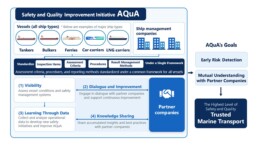
MOL launches ‘AQuA’ safety and quality improvement initiative
Standardizing Group-wide Safety and Quality Assessment Criteria to Enhance Vessel Safety and Quality Mitsui O.S.K. Lines, announced the launch of…
Subscribe to our newsletter!
if you dont want to swim alone in the ocean of news, sign up for the newsletter, and you will receive daily all the important news of world shipping!
