An entire world of customers relies on Viasat satellites


Defense, aviation, maritime, homes and communities, and a broad range of mobility customers rely on Viasat’s secure connectivity solutions across air, land, sea and space
As the first ViaSat-3 satellite soars toward its orbital slot and into its critical role in enabling global connectivity, we’d like to give you a closer look at the multi-layered company behind it, and a bit of the history that led us to this moment.
We’re far from just a satellite internet company. Our culture and ability to consistently push the edge of what is possible in satellite communications is built upon decades of experience and the enduring drive to push the boundaries of what’s expected.
Viasat was founded in 1986 on a spirit of innovation that has remained constant since the company’s genesis.
From the first defense products Viasat engineers designed in the late 1980s to the upcoming ViaSat-3 global satellite constellation, Viasat consistently took on big challenges. As a young start-up new to the scene, many outsiders deemed Viasat’s vision too ambitious. With the mindset that there is always a better way to do things, Viasat rose to the challenge
From the company’s start, CEO Mark Dankberg and his partners were repeatedly told their ideas were impossible to achieve, contracts too big to pull off and that technology simply did not exist for products they’d agreed to develop.
“A lot of people like the whole idea of being part of a start-up, but deep down inside, they don’t really want to take on the high risk that often accompanies innovation,” said Mark Miller, one of the company’s founders who today is Viasat’s chief technical officer. “It’s not a bad thing and there’s definitely a place for that. But that’s not the type of approach that’s conducive to a new company. You have to be innovative. You must be willing to take risks.”
Skepticism from the outside has further motivated those who’ve been with Viasat the longest. Time and time again, our employees proved the doubters wrong.
Dankberg said those successes happened in large part by not clinging to old business models and the willingness to take risks.
“We’ve constantly, through force of will, worked our way upward in the ecosystems in which we participate,” he said. “What that meant is learning new skills that people didn’t have before, taking advantage of intellectual horsepower, ambition, and persistence — things that enabled our people and our company to grow. And we’ve continued that pattern for 37 years.”
‘Always a better way’
Viasat’s “always a better way” mindset has been part of its DNA from its earliest days and continues to guide our path forward.
That drive has been key to Viasat employees’ ability to develop impactful solutions for customers across our multiple segments, including defense, government, residential, business, and mobility.
Viasat started as a defense contractor. Our first product was a signal-to-noise ratio device for the U.S. Army that quickly established Viasat’s reputation as a trusted partner to the U.S. Department of Defense. The company swiftly built upon that reputation, growing and expanding rapidly into other products and services.
In the early 2000s, Viasat expanded into the commercial sector, manufacturing airborne broadband terminals for an in-flight connectivity service.
Today, we’re a multi-market business providing communication solutions and cybersecurity services and products to homes, communities, businesses, airplanes, ships, warfighters, governments and disaster relief agencies around the world.
Throughout its history, Viasat has created “a better way” for customers in those segments, and the upcoming ViaSat-3 constellation is expected to further enhance those experiences across markets and geographies.
Homes & businesses
The company entered the consumer internet business in 2001, when it began providing Denver-based satellite internet company WildBlue with satellite modems. In 2009, while the high-capacity ViaSat-1 satellite was still under construction, Viasat acquired WildBlue. The addition of WildBlue’s capabilities enabled Viasat to quickly enter the U.S. home internet market, providing advanced connectivity solutions to homes in underserved areas or to homes that had never had an internet option.
Today, Viasat uses four satellites –Anik F2, WildBlue-1, ViaSat-1 and across North and Central America and ViaSat-2 to cover Brazil. Together they to connect homes, businesses, and mobility customers across North America and South America, including Mexico and Brazil.
The new ViaSat-3 constellation is expected to provide near global coverage with even greater capacity and faster speeds to our customers. The first satellite is planned to cover the Americas. The second is set to cover EMEA — Europe, the Middle East, and Africa. The third is planned to cover Asia-Pacific (APAC. The constellation is also expected to enable space relays between satellites in different orbits, enhancing the ability of Earth-observation satellites and others to download data much more quickly.
Additionally, when all three of the ViaSat-3 satellites are in service, they are expected to offer underserved customers and communities around the world an affordable way to connect for the first time.
Aviation & maritime
Internet connectivity on moving platforms like planes and ships first appeared in the late 1990s at the height of the tech bubble.
Several companies entered the emerging market to try to meet the new demand. Viasat partnered with several companies and began to supply broadband terminals and other technology to enable this new form of connectivity.
Providing internet to commercial and private aircraft is a major part of our business and ViaSat-3 will help meet the growing customer demand for in-flight wi-fi and communications. Currently, Viasat has more than 3,500 commercial aircraft in active service and under contract, with airlines like JetBlue, Delta, and many others, Our equipment also connects business and private jets around the world, as well as government and military aircraft.
For commercial aircraft, the service helps passengers, pilots, and crew stay connected in the air, increasing safety and efficiency, while also keeping passengers entertained. Government and defense agencies rely on Viasat’s mobile broadband service to power media-enabled two-way communications to large aircraft, helicopters, ground vehicles, and maritime vessels, so commanders and government leaders can stay informed while on the go.
In space
Viasat’s Real-Time Earth (RTE) service is already changing how data is delivered. By connecting to Viasat antennas on the ground, satellite operators can securely and rapidly command, downlink, and disseminate data from satellites in low-Earth orbit (LEO), medium-Earth orbit (MEO) and geostationary orbit (GEO).
The flexibility provided by enabling data sharing from every type of satellite is vital for agriculture, public utilities, fleet management, large enterprises, government, environmental, shipping, and many other industries that rely on fast, reliable data for situational awareness and critical decision making.
The ViaSat-3 constellation is designed to significantly reduce the time it takes to transmit data from satellites by extending the real-time Earth network into space. This will enable space relays between satellites in different orbits and allow Earth-observation satellites and others to download their data much more quickly.
Looking to the future
All these expected improvements fulfill Viasat’s lifelong mission of constantly improving technology and finding a better way to deliver services to customers.
Yet even bigger challenges and opportunities lie ahead.
“In the next five years, we’ll be in businesses we’ve never been in before, with new systems, and so much more,” said Vice Chairman Rick Baldridge. “The challenges ahead are going to dwarf the challenges behind us. The employees working on those issues in the future are going to have a ton of fun.”
As the ViaSat-3 constellation expands its coverage around the world, the company is expected to grow and change dramatically — as its spirit of innovation stays steady.



Related News.

5th CSN Greece ICT Conference, Athens 19th November 2026 “Intelligent Skies, Secure Seas: The AI Impact on ICT” – Save the date
About the Conference The 5th CSN Greece Shipping ICT Conference, titled “Intelligent Skies, Secure Seas: The AI Impact on ICT”, will take place on…
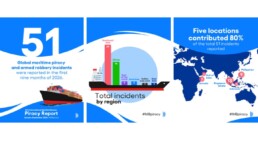
Maritime piracy incidents remain at historic lows despite Somali piracy concerns
The ICC International Maritime Bureau (IMB) has reported the lowest level (51) of piracy and armed robbery incidents since 1992 in the first nine…
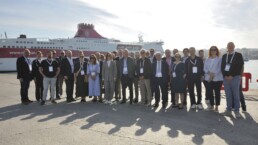
Piraeus Port Authority main sponsor of Ferry Shipping Summit 2026
With the participation of more than 200 delegates from several European countries, the Ferry Shipping Summit 2026 took place on 8–9 October 2026 in…

EuroDry announces order for the construction of a third modern 82,000 DWT Kamsarmax Bulk Carrier
EuroDry , an owner and operator of drybulk vessels and provider of seaborne transportation for drybulk cargoes, announced that it has signed a…
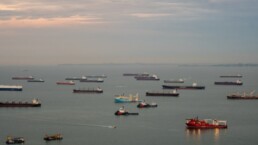
India urges Russia, Ukraine to protect Black Sea shipping
India has urged both Russia and Ukraine to ensure safe passage for commercial shipping through the Black Sea as attacks on merchant vessels put…
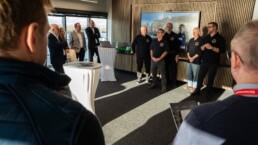
PD Ports strengthens its commitment to the River Tees with multi-million pound Marine investment
PD Ports has officially opened a new multi-million-pound Marine facility on the banks of the River Tees, reinforcing its long-term commitment to the…

Maritime leaders head to Shanghai for the Annual Summit 2026
Shared seas, shifting horizons Maritime trade stands at a turning point. The rules-based order on which shipping has long depended is under…
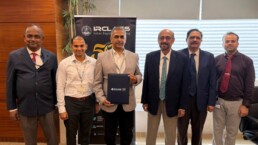
Indian Register of Shipping grants type approval to Medha Energy’s 92 kWh LTO Lithium-Ion battery system
Indian Register of Shippinghas successfully completed the Type Approval process for the 92 kWh Lithium-Ion Battery System developed by M/s Medha…

KLine opens a Singapore New Hub for Consolidated Ship Management and Maritime Talenτ
Three Companies, One Roof — Singapore's New Hub for Consolidated Ship Management and Maritime Talenτ A ceremony for around 280 guests sets the stage…
ASA explores measures to Safeguard Free and Safe Navigation at Critical International Maritime Chokepoints
The Asian Shipowners’ Association which accounts for 56% of the world’s fleet capacity and consists of China, Cook Islands, Hong Kong, Japan, Korea…
Subscribe to our newsletter!
if you dont want to swim alone in the ocean of news, sign up for the newsletter, and you will receive daily all the important news of world shipping!
