Powering and accelerating the True Virtualization of Space


When the virtualized era of satellite communications is realized, software will control and command all components of the connectivity process. Satellite users will have access to the bandwidth they need no matter whether in an airplane, on a ship or perhaps driving through a desert hundreds of miles from the nearest cell tower. The various components that comprise the network will be seamlessly interconnected and able to proactively respond to user needs. The process of provisioning or changing broadband connectivity will be done within seconds, not in days, hours or minutes.
This is the future promise of the fully virtualized satellite communications network. Within the space industry, the Intelsat team is championing this move towards virtualization and digital transformation.
In pursuit of this vision, satellite operators today are procuring software-defined satellites that can dynamically control and adjust bandwidth and deliver connectivity with a greater degree of automation, flexibility and efficiency. However, while certainly integral to the overall provision of service, software-defined satellites are only one part of the broader equation. These days, any operator can purchase and launch one of the new software-defined satellites. But without the underlying capabilities, expertise, and modernized systems to integrate them into a broader space and ground network operation, they will not be able to benefit from many of the new capabilities that these satellites offer.
To achieve true virtualization and digitization, a delicate dance must be orchestrated among key components of the network, including intelligent terminals and modems, network hubs located at ground stations around the world, and the satellites themselves. The more these components can seamlessly interact with each other without the intervention of humans, the closer we will get to a truly virtualized and optimized satellite communications network fabric.
With this knowledge as the driver, the Intelsat team is developing a highly sophisticated system that will all but eliminate the manual management of satellite network traffic, optimize bandwidth delivery based on changing conditions and evolving demands, and automatically manage the entirety of traffic flow across the network. The scalable and fully automated approach will allow Intelsat to meet communications demands dynamically, automatically, and intelligently as satellite traffic is routed between end-user terminals, satellites in orbit, and ground stations located around the world.
Intelsat’s network management system will essentially reside in the back office and behind the scenes, but the implications for Intelsat customers will be enormous.
Customers requiring broadband services around the world are in different situations and environments with unique bandwidth needs and SLAs. Some customers will be moving, others in fixed locations, and others still in constantly changing climatic conditions. Their needs and environments may change as they are consuming a given service.
Intelsat will have the capability to understand customer needs, the situations they are in, and automatically and dynamically adjust the network and service to offer an optimal service at all times.
For example, if broadband service is required on a merchant shipping vessel navigating across an ocean, Intelsat’s next generation network, enabled by our back-end infrastructure, will recognize the request and immediately set up the required service. As the ship moves across the ocean through changing weather conditions, bandwidth requirements may change as well. By dynamically managing the constant interactivity between the satellite modem on the ship, the satellite, and the network hub at the gateway, Intelsat will ensure the appropriate adjustments to the service are made to ensure users on board continue to enjoy high quality connectivity.
The advanced and modernized network management capabilities Intelsat is developing will be scalable and able to support the individual needs of thousands of customers accessing the network simultaneously across all business segments. It will start with management of the new software-defined GEO satellites, eventually expanding to multi-orbit operations that will allow for the efficient and intelligent management of resources and traffic across multiple constellations in different orbits, further enhancing Intelsat’s ability to deliver against the bandwidth needs of customers. To effectively virtualize their networks, contribute to the new vision for an enhanced user experience, and compete in the space industry of the future, all operators will need a sophisticated management system. In reality, few will have the resources, expertise, and capabilities to develop it. Deploying and integrating a modernized back-end system throughout our network will accelerate the virtualization of space and serve as yet another testament to Intelsat’s leadership in driving innovation and progress across the industry.



Related News.

5th CSN Greece ICT Conference, Athens 19th November 2026 “Intelligent Skies, Secure Seas: The AI Impact on ICT” – Save the date
About the Conference The 5th CSN Greece Shipping ICT Conference, titled “Intelligent Skies, Secure Seas: The AI Impact on ICT”, will take place on…
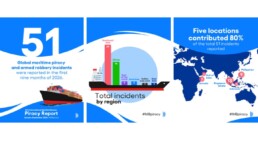
Maritime piracy incidents remain at historic lows despite Somali piracy concerns
The ICC International Maritime Bureau (IMB) has reported the lowest level (51) of piracy and armed robbery incidents since 1992 in the first nine…

Piraeus Port Authority main sponsor of Ferry Shipping Summit 2026
With the participation of more than 200 delegates from several European countries, the Ferry Shipping Summit 2026 took place on 8–9 October 2026 in…

EuroDry announces order for the construction of a third modern 82,000 DWT Kamsarmax Bulk Carrier
EuroDry , an owner and operator of drybulk vessels and provider of seaborne transportation for drybulk cargoes, announced that it has signed a…

India urges Russia, Ukraine to protect Black Sea shipping
India has urged both Russia and Ukraine to ensure safe passage for commercial shipping through the Black Sea as attacks on merchant vessels put…

PD Ports strengthens its commitment to the River Tees with multi-million pound Marine investment
PD Ports has officially opened a new multi-million-pound Marine facility on the banks of the River Tees, reinforcing its long-term commitment to the…

Maritime leaders head to Shanghai for the Annual Summit 2026
Shared seas, shifting horizons Maritime trade stands at a turning point. The rules-based order on which shipping has long depended is under…
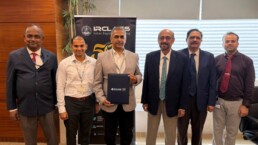
Indian Register of Shipping grants type approval to Medha Energy’s 92 kWh LTO Lithium-Ion battery system
Indian Register of Shippinghas successfully completed the Type Approval process for the 92 kWh Lithium-Ion Battery System developed by M/s Medha…

KLine opens a Singapore New Hub for Consolidated Ship Management and Maritime Talenτ
Three Companies, One Roof — Singapore's New Hub for Consolidated Ship Management and Maritime Talenτ A ceremony for around 280 guests sets the stage…

ASA explores measures to Safeguard Free and Safe Navigation at Critical International Maritime Chokepoints
The Asian Shipowners’ Association which accounts for 56% of the world’s fleet capacity and consists of China, Cook Islands, Hong Kong, Japan, Korea…
Subscribe to our newsletter!
if you dont want to swim alone in the ocean of news, sign up for the newsletter, and you will receive daily all the important news of world shipping!
