MSC commits to achieve 100% Electronic Bill of Lading Adoption by 2030
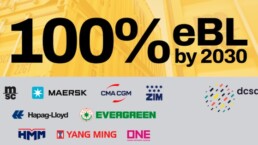

- MSC has committed to transition to 100% use of electronic Bills of Lading by 2030, with an intermediate target of 50% within five years.
- MSC launched its own eBL solution in April 2021, leading the way in the container shipping industry, and simplifying and speeding up the shipping experience for customers.
- Security is another major benefit, as the eBL ensures zero risk of documentary fraud, forgery or loss.
- The 100% eBL Commitment has also been signed by the eight other carrier members of the Digital Container Shipping Association .
- This milestone moment will accelerate the digitalization of container trade.
MSC has committed to transition to a fully standardized electronic Bill of Lading by 2030, with an intermediate target of 50% within five years. This milestone moment represents a significant step forward for the company and our customers.
The eBL is the electronic version of the traditional, paper-based Bill of Lading , one of the most important trade documents in container shipping. The eBL replicates the exact same functions as a paper BL, but in digital form, thereby offering a more efficient, secure and sustainable alternative.
“I am delighted that MSC is taking this big step towards paperless trade. Our pioneering MSC eBL solution has already transformed the shipping experience for numerous customers by making the process faster, simpler and more efficient than ever before.
On top of these benefits, moving to 100% eBL will contribute towards our climate goals, as we move towards net zero 2050. ”
Soren ToftCEO of MSC
MSC eBL: the story so far
MSC was one of the earliest adopters of the eBL. Our MSC eBL solution was launched in April 2021 after a two-year pilot project in India and at a perfect time in the industry considering the delayed delivery of paper BLs during the COVID-19 pandemic.
Customers appreciate the convenience, speed and simplicity of MSC eBL, which is accessible 24/7 from any device or location. The technology enables eBLs to be transmitted in minutes, compared to days or weeks, leading to significant cost savings, faster payment processes and reduced administration for users. The switch to eBLs also directly reduces the carbon footprint of all parties involved.
Offered via the blockchain-based WAVE BL platform, MSC eBL is fully secure. Documents are encrypted on upload and data is secured using automatic verification and authentication, so there is no risk of documents ending up in the wrong hands. Blockchain-based transfer of data also helps to eliminate the risks of document forgery, theft or loss, as compared to the transportation of paper-based BLs.
MSC eBL is a key offering in our growing portfolio of digital solutions and a vital component of our vision for the paperless and frictionless future of global trade.
> Discover the benefits of MSC’s eBL solution
> Read more about MSC’s eBL journeyJoining forces to advance paperless trade
The 100% eBL Commitment has been signed by the eight other ocean carrier members of the Digital Container Shipping Association (DCSA), representing a significant step forward in the digitalization of global container trade.
MSC is excited to join with the DCSA and the wider industry to commit to 100% adoption of a DCSA digital standards-based eBL, and to continue to play a role in making this goal a reality.
However, reaching the ambitious target of 100% adoption will only be possible if the entire maritime supply chain is on board. This is why MSC and the other DCSA carrier members are asking that all stakeholders – from shippers and forwarders to governments, financial institutions and insurance agencies – work together to make this commitment a reality.
The digitalization of trade documents within the framework of DSCA standards holds great potential to remove friction in international trade, benefitting both the customer experience and the environment.
While the eBL is on its way to becoming widely adopted, the change will also speed up the shipping process and facilitate the implementation of other forms of e-documentation (such as the certificate of origin and packing list) in the future.



Related News.

Poland’s additional national requirements distort competition says Danish Shipping
Poland has introduced a national survey requirement for smaller foreign-flagged vessels operating in Polish waters. This creates significant…

Battery Vessels could help electrify most of Global Shipping Emissions
Battery-electric ships are economical only if the pack is cycled frequently, so they have been confined to short-sea, ferry and harbour vessels…

Mintra and Ledgid explore collaboration to connect Maritime digital identity, learning and workforce development
Mintra® and LEDGID are exploring opportunities to bring together complementary capabilities in digital learning, maritime training, professional…

World Shipping Council calls for global agreement on shipping emissions as industry investment surpasses $200 billion USD
The World Shipping Council (WSC) is calling on governments to agree on binding global greenhouse gas regulations for international shipping without…

What happened to the ITF whistleblower’s complaint?
In January 2026, a whistleblower complained that International Transport Workers’ Federation (ITF) General Secretary Stephen Cotton had manipulated…

Growing regulatory scrutiny puts seafarer wellbeing firmly on maritime safety agenda, VIKAND warns
Seafarer wellbeing is coming under greater regulatory scrutiny as international rules and guidance increasingly recognise crew health and welfare as…

Good Times Bad Times the Premium Stays with the Strait
In October, we wrote that if the transfer network off Oman kept pace, Gulf crude would carry China's refill and keep drawing tonnage east,…

Allied Weekly Market Review Week 47
Pls find below the Allied - Weekly Market Review - Week 47 ALLIED - Weekly Market Report- Week 47


Climate TRACE releases September 2026 Emissions Data
Climate TRACE reported that global greenhouse gas (GHG) emissions for the month of September 2026 totaled 4.7 billion tonnes CO₂e. This remains…
Subscribe to our newsletter!
if you dont want to swim alone in the ocean of news, sign up for the newsletter, and you will receive daily all the important news of world shipping!
