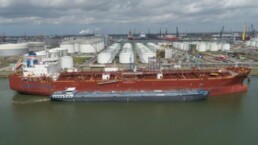

In addition to helping its 12 member ports decarbonize, the World Ports Climate Action Program has contributed to the faster adoption of sustainability standards and measures in the wider shipping industry. That was the main take away from the 4th meeting of CEO’s and working group members of WPCAP, which was founded almost 5 years ago to accelerate actions to combat climate change in the maritime sector
“Back then we felt it was unjust that the shipping industry did not take part in the Paris climate agreement and to address this, we started WPCAP together.” said Allard Castelein, CEO of the Port of Rotterdam. “Today, this issue of climate change is top of mind with industry leaders and other stakeholders alike and I am proud of the initiatives that we have implemented in the past years. I believe these have helped speed up the transition of the industry at large and are testimony to our collaborative efforts.”
The meeting focused on the work done to improve efficiency, aid the adoption of shore power, and accelerate the transition to clean shipping fuels. Members also discussed the decarbonization of cargo-handling equipment, noting in particular the potential of hydrogen fuel cells as a zero-emission technology as this can deliver high performance with relatively low additional requirements for infrastructure investments.
Still large potential for global efficiency gains
Efficiency continues to be seen as low-hanging fruit for decarbonization efforts, and the significant progress made in setting standards to improve efficiency has elicited positive responses from both WPCAP members and the wider shipping community.
The WPCAP working group focused on the top efficiency measures identified in a survey among almost 600 industry experts from more than 100 countries. Members collaborated with the IMO to calculate the CO2 impact of different efficiency measures and developed a guide and standards for ports to implement just-in-time arrivals and deliver significant fuel savings. In addition, the members worked with the International Hydrographic Organization (IHO) and other bodies to develop a platform for sharing nautical data between ports, improve ship-berth compatibility and further improve efficiency.
Ben van Scherpenzeel, Chairman of the Efficiency working group and Director Nautical Developments at the Port of Rotterdam, noted that both the IMO and ship operators welcomed the measures as they help with planning operations more efficiently, saving fuel costs and reducing emissions. He concluded that that there is still a lot of potential for further efficiency gains by rolling out the new tools beyond the WPCAP network, at ports across the globe.
Shore power adoption continues to rise
Of all the topics discussed, shore power saw perhaps the biggest change in attitude in the shipping industry in the past five years, thanks in part to the work done by different WPCAP members.
Jarl Schoemaker, Chair of the power-to-ship working group and Senior advisor Environmental Management at the Port of Rotterdam, noted that while shore power has been around for a long time, the roll-out was traditionally hampered by high investment cost due to low adoption rates. To help create a breakthrough in shore power adaption, WPCAP members made an inventory of available technology and exchanged best practices and demonstrated the benefits of collaboration which resulted in an MoU on the use of shore power for container vessels and cruise ships by 2028. They also commissioned a joint study, which showed that that even with the rise of alternative fuels from renewable sources, shore-power is likely to remain the best option to reduce emissions from large vessels during berth.
Jarl noted that shore power is increasingly recognized by regulators and policy makers as a key instrument for reducing emissions and improving air quality, including in the EU, leading to higher adoption rates and lower cost. This provides an opportunity to further team-up with IAPH in engaging with IMO to address remaining challenges and stimulate a progressive worldwide roll-out of shore power.
Port Readiness Levels for clean shipping fuels
The transition towards clean shipping fuels was a big topic for all WPCAP members, and is expected to be the main focus of multiple initiatives in the coming years, including Green Corridor projects launched by several WPCAP members across the globe.
Barriers to wider adoption of clean fuels include uncertainties around fuel availability, concerns about infrastructure and the technical readiness at individual ports. To address this, WPCAP members group joined forces with the IAPH Clean Marine Fuels working group to develop an assessment and communications tool to align global conversations about the availability of clean fuels at ports.
“It is important for ports to be able to say to ship owners: ‘we will be ready with this fuel, at this time, and this is what you can expect from us’ – and this tool does just that,” said Namrata Nadkarni, chair of the working group on sustainable marine fuels and founder of maritime consultancy Intent Communications. “The Port Readiness Framework allows you to communicate to all stakeholders where you are in the journey to supply new sustainable fuels or allow vessels using these fuels to bunker – from the research phase, to development and finally, deployment and bunkering of a new fuels.”
The working group is now focused on providing additional guidance and assessment sheets for ports to apply the framework to their efforts. Beyond this, an online tool can be development for voluntary self-assessment of port readiness. In the long run, the working group also sees potential for certification according to the new standards, although more thinking would be required on the exact implementation first.
WPCAP members commented that the new tool is a unique instrument and has the potential to significantly accelerate the transition to clean fuels, starting around specific Green Corridors.
Force for good
Allard Castelein concluded that WPCAP has helped to create the momentum needed to address climate change in the shipping industry. He invited all members to meet in Rotterdam in May 2023, to discuss the future of the WPCAP program.
“We try to move faster by collaborating, exchanging best practices with other leading ports, and reaching out to others outside our network. If we continue to work together and are vocal and show our aspirations, we have the opportunity to be a force for good,” he said.
WPCAP is a cooperation between the ports of Antwerp, Barcelona, Gothenburg, Hamburg, HAROPA PORT (Le Havre – Rouen – Paris), Long Beach, Los Angeles, New York / New Jersey, Rotterdam, Valencia, Vancouver and Yokohama.



Related News.

5th CSN Greece ICT Conference, Athens 19th November 2026 “Intelligent Skies, Secure Seas: The AI Impact on ICT” – Save the date
About the Conference The 5th CSN Greece Shipping ICT Conference, titled “Intelligent Skies, Secure Seas: The AI Impact on ICT”, will take place on…
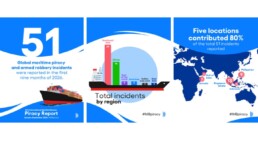
Maritime piracy incidents remain at historic lows despite Somali piracy concerns
The ICC International Maritime Bureau (IMB) has reported the lowest level (51) of piracy and armed robbery incidents since 1992 in the first nine…
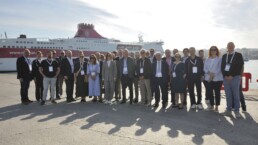
Piraeus Port Authority main sponsor of Ferry Shipping Summit 2026
With the participation of more than 200 delegates from several European countries, the Ferry Shipping Summit 2026 took place on 8–9 October 2026 in…

EuroDry announces order for the construction of a third modern 82,000 DWT Kamsarmax Bulk Carrier
EuroDry , an owner and operator of drybulk vessels and provider of seaborne transportation for drybulk cargoes, announced that it has signed a…

India urges Russia, Ukraine to protect Black Sea shipping
India has urged both Russia and Ukraine to ensure safe passage for commercial shipping through the Black Sea as attacks on merchant vessels put…
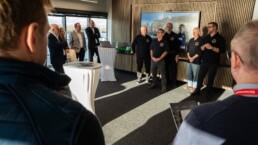
PD Ports strengthens its commitment to the River Tees with multi-million pound Marine investment
PD Ports has officially opened a new multi-million-pound Marine facility on the banks of the River Tees, reinforcing its long-term commitment to the…

Maritime leaders head to Shanghai for the Annual Summit 2026
Shared seas, shifting horizons Maritime trade stands at a turning point. The rules-based order on which shipping has long depended is under…
Indian Register of Shipping grants type approval to Medha Energy’s 92 kWh LTO Lithium-Ion battery system
Indian Register of Shippinghas successfully completed the Type Approval process for the 92 kWh Lithium-Ion Battery System developed by M/s Medha…
KLine opens a Singapore New Hub for Consolidated Ship Management and Maritime Talenτ
Three Companies, One Roof — Singapore's New Hub for Consolidated Ship Management and Maritime Talenτ A ceremony for around 280 guests sets the stage…
ASA explores measures to Safeguard Free and Safe Navigation at Critical International Maritime Chokepoints
The Asian Shipowners’ Association which accounts for 56% of the world’s fleet capacity and consists of China, Cook Islands, Hong Kong, Japan, Korea…
Subscribe to our newsletter!
if you dont want to swim alone in the ocean of news, sign up for the newsletter, and you will receive daily all the important news of world shipping!
