Raven SR, Chevron and Hyzon Motors collaborate to produce Hydrogen from green waste in Northern California

- Hydrogen to be produced from green waste and food waste with non-combustion reforming process
- Richmond, Calif., production facility to serve local hydrogen transportation fuel market, replacing conventional fuels
- Commercial operations targeted for Q1 2024
Raven SR, a renewable fuels company, Chevron New Energies, a division of Chevron U.S.A. Inc., and Hyzon Motors announced they are collaborating to commercialise operations of a green waste-to-hydrogen production facility in Richmond intended to supply hydrogen fuel to transportation markets in Northern California.
The facility will be owned by a newly formed company, Raven SR S1 LLC (Raven SR S1). Raven SR will be the operator of the facility, which is targeted to come online in the first quarter of 2024. Chevron holds a 50% equity stake in Raven SR 1. Raven SR holds a 30% stake and Hyzon owns the remaining 20%.
To produce the hydrogen, the project is expected to divert up to 99 wet tons of green and food waste per day from Republic Services’ West Contra Costa Sanitary Landfill into its non-combustion Steam/CO2 Reforming process, producing up to 2,400 metric-tons per year of renewable hydrogen. Diversion of this organic waste will help fulfill SB 1383 mandates, and will potentially avoid up to 7,200 metric-tons per year of CO2 emissions from the landfill. In addition, Raven’s technology uses no fresh water, an important element given drought risks in California, and uses less electricity to power its units than competing processes. The project is expected to produce at least 60% of its own electricity by upgrading the currently permitted and zoned landfill gas electric generators at the landfill, further reducing both the current air emissions and the need for grid power for its non-combustion process.
Chevron plans to market its share of the hydrogen in Bay Area and Northern California fueling stations, enabling the energy transition to zero emission vehicles. Hyzon, a global supplier of fuel cell electric commercial vehicles, plans to provide refueling for hydrogen fuel cell trucks at a hydrogen hub in Richmond.
“Our strategic partners’ commitment to the first non-combustion Steam/CO2 facility in the world will help drive our commercial operations in Richmond and accelerate similar facilities globally,” said Matt Murdock, CEO of Raven. “This facility will be the first hydrogen production plant in the world to reduce greenhouse gases, including critically important short-lived climate pollutants, through its process and its product. By removing waste from the landfill, it will help reduce methane emissions. Not only will the greater Richmond community benefit from reduced emissions, investments, and jobs, it will also see economic benefits as local gas stations have a consistent supply of clean, zero-carbon hydrogen fuel for fuel cell vehicles. We are grateful to work with partners who share our mission to make cleaner fuel options available as soon as possible.”
Ahead of teaming with Raven SR on the Raven SR S1 facility, Chevron and Hyzon were among Raven SR’s initial strategic investors, along with ITOCHU, Ascent Hydrogen Fund and Samsung Ventures.
“We are excited about this collaboration and our expanded commitment to Raven and its waste-to-hydrogen technology,” said Austin Knight, vice president of Hydrogen for Chevron New Energies. “Not only are we positioned to commercialize a first-of-its-kind lower carbon hydrogen project, we are working to reduce emissions in a community in which we have a long and proud history. With a relatively short lead time, we will be able to further develop the hydrogen ecosystem in the region.”
The Raven SR technology is a non-combustion thermal, chemical reductive process that converts organic waste and landfill gas to hydrogen and Fischer-Tropsch synthetic fuels. Unlike other hydrogen production technologies, its Steam/CO2 Reformation does not require fresh water as a feedstock and uses less than half the energy of electrolysis. The process is more efficient than conventional hydrogen production and can deliver fuel with low to negative carbon intensity. Additionally, Raven SR’s goal is to generate as much of its own power onsite as possible to reduce reliance on, and/or be independent of the grid. Its modular design provides a scalable means to locally produce renewable hydrogen and synthetic liquid fuels from local waste.
“The Richmond hub enables a local, renewable hydrogen ecosystem by aligning hydrogen production, refueling infrastructure and vehicle availability geographically and technologically. This alignment is expected to reduce total costs to fleet operators, accelerating the transition to zero-emissions vehicles and global decarbonization,” said Parker Meeks, Hyzon president and interim CEO.
“This marks a significant step in demonstrating the commercial viability of a localized, low-to-negative carbon intensity hydrogen economy,” he added. “Through Hyzon’s partnership with Raven, hydrogen supply can be synchronized with the demand for hydrogen fuel cell electric vehicles. Raven’s deployment of scalable hydrogen production facilities allows supply and demand to grow together as clean hydrogen for transport continues to gain market and regulatory support.”



Related News.
India joins ISF Verify, bringing trusted digital certification within reach of 30 per cent of the global seafarer workforce
Agreement with the world’s second-largest seafarer supply country marks a major milestone for global digital certification. The Directorate General…
OpenGate Capital to acquire Maersk Training, the Global Safety Training and Gas-Safety Services Business of Maersk
OpenGate Capital, a global private equity firm, announced today that it has signed a definitive agreement to acquire Maersk Training and its…
Can AI Save the Planet? Planet Classroom examines AI’s Climate Impact, Energy Demands and Clean Energy Solutions
C. M. (Cathy) Rubin and The Nest Campus CEO Peter Gilmer explore AI's growing environmental footprint, billions in climate investment, and the…
Smart Port Market Size to be valued at USD 23.10 Billion by 2034; Increasing Volume of International Maritime Trade to Boost Market Development: Fortune Business Insights™
The global smart port market size was valued at USD 3.4 billion in 2025 and is expected to be worth USD 4.2 billion in 2026. The market is projected…
Closer cooperation with India can strengthen Danish shipping
Minister of Business and Competitiveness Martin Lidegaard is leading a Danish business delegation to India. Green shipping is among the…
IRClass Academy and PIP Makassar strengthen Executive Maritime Capability through IMPDP 2026
Indian Register of Shipping , through its professional training and development arm IRClass Academy, has further strengthened its engagement in…
MOL, Sharp, IOM Implement Solar Panel Donation Project
Move Will Enhance Living Conditions in Power-short Areas of Kenya Mitsui O.S.K. Lines, announced the donation of solar power panels to communities in…
Intermodal Report Week 44 2026
Pls find below the Intermodal Report - Week 44 2026 Intermodal Report Week 44 2026
Allied Weekly Market Review Week 44
Pls find below the Allied - Weekly Market Review - Week 44 ALLIED - Weekly Market Report- Week 44
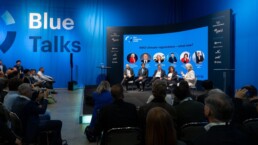
Nor-Shipping partners with Marketing in Maritime to deliver Marketing & Communications day and awards in 2027
Nor-Shipping is partnering with Marketing in Maritime to deliver a dedicated Marketing & Communications Day and awards initiative at the 2027…
Subscribe to our newsletter!
if you dont want to swim alone in the ocean of news, sign up for the newsletter, and you will receive daily all the important news of world shipping!
