
INTERCARGO continues to fully support the ambition to achieve net zero emission shipping by 2050. It is important to stress, however, that this goal can only be achieved by providing the shipping industry with alternative zero carbon fuels.
The responsibility for decarbonisation cannot be placed solely on the shoulders of the ship operator at the end of the line – it is a challenge that must be dealt with holistically by the entire shipping industry.
It is essential that appropriate policies are included in the Revision of the International Maritime Organization (IMO) GHG Strategy to ensure that green fuels are secured as well as the necessary infrastructure to ensure availability and bunkering in ports around the world. Unfortunately, these aspects are not sufficiently discussed and addressed despite their critical role.
INTERCARGO’s position is that a combination of core elements of previous proposals on medium-term measures is the best way forward, and therefore welcomes the ICS revised proposal (paper ISWG-GHG 13/4/9).
Specifically, INTERCARGO believes that a flat rate contribution per tonne of CO2 emitted on a Tank-to-Wake (TtW) basis – and subject to the outcome of the ongoing discussions at IMO on fuel emissions’ Life-Cycle Assessment (LCA) – should be combined with an International Maritime Sustainability Funding and Reward (IMSF&R) mechanism where ships of 5,000 GT and above will make an annual contribution per tonne of CO2.
Under such a scheme only ships that use ‘eligible alternative fuels’ would receive a reward for CO2 emissions prevented.
A combination of technical and economic measures should be accompanied by appropriate policies and commitments from the Member States, in order for fuel suppliers to secure the required alternative fuels in ports around the world in sufficient quantities.
On CII (Carbon Intensity Indicators)
INTERCARGO believes that the current Carbon Intensity Indicator (CII) framework should not be used as a benchmark for IMO’s medium-term measures.
During the Association’s recent deliberations during its semi-annual meetings, INTERCARGO members expressed their belief that CII cannot be used to achieve the desired decarbonisation goals as under real life operating conditions it will not deliver equitable, transparent and non-distorting emissions’ reductions.
A number of factors can have a significant adverse impact on a vessel’s CII rating, most of which are outside the vessel’s control. Examples include adverse weather, voyage distance, port waiting times, port infrastructure, and charterers orders. Paradoxically when considering voyage distances and port waiting times, vessels with longer travel distances can produce more emissions but have a better CII rating when compared to vessels travelling shorter distances and producing less emissions.
INTERCARGO does not therefore believe that CII, in the current format, would achieve the desired de-carbonisation goals or targets. While generally supportive of the operational short-term measure, there are significant flaws that need to be addressed in order to make CII fit for purpose.



Related News.

OL Shipping Group in Tokyo: Capt. Eberhard Koch calls for realistic solutions to Maritime Decarbonisation
An intensive and engaging couple of days in Tokyo brought together leading figures from the international maritime community, providing a valuable…
Regatta for Peace one of the largest ever in Cyprus
Cyprus will host the first European stop on a global sailing journey leading up to the 2027 America’s Cup in Naples. More than 120 sailors…
The propulsion technology powering the marine energy transition
The marine industry is under increasing pressure to future-proof fleets, balancing the need to reduce emissions and improve efficiency. Propulsion…
Signal Ocean acquires Lgmar
Signal Ocean announced the acquisition of Lgmar, the Athens-based company behind Telix, a maritime email and communication platform in daily use…

Canada clean power push challenged by interprovincial grid limits, says GlobalData
Canada is entering a pivotal phase of power-sector expansion as federal tax credits, the phase-out of coal-fired generation, and accelerating…

Maritime safety depends on human factors and leadership, not procedures alone
Interim survey findings point to a gap between seafarers’ perceptions of risk and injury data Seafarers may misjudge when and where they are most at…

New BIMCO contracts tackle ship recycling and energy-saving retrofits
BIMCO adopted two new contractual solutions designed to help you manage important operational and regulatory challenges: the revised…
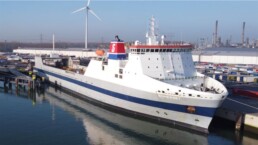
Stena Line to acquire vessel and make changes to its network
Stena Line has reached an agreement to acquire the RoRo vessel Somerset from CLdN. Subject to closure and transfer, the vessel would begin operating…
DORIC WEEKLY INSIGHT 16 OCTOBER 2026
Please find below the DORIC Market Insight for the week ending 16th October 2026. Weekly Report 16.10.2026

Important information for port clients and freight carriers effective November 1, a new traffic overpass and port checkpoint will open for traffic to the Port of Riga on Kundziņsala
Starting November 1 of this year, a new traffic overpass connecting Tvaika Street to Kundziņsala will open to facilitate traffic to and from the Port…
Subscribe to our newsletter!
if you dont want to swim alone in the ocean of news, sign up for the newsletter, and you will receive daily all the important news of world shipping!
