The sky’s the limit, how air freight can bring more agility to your global supply chain
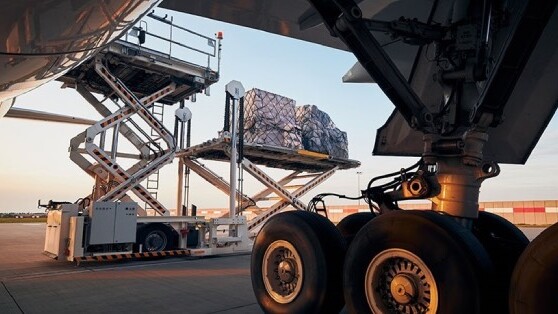

Transportation of goods by air has a history dating back to the early twentieth 20th century. In 1910, the first cargo plane carried bolts of silk from Dayton to Columbus, Ohio. Following the emergence of express delivery services in the 1970s, the use of air freight has continued to grow, with companies across almost every sector benefitting from its speed and reliability.
With revenues from transporting goods by air having risen by 27.2% in 2020 – at an all-time high of USD 128.2 billion – demand for air freight is continuing to grow, and projections show that the volume of goods being transported by air will more than double by 2035.
To cater to increased demand from our customers, Maersk has announced the intended acquisition of global freight forwarding company, Senator International, which has an operational air freight platform of own-controlled capacity and operations across Europe, Asia, South Africa and America.
For companies transporting goods globally, harnessing the power of air freight can help them become more agile and resilient, slotting seamlessly into their existing supply chain infrastructure and supporting their sustainable growth.
This is driven by four key benefits to customers: speed, security and control, flexibility and reliability, and reactivity.
These benefits are interconnected, propelled by the principal advantage of speed, and provide customers with the all-important tools to meet complex challenges, streamline their logistics strategies, and bring efficiency and greater visibility to their supply chains.
Speed
The critical benefit of choosing to transport goods by air is speed. The time taken for goods to travel from A to B is much less than when using an ocean freight vessel and customers can get their product to market faster. While ocean shipments typically take more than three weeks, depending on the trade lane, air freight takes between one and four days
This speed advantage also goes hand in hand with critical need. Companies across sectors such as fashion and lifestyle operate regular shipments of goods via ocean, reserving the use of air freight for specific, time-critical events. Whether it’s a new product launch, an emergency shipment of key components, or the need to quickly replenish an item which is out of stock, air shipping allows companies to move with agility.
Harnessing air freight also allows companies to operate a balanced supply chain, utilising air for its speed advantage and understanding when other modes of transportation, such as ocean freight, should be deployed for customers’ regular shipments.
Security and control
When transporting goods across the globe, many of our customers require assurances about the security of their cargo. The mode of transportation used is often dependent on the type of goods, and air freight allows companies shipping high-value goods a higher degree of control over their cargo.
The speed of air freight means that damage is easier to avoid. While other modes of transportation make goods more susceptible to damage en route to their destination, this becomes much less likely when utilising air. Additionally, air freight’s security advantages extend beyond preventing damage of stock in transit.
When using air freight, goods are subject to minimal handling and cargo is cleared through customs quickly and efficiently. Maersk Customs Services ensures the seamless movement of goods, with greater visibility and predictability. Due to the relatively short amount of time that goods are in transit via air, cargo is also less vulnerable to unforeseen issues and actions.
Meet the expert

Dr Julian Dragendorf is a Partner at McKinsey & Company, and a leader of the company’s global transport logistics practice. For the past 10 years, he has served customers in the logistics industry, leading work globally across all modes of transportation.
In recent years, supply chains have become more complex. Everything is much more global, and it’s important to acknowledge the different challenges that customers face depending on the type of goods they are transporting. This could mean time-critical goods or those which are not durable enough and require the speed advantage that air affords them – or a customer may need to replenish stock quickly while avoiding the time constraints associated with ocean freight.
“With air, the footprint is also larger and this is another central advantage for customers. There can be certain access limitations associated with ocean freight – not all destinations can be easily reached – so air allows companies to move at speed on a global scale. To build a truly robust supply chain, customers need creative and integrated solutions. Air freight is an important tool in supply chain managers’ toolboxes, and one which addresses the key point of time criticality in logistics.” – Julian Dragendorf, Partner at McKinsey & Company
Flexibility and reliability
Customers integrating air freight into their logistics strategies are afforded a greater degree of flexibility, which ties into the speed, security and control advantages. Because air freight is not a standard mode of transportation – rather, a premium component that adds strength to the wider supply chain – it is not a method of shipment that is regularly utilised by all our customers.
However, it does have its benefits. Many companies use air freight to avoid typical challenges in the delivery schedules of ocean freight vessels, or because of difficulties within their own production schedules. Delays happen, and having the ability to transport goods by air allows companies to flex their approach and get their shipments back on track quickly.
For customers dealing with setbacks and disruptions to the shipment of time-sensitive goods, air freight provides the capability to efficiently handle and absorb change. For example, technology companies introducing brand-new products to the market; , manufacturers requiring critical production components, and retailers transporting seasonal, time-critical, stock across the globe are all customers for whom the flexibility and reliability of air freight are key advantages.
Additionally, due to the frequency of flights and the reduced time in transit, air freight is an important and, crucially, reliable addition to customers’ existing supply chains. Choosing to transport goods by air offers customers highly dependable arrival and departure estimates, ensuring that the rest of their supply chain is not impacted by unforeseen delays.
Air plays a specific, but very important, role for customers, easing the complexity of supply chains and providing a level of transparency that is not available with other modes of transportation.
Reactivity
Incorporating air freight into the supply chain provides customers with the ability to work more reactively, responding to external events in real -time and strategising accordingly.
Having a supply chain that can flex depending on the circumstances is important for customers working within fast-changing and unpredictable environments, and activating air freight as a transportation mode can help customers meet the increasing demand for certain goods.
Some of our recent work with a global lifestyle apparel company, with a portfolio of denim brands, is a good example of this reactivity in practice. The imminent month-long closure of their distribution centres meant our customer needed to transport all goods from their factories in Bangladesh to the US, their primary market.
With cargo already en route via ocean, and with concerns over port congestion slowing down the arrival of goods in the US, the Maersk team rebooked 11 of the 26 containers, ensured the required stock was the first off the vessels, reserved air freight capacity in Dubai, and facilitated the smooth transit onwards to New York and Chicago.
Working with a 21-day deadline, against a much longer estimated journey via ocean, the stock reached retail stores ahead of schedule and allowed our customer to mitigate challenges and avoid congestion through an integrated sea-air solution.
Air freight, therefore, is an all-important component of agile and resilient supply chains, ready to be utilised to meet increasing demand and a vital resource for customers in unpredictable sectors where reactivity is required to overcome complex challenges.
Meet the expert

Ferwin Wieringa is the Global Head of Air Freight at Maersk. Having worked in supply chain logistics for almost 28 years, he joined the Maersk Group in 2015 and is responsible for air freight products around the globe.
As it stands, high-tech companies are using a greater share of air freight when compared with sectors such as lifestyle and retail. Time to market is very critical, and when we’re dealing with high-value goods which need to be available to consumers quickly, air freight is the chosen mode of transportation.
“At Maersk, we’re investing significantly in air freight to enhance our broader product offering. We’re known for providing our customers with an end-to-end solution encompassing logistics, ocean and rail, and a strong air freight provision is a fundamental component of that solution. We have a significant charter offering, the lease of several aircrafts, and the use of Star Air as a key vehicle for growth, all of which ties into our broader capability to meet any challenge a customer comes to us with. Production and demand challenges are driving companies to utilise air freight and reap its benefits, and we’re working to provide our customers with a comprehensive, end-to-end service through our integrated product offering.” – Ferwin Wieringa, Global Head of Air Freight at A.P. Møller Maersk
Air freight is a service which has long been offered at Maersk, but our expansion, driven by the intended acquisition of Senator International and the purchase and lease of cargo planes, will allow us to develop a tailored offering for customers across a range of industries, including technology, fashion and lifestyle, automotive and FMCG.
The benefits of air freight, propelled by the primary advantage of speed, allow customers in these sectors to build more robust and streamlined supply chains. With our offerings across Logistics, Ocean, Rail and Air, we’re able to provide our customers with a fully integrated, end-to-end solution to support their operations and enable their sustainable growth.
By utilising air, our customers find the tools to act faster, become more reactive, exert greater control over their goods, and bring all-important visibility to their supply chains.
Air freight is a crucial logistics component for customers seeking to expand their business, and harnessing its power is the key to treading the path of greater agility and resilience.
Source: Maersk



Related News.

ISLAND OIL: Unveiling of the Sculpture “Cyprus’s Journey Through the Ages” in Protaras – A Tribute and Landmark to Cyprus’s Historical Memory and Cultural Heritage
In a modest ceremony marked by a moving atmosphere, the sculpture “Cyprus’s Journey Through the Ages”, created by acclaimed Cypriot sculptor…

World Maritime Day 2026 from Policy to Practice – powering Maritime Excellence
Global regulations will deliver safer, more resilient shipping when they are implemented worldwide. The international maritime community marks…

Diana Shipping announces Time Charter Contract for m/v DSI Polaris with Dai An Ocean Shipping
Diana Shipping , a global shipping company specializing in the ownership and bareboat charter-in of dry bulk vessels, announced that, through a…

Chief Economists Expect Global Economy to Stabilize, but Fiscal Constraints, Rising Living Costs and AI Investment Uncertainty Threaten Growth
The global economy is stabilizing, but the fiscal support that cushioned successive shocks since 2020 is unlikely to play the same role in the year…

V. welcomes its new graduate cohort as programme expands across the group
Twelve graduates from nine nationalities join 11th year of V.’s expanded international management programme. V., the global ship manager and marine…

From Policy to Practice: Why Seafarers Are the Key to Maritime Excellence
The shipping industry is no stranger to regulation. Seafarers and ship operators work within a vast framework of international conventions, national…

Intermodal Report – Week 38 2026
Please find below the Intermodal market report for week 38 2026. Intermodal Report Week 38 2026 Market Insight By Nikos Tagoulis, Head of…

Allied – Weekly Market Review – Week 38
Please find below the Allied Weekly Report for Week 38 | 2026 ALLIED - Weekly Market Report- Week 38

Record year on the Northeast Passage but Arctic shipping remains very limited
In 2025, a record 103 transit voyages were made via the Northeast Passage. However, this is still equivalent to only around a day and a half of…

[xclusiv] S&P Report 21th September 2026
Please find below the [xclusiv] latest Weekly S&P Report [xclusiv] 2026_09_21 Market Commentary: VLCCs: Freight Boom Reprices the Fleet The VLCC…
Subscribe to our newsletter!
if you dont want to swim alone in the ocean of news, sign up for the newsletter, and you will receive daily all the important news of world shipping!
