DNV, Strohm and the Non-Metallic Innovation Centre study reviews lifecycle carbon footprint of pipelines
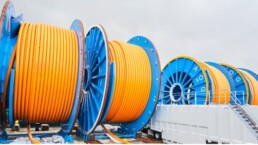

The importance of choices made about technology, design, transport logistics, and installation when it comes to the lifecycle GHG impact
DNV, Strohm, and the Non-Metallic Innovation Centre have launched a report comparing the lifecycle carbon footprint of externally coated carbon steel pipe and thermoplastic composite pipes. The report shows that TCP has a significantly lower carbon footprint, in the range of 30-60%, than an equivalent carbon steel pipeline solution for the defined case study.
The companies considered all steps of the lifecycle carbon footprint which is a measure of the direct and indirect greenhouse gas (GHG) emissions associated with all activities in the product’s life cycle, from material extraction and production to the end-of-life stage of the pipelines.
The report outlines the results from a joint industry project (JIP) between DNV, Strohm, and NIC, focusing on the lifecycle of a 22 km pipeline transporting produced water for injection in a field outside Angola in Western Africa, with an operating lifetime of 20 years.
Prajeev Rasiah, executive vice president for Energy Systems, Northern Europe at DNVsaid: “This study shows the importance of choices made about technology, design, transport logistics, and installation of offshore pipeline solutions, when it comes to the lifecycle GHG impact.”
“It focuses on the importance of efficient transport logistics and installation, including selection of vessels which have a high impact on the total carbon footprint for both steel and TCP. While admittedly limited to certain geographies and scenarios, the current case study has shown that TCP has an advantage within this area.”
“Pipelines are a critical part of offshore infrastructures and should be considered when assessing the overall carbon footprint. Choosing a technology and design that provides the least GHG emission from a cradle to grave perspective is a step towards the goal of a low carbon future.”
Caroline Justet, business growth executive for energy in transition at Strohm added: “We are excited about the results of the study as it’s a great step towards establishing TCP as a suitable alternative to steel in offshore applications.”
“The greatest GHG benefits from using TCP compared to steel will be in the cases when the pipe needs to be transported over long distances. TCP is spoolable and lightweight, allowing it to be delivered in long lengths and installed using small vessels or subsea pallets, significantly reducing CO2 emissions.”
“The NIC is proud to have been a part of this study which proves and now underpins one of the major benefits of non-metallic technology deployment. The findings from this collaboration complement a previous NIC study assessing CO2 footprint for onshore flowlines, with both studies showing consistent results. In a world where all companies are seeking to improve their environmental credentials, deployment of TCP can offer oil and gas companies an easily deployable and greener alternative to their historically steel based infrastructure.”
“Though this study had a specific application it shows to the industry where the CO2intensive steps are and allows designers to understand how to minimize the CO2footprint for offshore applications. This will allow the wider industry to understand how the design and implementation of non-metallic assets can improve both sustainability and performance.” concluded NIC Director, Mihalis Kazilas.



Related News.

Greece has the most to lose from delays in shipping’s green transition, new analysis finds
UCL and WWF Greece report finds the IMO Net-Zero Framework offers Greek ship owners the clarity they need, and the best protection against a…

Snow Land joins Cool Carriers as the world’s first reefer with a gate rudder, a new chapter for sustainable and efficient reefer shipping
Cool Carriers, the world’s largest operator of specialised reefer vessels, took delivery of Snow Land from Kitanihon Shipbuilding in Japan on 12…

IBIA launches Marine Energy Outlook Survey as Annual Convention in New York
IBIA - The International Bunker Industry Association officially launched its Marine Energy Outlook Survey during the IBIA Annual Convention in New…

Why did ITF staff vote to strike again?
Staff at the International Transport Workers’ Federation (ITF) headquarters in London have voted to give their union a strike mandate. According to…

Nearly half of maritime crew tickets booked a week ahead are cancelled
Two new C Teleport reports show when maritime and aircrew teams book crew flights, how often they cancel, and what late booking costs, with a…

Kpler completes $1.5bn+ Sixth Street investment and continues accelerating growth
Investment backs Kpler's bold ambition to shape the future of global trade intelligence. Kpler, a leading provider of global physical trade…

How SAL and DNV are strengthening heavy-lift shipping
From classification and newbuilding support to operational tools and advisory expertise, SAL and DNV have been collaborating for decades. The…

PSA Singapore breaks ground on Tuas Port Phase Two to strengthen Global Trade Connectivity
PSA Singapore marked the groundbreaking of Tuas Port Phase Two, a significant step in the development of the world’s largest fully automated…

 …

BIFA welcomes UK–EU trade progress and calls for clarity on implementation
The British International Freight Association (BIFA) has welcomed progress made at today's UK–EU Summit in Brussels, highlighting the potential…
Subscribe to our newsletter!
if you dont want to swim alone in the ocean of news, sign up for the newsletter, and you will receive daily all the important news of world shipping!
