The day Ariane 5 changed the way we look at the world
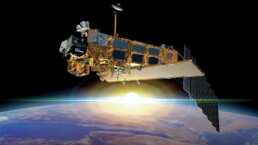

20 years ago Ariane 5 launched the game-changing environmental monitoring satellite Envisat
March 1, 2002: launch day for the European Space Agency’s Envisat, the biggest, most sophisticated environment-monitoring satellite ever built. It could never have happened without the magnificent performance delivered by the rocket that bore it aloft – Ariane 5.
Ariane 5’s Envisat launch mission that day was, befitting its exceptional passenger, quite remarkable.
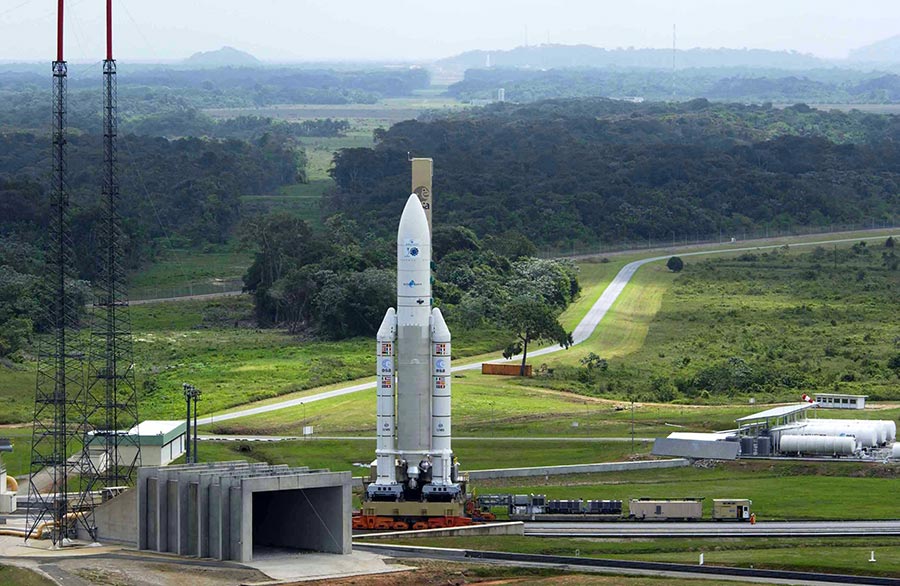
© ESA-CNES-Arianespace-S. Corvaja
The only operational launch system capable of transporting such a large and heavy satellite, the Ariane 5G version carrying Envisat was the first Ariane 5 to use the elongated 17-metre long fairing to accommodate its eight-tonne, 10-metre tall cargo. The mission set a new record in payload carriage – both weight and height – for Ariane 5
Lifting off under clear skies from its launch base at Europe’s Spaceport in French Guiana, this launch was the first Ariane 5 to head northwards from Kourou, and the first to deliver its payload into a sun-synchronous orbit.
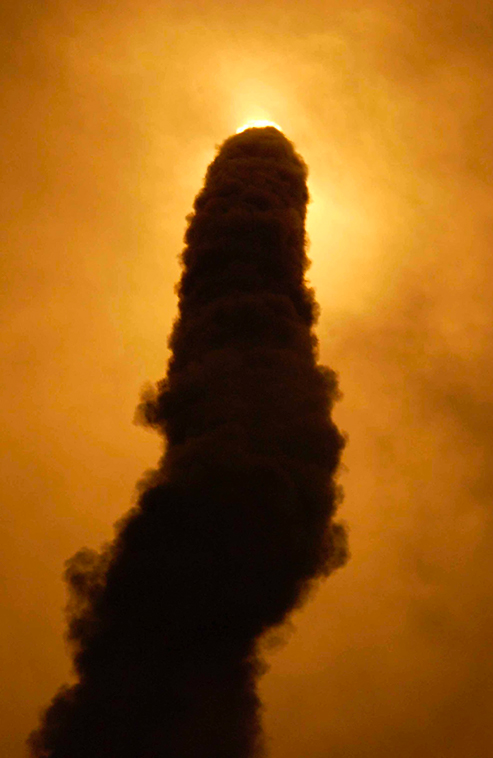
© ESA-CNES-Arianespace-S. Corvaja
Twenty-six minutes and 35 seconds of absolutely textbook ascent later, spacecraft separation occurred, and Envisat was released into space on its mission to take environmental monitoring of the Earth into a new dimension.
And the flight had a surprise bonus to offer. Ariane 5 placed Envisat into its target orbital location with such consummate precision that the satellite needed to use less of its own stock of fuel than planned to manoeuvre itself into its final position, with the result that it had extra reserves for its operational lifetime.
Envisat observed and monitored the Earth’s land, atmosphere, oceans and ice caps during its 10-year lifetime, giving us a truly global view of the planet’s natural eco-system and the impacts of human activity.
It recorded the topography of the landmasses and the seas to within a few centimetres, and surface temperatures with a precision of a few tenths of a degree. It tracked variations in vegetation cover, marine microlife and cloud composition. It studied the chemical profile of the atmosphere, measuring levels of ozone, trace gases, water content, and pollution.

© ESA – Barents Sea, off the Norwegian coast, August 2011
Its high-resolution radar sensors could pinpoint ships, identify oil spills, register land movements and flood contours to within millimetres.
Envisat exceeded all expectations, delivering observations of an even higher quality than was originally specified.
The Envisat mission ended on April 8, 2012, well over double the originally planned operational lifetime for the satellite.



Related News.

Navigating the Multi-Orbit Era: In Conversation with Intellian’s Jon Harrison at SMM 2026
At SMM 2026 in Hamburg, the rapid evolution of maritime satellite communications took centre stage. Across the exhibition halls, discussions among…
Cyprus ports need joint energy and investment strategy, shipping agents chief says
Cyprus needs a coordinated strategy for shipping, energy and environmental protection to support port investment and modernisation, Cyprus shipping…

MASO Public Affairs introduces MASO Regulatory Intelligence
A new subscription service helping businesses understand what is changing and what it means for them MASO Public Affairs introduces MASO Regulatory…
Anglo-Eastern helps turn CMBTECH’s ammonia ambition into an operational reality
From early feasibility study and risk-based design to newbuilding supervision, crew readiness and technical management, Anglo-Eastern drew on its…

Escalation of attacks threatens to derail recovery in Middle East oil exports
World oil demand is forecast to fall by 2.5 mb/d y-o-y in 4Q26 and 2.6 mb/d on average in 2026. As the Iran war manifests itself through restricted…

New study finds shipping pays twice its share to EU ETS earmarked revenues should triple to help build market for sustainable fuels and technologies
Shipping is responsible for around 10% of EU ETS emissions but pays almost 20% of the ETS bill. Unlike other sectors, it has never received free…

MSARC strengthens maritime mass rescue readiness through training and national live exercise off Dakar, Senegal
Joint MSARC–FHAS programme combines three days of SAR training with a national multi-agency live exercise The Maritime Search and Rescue Council ,…
Sogese report deliveries are still being delayed as container freight rates fluctuate
FOR IMPORTERS Spot rates into the Mediterranean are back at January levels, Far East to Europe reliability sits at pandemic lows, and nearly…

Glencore begins trading on Australian Securities Exchange
Glencore has begun trading on the Australian Securities Exchange under the ASX code GLC. Gary Nagle, Glencore’s CEO, said it was an exciting day for…
BIMCO Shipping Number of the Week
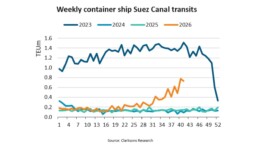
Suez Canal container ship transits exceed 50% of pre-disruption levels "During the first two weeks of October, weekly container ship capacity…
Subscribe to our newsletter!
if you dont want to swim alone in the ocean of news, sign up for the newsletter, and you will receive daily all the important news of world shipping!
