US Patent and Trademark Office grants OQ Technology its first satellite IoT Patent
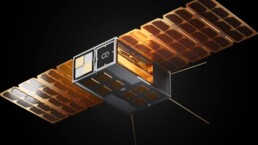

OQ Technology, a global 5G IoT satellite operator, has been granted a patent for its IoT ‘wake-up’ technology by the US Patent and Trademark Office. It is the first out of the company’s six patent applications in the US and the EU.
‘Wake-up’ is a smart power-saving technology within OQ’s terminal IoT devices that allows them to efficiently wake up and communicate with the base station (satellite) only when needed. The function can be adjusted in line with the growth of the number of satellites, with each satellite being able to connect with thousands of sensors. Through ‘wake-up’ OQ aims to achieve the 10-year battery-life goal set by 3GPP standards for narrowband IoT (NB-IoT) wireless communications.
OQ’s other patent applications include frequency synchronisation, timing synchronisation, IoT device localisation, inter-satellite link technology, and a satellite system design and network architecture for cellular IoT communication between satellites and ground stations. The ‘wake-up’ technology and the technologies still pending patents are all to be implemented onboard OQ’s satellite constellation in low Earth orbit (LEO).
Omar Qaise, founder and CEO of OQ Technology said: “I’m very grateful to US Patent and Trademark Office to grant OQ Technology this patent. This and the pending patents will give us an edge over competitors and security to our intellectual property. In addition to the patent for ‘wake-up’, we have five more patents in the queue to be approved both in USA and Europe which we expect to take place this year. With these patents and our frequency licenses and chip partnerships we are the pioneer company who is well positioned to provide 3GPP compatible satellite NB-IoT over non-terrestrial networks.
“OQ Technology is the only company in the world that uses standardised 3GPP cellular technology for NB-IoT to connect devices to satellites. We have been leading the way for satellite-based 5G communications since we created the world’s first universal plug and play IoT device that can provide connectivity using LEO satellite infrastructure. Testing is orbit using our Tiger-1 mission in 2019 was another. This is yet another important milestone for us.”
The remaining five technologies pending patents are: – “Terminal device localisation”, which allows to locate a terminal device, using stored data from the base station(s) instead of an expensive global positioning system. – “Inter-satellite links”, keeping the different base stations aware of each other and also record keeping of terminal devices being connectable to the different base stations. This will make hand-over between base stations easier. In the future this will also include GEO satellites. – “Frequency synchronisation” and “Timing synchronisation” – they synchronise communication and thus improve the signalling between terminal devices and base stations to overcome Doppler effect (wavelength change from travelling objects) issues and timing misalignment issues. This improves the quality of data transmissions and data rate capacity, and also saves energy. – A satellite system design and network architecture for cellular IoT communication between space and earth stations.
The company has also developed a technology that allows it to use the cheaper standard mobile chips ($5) for its satellite connectivity, instead of the expensive satellite chip ($100) that would have to be installed and used when leaving terrestrial networks.
OQ’s services are ideal for applications requiring fast and real-time data processing via satellite, including asset tracking, drone control, vehicle telematics, artificial intelligence critical alarms, automated transport and smart cars, where the latency has to be below 10 milliseconds, which satellites in GEO (geosynchronous equatorial orbit) by incumbent operators, with a latency of up to 250 ms, cannot provide.
Last year, OQ launched its first commercial nanosatellite “Tiger-2” and used it to successfully test its hybrid satellite-cellular user terminal in harsh desert conditions. Tiger-3 is on schedule for launch with mission integrator NanoAvionics. OQ plans to further grow its constellation with more satellites soon.



Related News.

Navigating the Multi-Orbit Era: In Conversation with Intellian’s Jon Harrison at SMM 2026
At SMM 2026 in Hamburg, the rapid evolution of maritime satellite communications took centre stage. Across the exhibition halls, discussions among…

Cyprus ports need joint energy and investment strategy, shipping agents chief says
Cyprus needs a coordinated strategy for shipping, energy and environmental protection to support port investment and modernisation, Cyprus shipping…

MASO Public Affairs introduces MASO Regulatory Intelligence
A new subscription service helping businesses understand what is changing and what it means for them MASO Public Affairs introduces MASO Regulatory…

Anglo-Eastern helps turn CMBTECH’s ammonia ambition into an operational reality
From early feasibility study and risk-based design to newbuilding supervision, crew readiness and technical management, Anglo-Eastern drew on its…

Escalation of attacks threatens to derail recovery in Middle East oil exports
World oil demand is forecast to fall by 2.5 mb/d y-o-y in 4Q26 and 2.6 mb/d on average in 2026. As the Iran war manifests itself through restricted…

New study finds shipping pays twice its share to EU ETS earmarked revenues should triple to help build market for sustainable fuels and technologies
Shipping is responsible for around 10% of EU ETS emissions but pays almost 20% of the ETS bill. Unlike other sectors, it has never received free…

MSARC strengthens maritime mass rescue readiness through training and national live exercise off Dakar, Senegal
Joint MSARC–FHAS programme combines three days of SAR training with a national multi-agency live exercise The Maritime Search and Rescue Council ,…

Sogese report deliveries are still being delayed as container freight rates fluctuate
FOR IMPORTERS Spot rates into the Mediterranean are back at January levels, Far East to Europe reliability sits at pandemic lows, and nearly…

Glencore begins trading on Australian Securities Exchange
Glencore has begun trading on the Australian Securities Exchange under the ASX code GLC. Gary Nagle, Glencore’s CEO, said it was an exciting day for…

BIMCO Shipping Number of the Week
Suez Canal container ship transits exceed 50% of pre-disruption levels "During the first two weeks of October, weekly container ship capacity…
Subscribe to our newsletter!
if you dont want to swim alone in the ocean of news, sign up for the newsletter, and you will receive daily all the important news of world shipping!
