Indonesia Coal export ban

Indonesia’s coal export ban in the light of force majeure and off-hire clauses
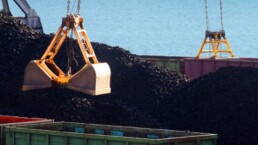
In January 2022, Indonesia, the world’s biggest exporter of thermal coal, implemented a month-long coal export ban to prevent potential power loss and blackouts, after supplies at domestic power plants fell to critically low levels. Even though Indonesia gradually lifted the export ban on the mining companies which have met all their domestic market obligation requirements, the consequences of the ban will most probably remain in the shipping industry. More precisely, we may see a rising number of laytime/demurrage and off-hire disputes between owners and charterers due to the export suspension.
Voyage charters
In voyage charters, a possible argument that charterers might raise to interrupt laytime and mitigate their liability for demurrage is force majeure. Force majeure is a Civil Law principle, but in English Law it is not a free-standing legal concept. Because of that, the parties often implement it contractually by naming specific events that constitute force majeure events. Many voyage charters will identify in an exemption clause the unforeseeable circumstances which are likely to amount to force majeure, preventing the performance of a contractual obligation by either party, due to circumstances beyond their control. The same clause will set out the consequences of a force majeure event, which may vary, from suspending the performance of the charter, to providing the parties with the right to terminate the contract.
However, the question remains. Would Indonesia’s coal export ban fall under any force majeure event? And if it does, will this interrupt laytime or exempt charterers from demurrage? Clearly, it is a matter of construction of each clause and the answer might not satisfy the charterers. By way of indication, the Sugar Charter Party 1969 contains a force majeure clause [1], whilst Clause 8 of AMWELSH93 allows to limit liability for failure to load/discharge cargo directly resulting from “restraint of princes, rulers or people“. Another one is the recently introduced BIMCO Force Majeure Clause 2022 [2]. Charterers could potentially argue that the coal export ban falls into the wording of the above exemption clauses. Owners on the other hand, can successfully refute this argument and contend that a general exemption clause is neither specific nor clear enough to be further applied as an exemption to laytime and demurrage. Considering that voyage charters in their standard form hardly include exceptions or interruptions to laytime due to delays in loading a cargo, the extension of force majeure to laytime and demurrage provision seems more distant. At any rate, clear and precise language is prerequisite to have this effect, otherwise it is doubtful that charterers can rely on it [3].
In addition, in the unlikely event that the force majeure clause could seem to be applied as an exemption or interruption of the laytime, the well-known maxim “once on demurrage, always on demurrage” enters the game. The general rule dictates that exceptions to laytime do not constitute exceptions to demurrage unless “clearly worded to that effect” [4]. For the same reason, if the vessel is already on demurrage when the event occurs, the exemption clause will not excuse delays during this period, unless there are clear express words to that effect [5].
Time charters
In time charters, charterers may well argue that the coal export ban implemented by the Indonesian Government constitutes an off-hire event. More precisely, if the charter is under the NYPE 1946 form, they might allege that this action falls within the scope of “any other cause” of clause 15 [6], preventing the full working of the vessel. However, the phrase “any other cause“, in the absence of the word whatsoever, is an application of the ejusdem generis rule [7]. In other words, it acts as a sweep-up provision at the end of a list and means any other cause of the same type of events as those previously mentioned in that list. Clearly, the export suspension of coal, or in general of any other type of cargo, does not fall under the definition of the off-hire events in Clause 15 and cannot be interpreted towards this direction. Therefore, charterers have little chances of success with this argument.
Further on, apart from the standard NYPE off-hire clause, time charters usually contain additional off-hire clauses, naming other off-hire events, for example if the vessel is “seized or detained or arrested or delayed by any authority” [8]. Charterers might misguidedly place reliance on such clauses and possibly argue that Indonesia’s coal export ban is a form of detention. It is well-established law that the meaning of detention is something more than a mere delay and refers to a “physical or geographical constraint upon vessel’s movements in relation to her service under the charter” [9]. This definition was explored and further approved by the Court of Appeal in The Jalagouri [10], but the facts in this case were completely different from the Indonesian coal suspension, mainly because there was an actual order from the port authorities against the vessel, which was viewed as a physical constraint or a legal restraint of the vessel’s movements [11]. With that in mind, it seems difficult to argue that Indonesia’s export suspension resulted in the detention – with the meaning of physical or geographical constraint– of the vessels waiting to load coal at Indonesian ports. At any rate, owners can argue that as the vessel is always at the disposal of charterers, the delay to load cargo is a direct and inevitable result of complying with charterers’ orders and, therefore, the vessel should remain on-hire. The position might be slightly different if the vessel has loaded cargo and is prevented from sailing.
Conclusion
With the above in mind, charterers will find it difficult to defend in trial and arbitration any exemptions arising out of the Indonesian coal suspension. Of course, each case will be treated differently based on the express provisions at the charter parties, but it will come as no surprise if the outcome favours the owners.
Source: Skuld



Related News.

Navigating the Multi-Orbit Era: In Conversation with Intellian’s Jon Harrison at SMM 2026
At SMM 2026 in Hamburg, the rapid evolution of maritime satellite communications took centre stage. Across the exhibition halls, discussions among…
Cyprus ports need joint energy and investment strategy, shipping agents chief says
Cyprus needs a coordinated strategy for shipping, energy and environmental protection to support port investment and modernisation, Cyprus shipping…

MASO Public Affairs introduces MASO Regulatory Intelligence
A new subscription service helping businesses understand what is changing and what it means for them MASO Public Affairs introduces MASO Regulatory…
Anglo-Eastern helps turn CMBTECH’s ammonia ambition into an operational reality
From early feasibility study and risk-based design to newbuilding supervision, crew readiness and technical management, Anglo-Eastern drew on its…

Escalation of attacks threatens to derail recovery in Middle East oil exports
World oil demand is forecast to fall by 2.5 mb/d y-o-y in 4Q26 and 2.6 mb/d on average in 2026. As the Iran war manifests itself through restricted…
New study finds shipping pays twice its share to EU ETS earmarked revenues should triple to help build market for sustainable fuels and technologies
Shipping is responsible for around 10% of EU ETS emissions but pays almost 20% of the ETS bill. Unlike other sectors, it has never received free…

MSARC strengthens maritime mass rescue readiness through training and national live exercise off Dakar, Senegal
Joint MSARC–FHAS programme combines three days of SAR training with a national multi-agency live exercise The Maritime Search and Rescue Council ,…
Sogese report deliveries are still being delayed as container freight rates fluctuate
FOR IMPORTERS Spot rates into the Mediterranean are back at January levels, Far East to Europe reliability sits at pandemic lows, and nearly…
Glencore begins trading on Australian Securities Exchange
Glencore has begun trading on the Australian Securities Exchange under the ASX code GLC. Gary Nagle, Glencore’s CEO, said it was an exciting day for…
BIMCO Shipping Number of the Week
Suez Canal container ship transits exceed 50% of pre-disruption levels "During the first two weeks of October, weekly container ship capacity…
Subscribe to our newsletter!
if you dont want to swim alone in the ocean of news, sign up for the newsletter, and you will receive daily all the important news of world shipping!
