The eye in the sky Sentinel 5P supplies detailed measurements ever made of harmful gas emissions
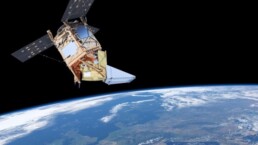

Every second of every day, a trailblazing Earth orbiting satellite is delivering vital data on how air pollution impacts our planet –creating insights to unlock improvements in the health of humankind for generations to come.
This eye-in-the-sky, called Sentinel 5P, was designed and built by Airbus. It carries a sophisticated instrument that supplies some of the most detailed measurements ever made of harmful gas emissions. Monitoring such gases is vital since bad air quality has a direct impact on human health, causing lung cancer and heart disease and can only be done from space as it is invisible to the eye.
Airbus’ role in Sentinel 5P underscores the company’s NextSpace philosophy – continuing its standing as a visionary in the space adventure. With NextSpace, Airbus is taking a future-oriented focus for the very best services and technologies it can develop to connect, protect, inform, explore and direct our lives on Earth.
Delivering on Airbus’ NextSpace promise
The 900kg Sentinel 5P platform was built by Airbus in the UK for the European Space Agency. Its Tropomi imaging spectrometer instrument is the result of a venture involving Airbus and multiple agencies/ institutes in the Netherlands. With the high-resolution data gathering-capabilities of Tropomi (the acronym for: TROPOspheric Monitoring Instrument), Sentinel 5P maps trace gases and detects air pollution over cities. This information is essential to Europe’s Copernicus programme, which is the world’s leading climate monitoring programme.
Since its launch in October 2017, Sentinel 5P has delivered on Airbus’ NextSpace promise by supplying data that literally opens new perspectives on climate monitoring. One example is the game-changing use of the satellite’s observations for real-time monitoring of deforestation across South America’s Amazon rainforest. Sentinel 5P’s ability to identify strong aerosol emissions has enabled conservation organisations to create and operate a freely-available app that pinpoints the sources of fires – with this information provided to authorities throughout the region.
The Tropomi instrument is also providing insights on how atmospheric pollution has changed during the COVID-19 pandemic. Its data showed substantial reductions in nitrogen dioxide over cities when industrial and other polluting activities, such as emissions from factories or power plants, were reduced during the country’s pandemic-related lockdown. However, as restrictions were eased, the monitoring by Sentinel 5P confirmed that average levels of air pollutants rebounded and continue on the rise.
What’s next?
The tenets of Airbus’ NextSpace philosophy include innovative as our driving force and improving how space is used and accessed, which is underscored by the company’s role in the follow-on Sentinel 5 missions. Sentinel 5 instruments will be carried aboard Europe’s future MetOp second-generation weather satellites, also made by Airbus. They will feature an enhanced imaging spectrometer instrument which will enable atmospheric measurements relating to air quality, ozone and UV radiation, covering the entire globe every day.
Looking further to the future, Airbus will be a key player in missions that expand the Copernicus programme’s capabilities. This includes two Airbus-built CRISTAL spacecraft, equipped with a radar altimeter and microwave radiometer technology to monitor sea-ice thickness and overlying snow depth to better understand climate processes.
Airbus is also prime contractor for the LSTM (Copernicus Land Surface Temperature Monitoring) mission, which includes the supply of its spacecraft and high-resolution thermal infrared sensor. LSTM will help farmers achieve sustainable agricultural production in a world of increasing water scarcity, measuring temperatures of individual fields and provides images with 400 times more detail than currently acquired in space.
The Copernicus ROSE-L mission will feature an Airbus radar instrument with the largest antenna of its type ever built – measuring an impressive 11 metres x 3.6 metres. ROSE-L is to provide day-and-night monitoring of land, oceans and ice, thereby supporting forest management, precision farming, food security and ocean monitoring.
Above all, what’s next is ensuring that our space technology and services continue to serve life on Earth.



Related News.

Navigating the Multi-Orbit Era: In Conversation with Intellian’s Jon Harrison at SMM 2026
At SMM 2026 in Hamburg, the rapid evolution of maritime satellite communications took centre stage. Across the exhibition halls, discussions among…

Cyprus ports need joint energy and investment strategy, shipping agents chief says
Cyprus needs a coordinated strategy for shipping, energy and environmental protection to support port investment and modernisation, Cyprus shipping…

MASO Public Affairs introduces MASO Regulatory Intelligence
A new subscription service helping businesses understand what is changing and what it means for them MASO Public Affairs introduces MASO Regulatory…

Anglo-Eastern helps turn CMBTECH’s ammonia ambition into an operational reality
From early feasibility study and risk-based design to newbuilding supervision, crew readiness and technical management, Anglo-Eastern drew on its…

Escalation of attacks threatens to derail recovery in Middle East oil exports
World oil demand is forecast to fall by 2.5 mb/d y-o-y in 4Q26 and 2.6 mb/d on average in 2026. As the Iran war manifests itself through restricted…

New study finds shipping pays twice its share to EU ETS earmarked revenues should triple to help build market for sustainable fuels and technologies
Shipping is responsible for around 10% of EU ETS emissions but pays almost 20% of the ETS bill. Unlike other sectors, it has never received free…

MSARC strengthens maritime mass rescue readiness through training and national live exercise off Dakar, Senegal
Joint MSARC–FHAS programme combines three days of SAR training with a national multi-agency live exercise The Maritime Search and Rescue Council ,…

Sogese report deliveries are still being delayed as container freight rates fluctuate
FOR IMPORTERS Spot rates into the Mediterranean are back at January levels, Far East to Europe reliability sits at pandemic lows, and nearly…

Glencore begins trading on Australian Securities Exchange
Glencore has begun trading on the Australian Securities Exchange under the ASX code GLC. Gary Nagle, Glencore’s CEO, said it was an exciting day for…

BIMCO Shipping Number of the Week
Suez Canal container ship transits exceed 50% of pre-disruption levels "During the first two weeks of October, weekly container ship capacity…
Subscribe to our newsletter!
if you dont want to swim alone in the ocean of news, sign up for the newsletter, and you will receive daily all the important news of world shipping!
