What has caused the great Global Supply Chain Failure?
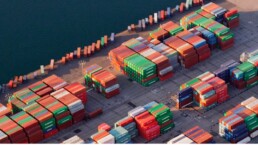

Clogged container ports in California, semiconductor shortages around the world, and empty shelves in supermarkets — most of us have experienced the impact of broken supply chains since the beginning of the COVID-19 pandemic.
Now experts are predicting a shortage of some popular toys this holiday season and even Christmas trees could be in short supply.
What has caused these problems?

Video by Michael Nuesslein
“The easy answer is the pandemic, but that is not the whole story,” says Etosha Thurman, chief marketing and solutions officer, Intelligent Spend and Business Network, SAP.
While it’s true the pandemic caused supply chain disruption, the likes of which no one had ever experienced before, according to Thurman, the truth is that the pandemic really just exposed what was already there: fragmented linear supply chains that don’t provide the visibility required to mitigate risk or the flexibility to collaborate with trading partners, which makes it nearly impossible to respond quickly when disruption hits.
As we have seen, supply chain issues are not limited to the procurement and manufacturing of goods but extend to logistics and delivery. This is where critical labor shortages came into play and further compounded the problem. In the U.S., a shortage of truck drivers — just one example of what has been dubbed “the great resignation” following COVID-19 — has disrupted timely distribution from already backed-up ports. In the U.K., Britain’s exit from the European Union triggered a shortage of truckers, normally coming from Eastern Europe, which slowed the delivery of gas to stations and resulted in consumers queuing up for the low supply.
Thurman points out that although we hopefully will not experience another extended crisis like the COVID-19 pandemic, we still need to address the underlying causes of supply chain fragility and prepare for the next disruption, whenever it comes.
“I hope never again to see the likes of what we’ve experienced over the last two years,” she says. “But the fact remains, there will be another geopolitical event. There will be another major weather issue, and we will run into labor shortages — all of which can disrupt a fragmented supply chain.”
According to Thurman, now is the time to start putting in place the sourcing, procurement, and supply chain solutions that will help build a stronger, more resilient supply chain for the future.
“We can’t predict when the next big disruption will occur, but we can prepare,” she said. And SAP can help with that preparation.
“At SAP we can help you establish those resilient processes with our solutions for procurement, travel and expense management, and external workforce management – each a market-leading solution in its own right – that provide the visibility and actionable insights required to make informed decisions about how to spend your company’s money and keep your supply chains intact,” Thurman says. “And of course, SAP Business Network serves as the foundation to help you connect and collaborate with your trading partners, and it can help diversify your procurement options for the future.”
“SAP Business Network not only allows for risk management and strategic sourcing within the four walls of one company, it helps companies break free of enterprise boundaries and provides the transparency, visibility, and collaboration needed across the entire supply chain,” she says. “Not just to their first-tier suppliers, but through the end tier of their supply chains. After all, no business does business alone in our networked economy.”
Using SAP Business Network, companies can create an ecosystem where there is end-to-end transparency from the needs of the customer all the way back to the actions of the suppliers. This visibility is important to maintain a strong and resilient supply chain, but also provides a window into an area that is becoming increasingly more important to consumers: sustainability.
Thurman notes that SAP recently surveyed more than 1,000 Americans and learned some very interesting things. “One of the findings was that sustainability is a key topic of interest for millennials,” she says. “In fact, 39% of the surveyed millennials said that they would prefer to buy from a brand that demonstrates good sustainability practices. This is why it’s critical for companies to move forward on their sustainability goals. If not today, they must do so in the near future.”
“We can help companies choose the right suppliers to bring into their supply chains through our procurement solutions,” she confirms. “We can help you identify new suppliers more aligned with your corporate goals for diversity and sustainability, or even where you have inefficient processes that are contributing to emissions; for example, trucks sitting around waiting because you don’t have your schedule right.”
In uncertain times, it is imperative that companies put in place solutions that can help drive transparency, collaboration, and risk management.
“The solutions that we offer do that, and we’re more than happy to help our customers figure out not just their way through what they are struggling through today, but how to build a resilient and sustainable supply chain for tomorrow.”



Related News.

Greece has the most to lose from delays in shipping’s green transition, new analysis finds
UCL and WWF Greece report finds the IMO Net-Zero Framework offers Greek ship owners the clarity they need, and the best protection against a…

Snow Land joins Cool Carriers as the world’s first reefer with a gate rudder, a new chapter for sustainable and efficient reefer shipping
Cool Carriers, the world’s largest operator of specialised reefer vessels, took delivery of Snow Land from Kitanihon Shipbuilding in Japan on 12…

IBIA launches Marine Energy Outlook Survey as Annual Convention in New York
IBIA - The International Bunker Industry Association officially launched its Marine Energy Outlook Survey during the IBIA Annual Convention in New…

Why did ITF staff vote to strike again?
Staff at the International Transport Workers’ Federation (ITF) headquarters in London have voted to give their union a strike mandate. According to…

Nearly half of maritime crew tickets booked a week ahead are cancelled
Two new C Teleport reports show when maritime and aircrew teams book crew flights, how often they cancel, and what late booking costs, with a…

Kpler completes $1.5bn+ Sixth Street investment and continues accelerating growth
Investment backs Kpler's bold ambition to shape the future of global trade intelligence. Kpler, a leading provider of global physical trade…

How SAL and DNV are strengthening heavy-lift shipping
From classification and newbuilding support to operational tools and advisory expertise, SAL and DNV have been collaborating for decades. The…

PSA Singapore breaks ground on Tuas Port Phase Two to strengthen Global Trade Connectivity
PSA Singapore marked the groundbreaking of Tuas Port Phase Two, a significant step in the development of the world’s largest fully automated…

 …

BIFA welcomes UK–EU trade progress and calls for clarity on implementation
The British International Freight Association (BIFA) has welcomed progress made at today's UK–EU Summit in Brussels, highlighting the potential…
Subscribe to our newsletter!
if you dont want to swim alone in the ocean of news, sign up for the newsletter, and you will receive daily all the important news of world shipping!
