Secure data sharing in the port of Rotterdam
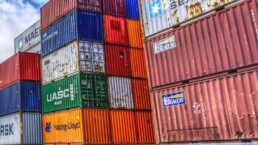

Calls for a secure port are louder than ever in Rotterdam. With the ‘secure data sharing’ programme, Portbase, together with the port community, is helping make the port of Rotterdam secure. It does so by establishing reliable information exchange between the various links in the container logistics chain
With its Port Community System (PCS), Portbase has been ensuring smooth handling in Dutch ports for almost 20 years, by allowing the core processes in the ports to rest on trusted and reliable basic infrastructure for storing, accessing and sharing data.
Special programme
Rising (cyber) crime means that security in the port of Rotterdam is high on everyone’s agenda. Of course, or perhaps especially, when it comes to sharing data. Calls for secure operations in the port, with reliable parties and data, prompted Portbase, together with the port community, to develop a special programme: ‘Secure data sharing’. Peter de Graaf, managing director of Portbase, explains: “This programme focuses on a chain-wide approach, with concrete solutions to make the information exchange between the different links in the container logistics chain more secure.”
Three basic principles
The ‘Secure data sharing’ programme has three basic principles: secure identities, secure processes and a secure platform. In short, it is about implementing multi-factor authentication (MFA) and working with authorisations. But it is also, for example, about more layered security for the PCS.
Cooperation
A current practical example shows what the ‘Secure data sharing’ programme can achieve. Until now, a container in the port of Rotterdam is released using a pin code, a ‘key’. By linking up with the ‘Secure data sharing’ programme, only authorised companies and their employees can carry out the necessary digital actions and obtain information within the Portbase services in relation to the container release process.
Portbase achieves this by developing applications for the port business community that can create closed chains. Only authorised parties will have access to the closed chain. An account and the right ‘key’ are therefore no longer sufficient, as an additional layer of security has been added with the application of authorisations.
Moreover, Portbase makes the PCS suitable for third-party solutions that add an extra layer of security. For example, shipping companies can choose to digitally encrypt PIN codes. Hapag Lloyd is the first major shipping company in the port of Rotterdam to use this extra guarantee via the Belgian tech company T-Mining, linked to the Portbase PCS. Both parties will start doing so this month.
Further roll out
The aim is to further roll out and optimise the concept of the additionally secured container release in the short term, in close consultation with the port community. De Graaf: “This will help create a secure port of Rotterdam, because the theft-sensitive PIN code will become irrelevant in the port logistics process.”



Related News.

Navigating the Multi-Orbit Era: In Conversation with Intellian’s Jon Harrison at SMM 2026
At SMM 2026 in Hamburg, the rapid evolution of maritime satellite communications took centre stage. Across the exhibition halls, discussions among…

Cyprus ports need joint energy and investment strategy, shipping agents chief says
Cyprus needs a coordinated strategy for shipping, energy and environmental protection to support port investment and modernisation, Cyprus shipping…

MASO Public Affairs introduces MASO Regulatory Intelligence
A new subscription service helping businesses understand what is changing and what it means for them MASO Public Affairs introduces MASO Regulatory…

Anglo-Eastern helps turn CMBTECH’s ammonia ambition into an operational reality
From early feasibility study and risk-based design to newbuilding supervision, crew readiness and technical management, Anglo-Eastern drew on its…

Escalation of attacks threatens to derail recovery in Middle East oil exports
World oil demand is forecast to fall by 2.5 mb/d y-o-y in 4Q26 and 2.6 mb/d on average in 2026. As the Iran war manifests itself through restricted…

New study finds shipping pays twice its share to EU ETS earmarked revenues should triple to help build market for sustainable fuels and technologies
Shipping is responsible for around 10% of EU ETS emissions but pays almost 20% of the ETS bill. Unlike other sectors, it has never received free…

MSARC strengthens maritime mass rescue readiness through training and national live exercise off Dakar, Senegal
Joint MSARC–FHAS programme combines three days of SAR training with a national multi-agency live exercise The Maritime Search and Rescue Council ,…

Sogese report deliveries are still being delayed as container freight rates fluctuate
FOR IMPORTERS Spot rates into the Mediterranean are back at January levels, Far East to Europe reliability sits at pandemic lows, and nearly…

Glencore begins trading on Australian Securities Exchange
Glencore has begun trading on the Australian Securities Exchange under the ASX code GLC. Gary Nagle, Glencore’s CEO, said it was an exciting day for…

BIMCO Shipping Number of the Week
Suez Canal container ship transits exceed 50% of pre-disruption levels "During the first two weeks of October, weekly container ship capacity…
Subscribe to our newsletter!
if you dont want to swim alone in the ocean of news, sign up for the newsletter, and you will receive daily all the important news of world shipping!
