CLIA Release 2021 environmental technologies and practices inventory and Oxford economics environmental

Cruise Lines International Association (CLIA), the leading voice of the global cruise industry, released today the CLIA Global Cruise Industry Environmental Technologies and Practices Inventory and associated Environmental Report produced by Oxford Economics (OE). The report, which demonstrates the industry’s commitment to responsible tourism practices and continued progress on the development and implementation of new environmental technologies, is published as CLIA ocean-going members commit to pursue net carbon neutral cruising by 2050.
“While cruise has been one of the sectors most acutely impacted by the global pandemic, cruise lines remain at the forefront of the challenge to develop new environmental technologies which benefit the entire shipping industry,” said Kelly Craighead, president and CEO of Cruise Lines International Association (CLIA). “Our industry is committed to pursuing net carbon neutral cruising by 2050, and CLIA and our ocean-going members are investing in new technologies and cleaner fuels now to realise this ambition.”
For the first time, the OE Environmental Report also addresses the challenge posed by the need for new, alternative fuels and the steps the industry is taking to support progress. Specifically, in addition to LNG, over three-quarters of the global cruise fleet by passenger capacity is now equipped to use alternative fuels.
Alternative fuel sources to heavy fuel oils being developed include biodiesel, methanol, ammonia, hydrogen, and electric batteries. The report notes that there remain engineering, supply, and regulatory hurdles before the large-scale adoption of such fuels can take place, but the cruise industry’s growing investment in new ships is facilitating the research and development of these fuels.
“This report shows that the cruise industry is resilient, innovative and focused on the future” said Pierfrancesco Vago, Chairman of CLIA Global. “We know that there is more to be done but the cruise industry has shown both its commitment and its capability to rise to the challenge. The cruise industry is an enabler of green maritime innovation, which will be the key to decarbonization of shipping. This is why CLIA has joined other maritime organisations to propose a $5 billion IMO research and development fund to accelerate the development of zero GHG fuels and propulsion technologies.”
The report notes that CLIA ocean-going cruise lines continue to make substantial progress across a range of areas:
- Shore-side Power Capability – cruise lines continue to make significant investments for cruise ships to connect to shoreside electricity, thus allowing engines to be switched off in port. While significant investment in portside infrastructure will be required, there are many collaborations between cruise lines, ports and local authorities to increase the availability.
- 82% of the new build capacity is either committed to be fitted with shore-side electricity capability or will be configured to add shore-side power in the future.
- 35% of global capacity (up 2.3 percentage point since 2020) are fitted to operate on shore-side electricity in the 14 ports worldwide where that capability is provided in at least one berth.
- LNG Fuel– The 2021 report found 52% of new build capacity will rely on LNG fuel for primary propulsion, a 3-percentage point increase in overall capacity compared to 2020.
- Exhaust Gas Cleaning Systems (EGCS)– More than 76% of global capacity utilizes EGCS to meet or exceed air emissions requirements, representing an increase in capacity of 7 percentage points compared to 2020. Additionally, 94% of non-LNG new builds will have EGCS installed, in line with already high historical level of investments.
- Advanced Wastewater Treatment Systems – 100% of new ships on order are specified to have advanced wastewater treatment systems and currently 74% of the CLIA oceangoing cruise line fleet capacity is served by advanced wastewater treatment systems (an increase of 4 percentage points over 2020). Notably, nearly 20% of fleet capacity is equipped with AWTS approved and capable of meeting the nitrogen and phosphorous discharge standards of the IMO MARPOL Annex IV Baltic Sea Special Area
CLIA member cruise lines have committed to a 40% reduction in the rate of carbon emissions across the global fleet by 2030, compared to 2008, consistent with the International Maritime Organization’s (IMO) carbon intensity reduction level of ambition.
For more information, please visit https://cruising.org/en/environmental-sustainability.



Related News.
Navigating the Multi-Orbit Era: In Conversation with Intellian’s Jon Harrison at SMM 2026
At SMM 2026 in Hamburg, the rapid evolution of maritime satellite communications took centre stage. Across the exhibition halls, discussions among…
Cyprus ports need joint energy and investment strategy, shipping agents chief says
Cyprus needs a coordinated strategy for shipping, energy and environmental protection to support port investment and modernisation, Cyprus shipping…

MASO Public Affairs introduces MASO Regulatory Intelligence
A new subscription service helping businesses understand what is changing and what it means for them MASO Public Affairs introduces MASO Regulatory…
Anglo-Eastern helps turn CMBTECH’s ammonia ambition into an operational reality
From early feasibility study and risk-based design to newbuilding supervision, crew readiness and technical management, Anglo-Eastern drew on its…

Escalation of attacks threatens to derail recovery in Middle East oil exports
World oil demand is forecast to fall by 2.5 mb/d y-o-y in 4Q26 and 2.6 mb/d on average in 2026. As the Iran war manifests itself through restricted…
New study finds shipping pays twice its share to EU ETS earmarked revenues should triple to help build market for sustainable fuels and technologies
Shipping is responsible for around 10% of EU ETS emissions but pays almost 20% of the ETS bill. Unlike other sectors, it has never received free…
MSARC strengthens maritime mass rescue readiness through training and national live exercise off Dakar, Senegal
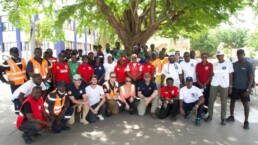
Joint MSARC–FHAS programme combines three days of SAR training with a national multi-agency live exercise The Maritime Search and Rescue Council ,…
Sogese report deliveries are still being delayed as container freight rates fluctuate
FOR IMPORTERS Spot rates into the Mediterranean are back at January levels, Far East to Europe reliability sits at pandemic lows, and nearly…
Glencore begins trading on Australian Securities Exchange
Glencore has begun trading on the Australian Securities Exchange under the ASX code GLC. Gary Nagle, Glencore’s CEO, said it was an exciting day for…
BIMCO Shipping Number of the Week
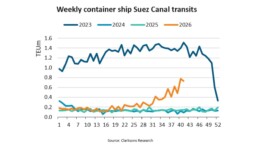
Suez Canal container ship transits exceed 50% of pre-disruption levels "During the first two weeks of October, weekly container ship capacity…
Subscribe to our newsletter!
if you dont want to swim alone in the ocean of news, sign up for the newsletter, and you will receive daily all the important news of world shipping!
