Electric car batteries pose huge fire risks to shipping crew
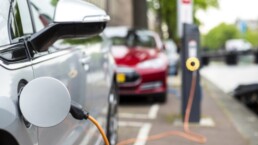

Vessel fires caused by lithium-ion batteries in electric cars are ferocious and extremely difficult to control – something that few shipping companies or their crew know about, according to a leading fuels expert.
Tony In’t Hout, Director at Stream Marine Training (SMT), believes crew members on container ships carrying electric cars face serious injury or worse unless they understand what causes the batteries to ignite and how to quell the flames.
“In the maritime sector, the issue of electric vehicle batteries being highly flammable when they overheat is often overlooked,” he said. “People don’t realise how dangerous lithium-ion batteries are, so the shipping sector needs courses on how to fight fires – especially as we’ve seen quite a few blazes on ships in recent years caused by vehicle batteries.”
This year, maritime training provider SMT is launching a two-day course, headed by Dutch national Mr In’t Hout, that explores the fire risks to ships carrying lithium-ion batteries. One common cause is the entire battery-package overheating (thermal runway).
On day one of the course, trainees will learn about electric vehicle batteries and other potentially flammable ship industry fuels such as ammonia, hydrogen and methanol. They will also study the carbon footprint of these energy sources. Day two sees the attendees doing practical firefighting sessions at SMT’s training facility in Glasgow, Scotland.
“An aluminium car battery holds eight times the power of a normal one, so it can fuel itself if it catches fire,” said Mr In’t Hout. “Anyone working on ships needs to understand how to deal with that type of situation, which we cover on day two of the course.
“Another example is if you have a ferry with a hydrogen truck, an aluminium-battery car and an LNG truck next to each other when a fire breaks out – what should the crew do in that scenario? Most seafarers won’t know because they haven’t had the relevant training.”
Fire outbreaks on vessels caused by electric vehicle batteries have become more commonplace. In May 2019, a fire broke out on the Grande Europa roro, some 25 miles from Palma de Mallorca in the Mediterranean. Just two months earlier, the Grande America roro sank in the Bay of Biscay after igniting. It’s believed that car batteries sparked the fires on both vessels, which were owned by Italian roro operator Grimaldi Group.
More recently, firefighters had to douse flames on Brim, a Norwegian passenger vessel, after its battery ignited on 12 March 2021.The cause was attributed to an overheated battery on the tour boat, which had taken children on an educational trip earlier that day. Fortunately, none of the crew still on the ship when it caught fire were injured.
“If you have a battery car that ignites, you can throw a blanket over it or, as we do in Holland, put it in an open-top container truck filled with water,” Mr In’t Hout said. “The chemical in the battery keeps fuelling itself, so you need water to cool it down. That’s one of the many things we teach on our course.”



Related News.

Navigating the Multi-Orbit Era: In Conversation with Intellian’s Jon Harrison at SMM 2026
At SMM 2026 in Hamburg, the rapid evolution of maritime satellite communications took centre stage. Across the exhibition halls, discussions among…
Cyprus ports need joint energy and investment strategy, shipping agents chief says
Cyprus needs a coordinated strategy for shipping, energy and environmental protection to support port investment and modernisation, Cyprus shipping…

MASO Public Affairs introduces MASO Regulatory Intelligence
A new subscription service helping businesses understand what is changing and what it means for them MASO Public Affairs introduces MASO Regulatory…
Anglo-Eastern helps turn CMBTECH’s ammonia ambition into an operational reality
From early feasibility study and risk-based design to newbuilding supervision, crew readiness and technical management, Anglo-Eastern drew on its…

Escalation of attacks threatens to derail recovery in Middle East oil exports
World oil demand is forecast to fall by 2.5 mb/d y-o-y in 4Q26 and 2.6 mb/d on average in 2026. As the Iran war manifests itself through restricted…
New study finds shipping pays twice its share to EU ETS earmarked revenues should triple to help build market for sustainable fuels and technologies
Shipping is responsible for around 10% of EU ETS emissions but pays almost 20% of the ETS bill. Unlike other sectors, it has never received free…

MSARC strengthens maritime mass rescue readiness through training and national live exercise off Dakar, Senegal
Joint MSARC–FHAS programme combines three days of SAR training with a national multi-agency live exercise The Maritime Search and Rescue Council ,…

Sogese report deliveries are still being delayed as container freight rates fluctuate
FOR IMPORTERS Spot rates into the Mediterranean are back at January levels, Far East to Europe reliability sits at pandemic lows, and nearly…

Glencore begins trading on Australian Securities Exchange
Glencore has begun trading on the Australian Securities Exchange under the ASX code GLC. Gary Nagle, Glencore’s CEO, said it was an exciting day for…
BIMCO Shipping Number of the Week
Suez Canal container ship transits exceed 50% of pre-disruption levels "During the first two weeks of October, weekly container ship capacity…
Subscribe to our newsletter!
if you dont want to swim alone in the ocean of news, sign up for the newsletter, and you will receive daily all the important news of world shipping!
