Incidental catch of vulnerable species in Mediterranean and Black Sea fisheries
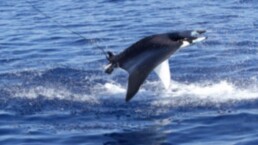

This publication offers an overview of historical and current trends in the bycatch of five important groups of vulnerable species in the Mediterranean and the Black Sea: seabirds, sea turtles, elasmobranchs, marine mammals and macrobenthic invertebrates. Interactions between these groups and fisheries are known to occur in the context of nearly all commonly used types of fishing gear and can result in injury or death to the animals. Each chapter in this review focuses on one of the five groups of vulnerable species, describing and presenting data from surveys and studies conducted over recent decades. The chapters are further subdivided according to fishing gear and GFCM subregion (western, central and eastern Mediterranean, the Adriatic Sea and the Black Sea).
The incidental catch records included in this review are derived from a variety of approaches. Surveys completed by onboard observers, while demanding more time and resources, represent the most comprehensive and accurate of these methods. Less reliable data come from non-systematic, opportunistic data collection, such as questionnaire surveys answered by fishers. Though many geographic areas and vessel groups remain underrepresented in the available data, coverage has generally increased in recent years and insight continues to emerge on the key dynamics governing the bycatch of vulnerable species in the Mediterranean and Black Sea.
Seabird bycatch has mainly been recorded from the western Mediterranean and in longline fisheries. Bottom trawlers, on the other hand, have the greatest impact on sea turtles, especially in the northern Adriatic Sea, Tunisia, Egypt and Turkey. The vessel groups most implicated in elasmobranch bycatch vary by subregion, with longliners accounting for nearly 80 percent of incidental captures in the central Mediterranean, for example, while pelagic trawlers are responsible for an even greater majority of incidental captures in the neighbouring Adriatic Sea. Historically, marine mammals were often caught in large-mesh driftnets, but the incidental capture of these species has declined since bans on driftnets were put in place in the late 1990s. Unsurprisingly, macrobenthic invertebrates, including soft and hard corals, sponges, echinoderms and molluscs, are most affected by bottom trawls, as they are dragged across the seafloor these species inhabit.
Vulnerable species are not the only ones to come out the worse for wear from their interactions with fishing activities. Fishers also risk economic losses resulting from damage done to their nets by entrapped individuals or from the depredatory behaviour of species that feed on bait meant to lure target species. Raising awareness amongst fishers and relevant stakeholders of the threats currently facing vulnerable populations across the Mediterranean and the Black Sea, as well as their importance to local ecosystems, will help to improve relations between fisheries and these species and to ease transitions toward safer practices. New technologies that can mitigate the bycatch of vulnerable species must continue to be tested and implemented in fisheries and standardized procedures for data collection should be established to better understand the many factors influencing bycatch in the region.



Related News.

Greece has the most to lose from delays in shipping’s green transition, new analysis finds
UCL and WWF Greece report finds the IMO Net-Zero Framework offers Greek ship owners the clarity they need, and the best protection against a…

Snow Land joins Cool Carriers as the world’s first reefer with a gate rudder, a new chapter for sustainable and efficient reefer shipping
Cool Carriers, the world’s largest operator of specialised reefer vessels, took delivery of Snow Land from Kitanihon Shipbuilding in Japan on 12…

IBIA launches Marine Energy Outlook Survey as Annual Convention in New York
IBIA - The International Bunker Industry Association officially launched its Marine Energy Outlook Survey during the IBIA Annual Convention in New…

Why did ITF staff vote to strike again?
Staff at the International Transport Workers’ Federation (ITF) headquarters in London have voted to give their union a strike mandate. According to…

Nearly half of maritime crew tickets booked a week ahead are cancelled
Two new C Teleport reports show when maritime and aircrew teams book crew flights, how often they cancel, and what late booking costs, with a…

Kpler completes $1.5bn+ Sixth Street investment and continues accelerating growth
Investment backs Kpler's bold ambition to shape the future of global trade intelligence. Kpler, a leading provider of global physical trade…

How SAL and DNV are strengthening heavy-lift shipping
From classification and newbuilding support to operational tools and advisory expertise, SAL and DNV have been collaborating for decades. The…

PSA Singapore breaks ground on Tuas Port Phase Two to strengthen Global Trade Connectivity
PSA Singapore marked the groundbreaking of Tuas Port Phase Two, a significant step in the development of the world’s largest fully automated…

 …

BIFA welcomes UK–EU trade progress and calls for clarity on implementation
The British International Freight Association (BIFA) has welcomed progress made at today's UK–EU Summit in Brussels, highlighting the potential…
Subscribe to our newsletter!
if you dont want to swim alone in the ocean of news, sign up for the newsletter, and you will receive daily all the important news of world shipping!
