First W-band transmission from space
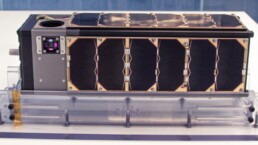

On 30 June 2021, the first-ever satellite with a W-band radio transmitter on board was launched. The objective of the mission, funded under the ARTES Advanced Technology programme, is to improve our understanding of the atmospheric effects in the propagation of radio signals at such a high frequency band. The mission’s success will help pave the way for future operational telecom services in W-band.
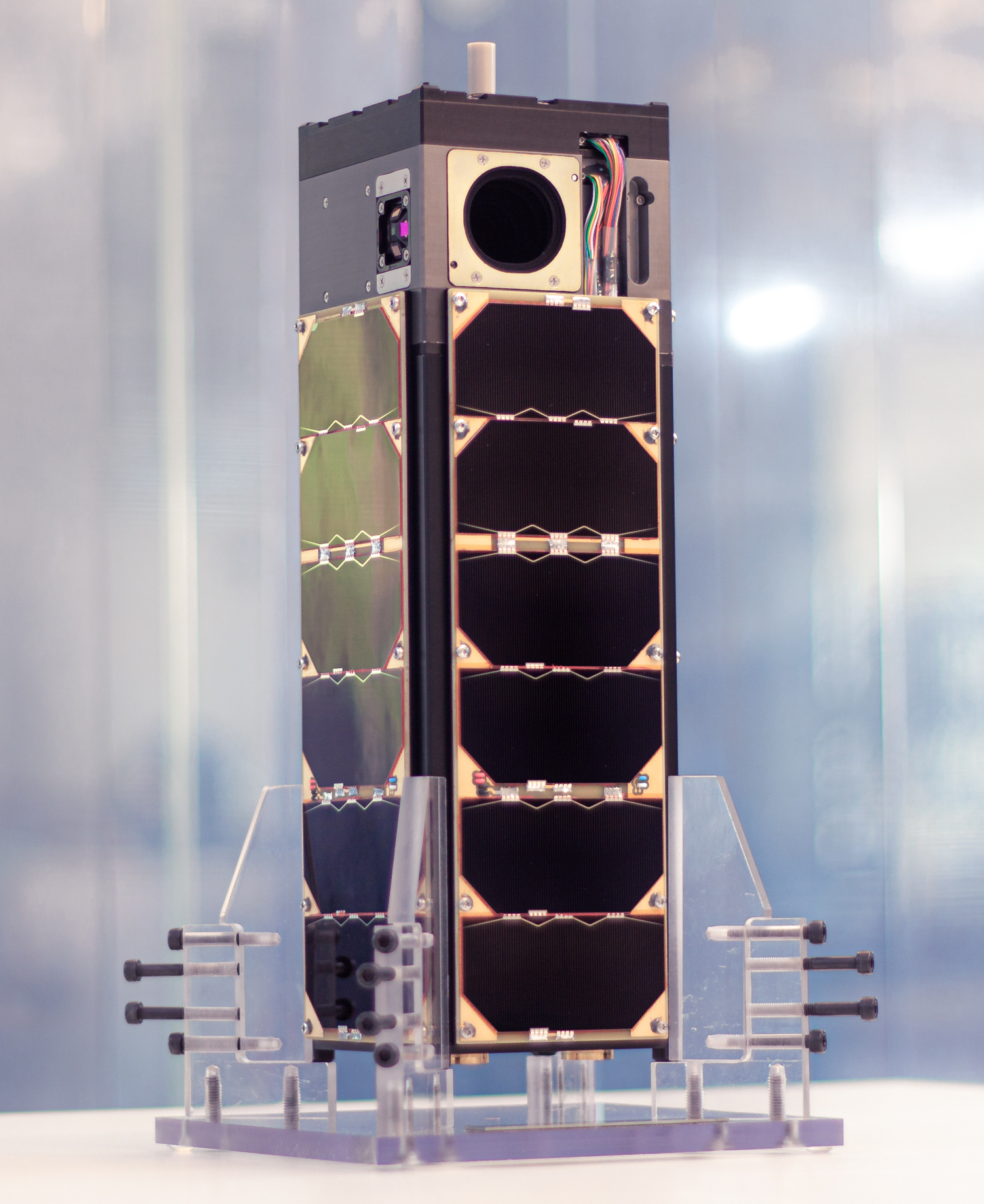
(Image credit: Reaktor Space Lab)
“Following the successful launch of the spacecraft from Cape Canaveral, Florida, USA, and deployment in a 550-Km-altitude sun-synchronous orbit, telemetry confirmed that the spacecraft is in good health and that its transmitting beacons are operating as expected,” says Arturo Martín Polegre, Technical Officer of the project at ESA.
The launch marks the beginning of a two-year campaign of measurement collection where continuous-wave radio signals will be routinely received and processed on the ground – in order to build a better picture of the atmospheric channel propagation statistics. This will be carried out at the Joanneum Research facilities, in Graz, Austria. The research group is leading the European consortium who designed, manufactured and built the spacecraft and associated ground segment for this mission. Joanneum Research already had valuable expertise in this field having been heavily involved in the Alphasat Q/V-band experiment (characterising atmospheric propagation in that frequency band).
“We are very happy to lead such a strong consortium of companies, which have made it possible to transmit a signal at 75GHz from a Low Earth Orbit Satellite for the first time,” says Michael Schmidt, Project Manager, W-Cube project, Joanneum Research
Consortium member Reaktor Space Lab designed, assembled and tested the spacecraft to make sure it could withstand the rigours of the launch and of the space environment. Reaktor Space Lab will now monitor the health of the spacecraft and run operations using the ground station they have set-up at their premises in Espoo, Finland.
The payload was developed by VTT, in Helsinki, Finland, and includes the frequency beacons that generate the signals transmitted to the ground station. The amplifiers and frequency converter came from the Fraunhofer Institute for Applied Solid State Physics, in Freiburg im Breisgau, Germany.
Portuguese Luis Cupido Technologies have developed the ground antenna, including the tracking system, and the University of Stuttgart, Germany, are also key players and will be at the peak of their involvement during the propagation campaign, using their expertise alongside Joanneum Research for the signal processing and extraction of the propagation channel characteristics.
“With this project, Europe keeps its leading position in the wave propagation field for satellite communication,” affirms Michael Schmidt, Joanneum Research.
Elodie Viau, ESA Director of Telecommunications and Integrated Applications, said “This is a great example of how ESA’s ARTES programme can make very significant contributions to next-generation satellite telecommunication services. Congratulations to the team who have paved the way for the first W-band transmission from space.”



Related News.

Navigating the Multi-Orbit Era: In Conversation with Intellian’s Jon Harrison at SMM 2026
At SMM 2026 in Hamburg, the rapid evolution of maritime satellite communications took centre stage. Across the exhibition halls, discussions among…
Cyprus ports need joint energy and investment strategy, shipping agents chief says
Cyprus needs a coordinated strategy for shipping, energy and environmental protection to support port investment and modernisation, Cyprus shipping…

MASO Public Affairs introduces MASO Regulatory Intelligence
A new subscription service helping businesses understand what is changing and what it means for them MASO Public Affairs introduces MASO Regulatory…

Anglo-Eastern helps turn CMBTECH’s ammonia ambition into an operational reality
From early feasibility study and risk-based design to newbuilding supervision, crew readiness and technical management, Anglo-Eastern drew on its…

Escalation of attacks threatens to derail recovery in Middle East oil exports
World oil demand is forecast to fall by 2.5 mb/d y-o-y in 4Q26 and 2.6 mb/d on average in 2026. As the Iran war manifests itself through restricted…
New study finds shipping pays twice its share to EU ETS earmarked revenues should triple to help build market for sustainable fuels and technologies
Shipping is responsible for around 10% of EU ETS emissions but pays almost 20% of the ETS bill. Unlike other sectors, it has never received free…
MSARC strengthens maritime mass rescue readiness through training and national live exercise off Dakar, Senegal
Joint MSARC–FHAS programme combines three days of SAR training with a national multi-agency live exercise The Maritime Search and Rescue Council ,…

Sogese report deliveries are still being delayed as container freight rates fluctuate
FOR IMPORTERS Spot rates into the Mediterranean are back at January levels, Far East to Europe reliability sits at pandemic lows, and nearly…

Glencore begins trading on Australian Securities Exchange
Glencore has begun trading on the Australian Securities Exchange under the ASX code GLC. Gary Nagle, Glencore’s CEO, said it was an exciting day for…
BIMCO Shipping Number of the Week
Suez Canal container ship transits exceed 50% of pre-disruption levels "During the first two weeks of October, weekly container ship capacity…
Subscribe to our newsletter!
if you dont want to swim alone in the ocean of news, sign up for the newsletter, and you will receive daily all the important news of world shipping!
