A legal look at LNG as a marine fuel
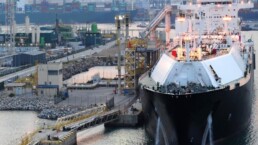

The number of LNG-fuelled vessels is expected to increase in the coming years. Marcus Dodds of Watson Farley & Williams tells us what he thinks an LNG future holds from a legal perspective.
Liquefied natural gas (LNG) as a marine fuel has already been adopted by a number of operators for its very low sulphur properties. But it’s also been identified by some as a viable interim solution to reducing greenhouse gas emissions, at least until future fuels are developed further.
The LNG marine fuel infrastructure remains nascent, and quantity or quality disputes or claims have not yet materialised. But this may change as popularity increases and perhaps less diligent suppliers enter the bunker market.
Q&A with Marcus Dodds of WFW
What sort of bunker quality disputes and issues do you expect to see for LNG fuelled vessels?
In terms of quality, I think that the most obvious issue will be sediment inclusion (by way of suspension) in the LNG transfer.
This could be an issue for either of the main types of dual fuel engines, perhaps more so the ME-GI type (Diesel cycle) engines as they inject the fuel mix at high pressure and the issue could manifest at the injectors. A practical means of combatting this can be the use of fine mesh strainers in the transfer pipework and good housekeeping in respect of the liquid phase pipes and fuel tanks on the LNG-fuelled vessel post-build and after maintenance.
The simple contractual means of addressing this (assuming equal bargaining power) would be for the owner to require the charterer to procure that the bunkering vessels use these strainers at time of transfer; which can be done by a broad requirement that the charterer shall deliver product that is free of particulate inclusion or a more specific requirement that it meets cleanliness standards required by the receiving vessel’s fuel gas systems. Although perhaps in time there will be a preference for an owner of a receiving vessel to equip the same with its own strainers, to ensure that their condition and mesh size suits their requirements.
Otherwise, with X-DF type (Otto cycle) engines, by design they protect themselves if issues develop in gas mode by increasing the quantity of pilot fuel injected or switching over to ‘fuel oil’ mode. So, issues may arise if there is an adverse fuel price differential between LNG and fuel oil, or where the charterer’s environmental compliance strategy or ambition is predicated on the use of LNG. It will probably only be in very rare circumstances that issues with inadequate Methane Number may arise.
Provisions should be considered that address the possibility of extended periods of idleness, as, depending on the LNG containment system, there will be a long-term effect on the quality of the LNG liquid as a consequence of boil-off.
What contractual disputes are you anticipating?
My own expectation, basis the contracts that I have worked on but where the ships have not been delivered yet, is that we might see some over-consumption claims when operating in LNG mode.
The main reason being that some owners have not sufficiently recognised the differing characteristics of LNG versus fuel oils. By failing to recognise that whereas the range of calorific values of fuel oils is now narrower than ever (as the sulphur content is so limited), that same range of values for LNG is by comparison quite broad. This situation can be exacerbated by accepting the typical shipyard approach of valuing the calorific benefit of LNG as if it is pure methane.
If entering a time-charter with performance warranties lifted straight from the ship-building contract, then negotiating a review period post-delivery would be a key consideration. Such a review could then permit some adjustment of the warranties to reflect the actual performance of the ship. Bear in mind that sea trials before delivery will most likely be in ‘fuel oil’ mode and in light condition.
I suspect that we will also see issues arise where the owner or master is concerned about the risk of ‘rollover’. This concern could arise (rightly or wrongly) when the quantity of remnant LNG in a fuel tank is too large and the density of the fresh stem is too heavy by comparison to permit its loading for fear of the risk of rollover.
The parameters of rollover are well understood in the context of shoreside tank storage, but less so on-board ships which means that the same are hard to define contractually. As such, for the purpose of a time charter, and the circumstances where the owner should be entitled to refuse a stem, rather unsatisfactory terms such as “reasonableness” are used.
In the context of a large container ship using a single membrane (or other atmospheric) type of LNG fuel tank, this could create quite an operational hurdle, assuming that the vessel has neither the equipment nor instrumentation to manage the rollover risk. Given the liner nature of the trade, the issue may be avoided by careful planning, but it could impact on the ability to re-deploy the ship on other lines.
Allocation of risk and responsibility for bunker transfer operations would be a concern, particularly if the charterer is negotiating a right for its and/or the bunker vessel’s personnel to have a right to supervise and/or intervene.
Arrangements for and after scheduled dockings (including allocation of time and costs in preparation) should also be considered, such as to ensure that (if required) all LNG onboard can be consumed or transferred ahead of arrival at the yard and, thereafter, addressing the gassing-up and cool-down time and costs.
In general, there is a need to resist attempts to borrow contractual performance methodologies from LNG carrier charters. As for the most part these are not reflective of the reality of LNG-fuelled vessel operations and to the extent that they are inappropriate this is usually detrimental to an owner.
How about bunker supply contracts?
The liability regimes under bunker contracts have tended to borrow from the LNG master sales and purchase agreement (MSPA) terms. This is because many suppliers source LNG under such terms and therefore look to keep back-to-back arrangements.
Typically, these contracts have exclusions for ‘consequential loss’ provisions that cover direct and indirect loss. However, the former is usually limited to types of loss that reflect earnings and profit, whereas in-chartering another bunker vessel might be better characterised, type wise, as a loss of use.
So, I expect that these sorts of incidents may throw-up some interesting issues, at least where fault-based liability regimes are concerned; noting that, typically, personnel are covered by knock-for-knock arrangements.
If you were ordering an LNG-fuelled vessel what should you look out for?
A basic point, but a holistic approach is needed when selecting the characteristics of the fuel tanks, engines, and fuel handling systems.
Ensure you have people with LNG experience providing oversight of the relevant aspects of the design and construction. This includes not just the LNG fuel tanks, engines, fuel transfer and fuel handling systems, but also all the aspects that feed into compatibility with LNG bunker vessels and the safety and practicality of the design and location of the LNG bunker transfer stations. Consider casualty management beyond the ambit of acceptable design risk assessment, such as the ability to transfer LNG from the fuel tanks to receiving facilities or between fuel tanks.
If the yard does not have a significant track record of LNG specific newbuildings, then additional caution and level of oversight would be applied. In my experience it’s all too easy for, say, non-cryogenic materials to slip through. Choosing a classification society with the LNG relevant experience at both office and site attendance levels is also a priority.
Think about future-proofing the vessel, such as in terms of readiness for the use of other fuels and ensuring flexibility to deploy on different liner trades, such as fuel tank capacities for LNG and conventional fuels.
To the extent that a charterer may have rights to modify the design during construction, ensure that it is not merely the knock-on CAPEX impact that is addressed in the associated charter, but also the OPEX impact and any technology related risks to the reliability of the ship in service.
Looking ahead to delivery, then I would add the need to secure the availability and retention of engineers and superintendents with relevant LNG experience (rather than merely training). Their experience will be critical until it is grown organically.
Source: North P&I
Related News.
November 24, 2026
Greece has the most to lose from delays in shipping’s green transition, new analysis finds
UCL and WWF Greece report finds the IMO Net-Zero Framework offers Greek ship owners the clarity they need, and the best protection against a…

November 24, 2026
Snow Land joins Cool Carriers as the world’s first reefer with a gate rudder, a new chapter for sustainable and efficient reefer shipping
Cool Carriers, the world’s largest operator of specialised reefer vessels, took delivery of Snow Land from Kitanihon Shipbuilding in Japan on 12…

November 24, 2026
IBIA launches Marine Energy Outlook Survey as Annual Convention in New York
IBIA - The International Bunker Industry Association officially launched its Marine Energy Outlook Survey during the IBIA Annual Convention in New…

November 24, 2026
Why did ITF staff vote to strike again?
Staff at the International Transport Workers’ Federation (ITF) headquarters in London have voted to give their union a strike mandate. According to…

November 24, 2026
Nearly half of maritime crew tickets booked a week ahead are cancelled
Two new C Teleport reports show when maritime and aircrew teams book crew flights, how often they cancel, and what late booking costs, with a…

November 24, 2026
Kpler completes $1.5bn+ Sixth Street investment and continues accelerating growth
Investment backs Kpler's bold ambition to shape the future of global trade intelligence. Kpler, a leading provider of global physical trade…

November 24, 2026
How SAL and DNV are strengthening heavy-lift shipping
From classification and newbuilding support to operational tools and advisory expertise, SAL and DNV have been collaborating for decades. The…

November 24, 2026
PSA Singapore breaks ground on Tuas Port Phase Two to strengthen Global Trade Connectivity
PSA Singapore marked the groundbreaking of Tuas Port Phase Two, a significant step in the development of the world’s largest fully automated…

November 24, 2026
BIFA welcomes UK–EU trade progress and calls for clarity on implementation
The British International Freight Association (BIFA) has welcomed progress made at today's UK–EU Summit in Brussels, highlighting the potential…
Subscribe to our newsletter!
if you dont want to swim alone in the ocean of news, sign up for the newsletter, and you will receive daily all the important news of world shipping!
Design & Development by P.KAN.DESIGNER
© 2026 Cyprus Shipping News. All rights reserved
Design & Development by P.KAN.DESIGNER
© 2026 Cyprus Shipping News. All rights reserved


…



