Wärtsilä launches major test programme towards carbon-free solutions with hydrogen and ammonia

The technology group Wärtsilä continues to lead the ongoing transformation of the energy and marine sectors towards carbon-free solutions through its future fuel development work. The company is pioneering the adoption of hydrogen and ammonia as viable engine fuels through advanced testing in Wärtsilä’s fuel-flexible combustion engines.
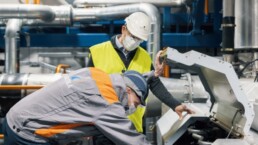
Hydrogen and ammonia contain no carbon, meaning the combustion releases no CO2 emissions.Full-scale engine tests have been recently carried out in Wärtsilä’s engine laboratory in Vaasa, Finland, to assess the optimum engine parameters for running on these fuels. The test results are very encouraging, with one test engine performing very well when running on a fuel with 70% ammonia content at a typical marine load range.Tests were also completed successfully on another engine in pure hydrogen operation.
Testing will continue throughout the coming years with the aim of defining the most feasible internal combustion engine-based solutions for power plant and marine applications, thereby enabling the transition to a decarbonised future with green fuels.
For the energy market, Wärtsilä expects to have an engine and plant concept for pure hydrogen operation ready by 2025. For the marine market, the company expects to have an engine running on an ammonia blend already this year. Wärtsilä anticipates having an engine concept with pure ammonia fuel in 2023. In the energy sector, it is anticipated that green hydrogen will deliver 7 percent of the global energy demand by 2050.
Håkan Agnevall, CEO of Wärtsilä said: “These are milestone moments in Wärtsilä’s transition to future fuels. Society will have to invest significant amounts into the infrastructure needed to develop green hydrogen, but those investments require market-ready engines that can run on the fuel once it is readily available. The energy and marine industries are on a decarbonisation journey, and the fuel flexibility of the engines powering these sectors is key to enable the transformation.”
Wärtsilä is also developing ammonia storage and supply systems as part of the EU’s ShipFC project. The company has already gained significant experience with ammonia from designing cargo handling systems for liquid petroleum gas carrier vessels, many of which are used to transport ammonia. In addition, Wärtsilä will begin testing ammonia in a marine four-stroke combustion engine together with customers Knutsen OAS, Repsol Norway and Equinor at the Sustainable Energy Catapult Centre in Stord, Norway, as part of the Demo2000 project.
Wärtsilä’s fuel agnostic approach enables the company to support the energy and marine sectors on how to shape sustainable, and efficient, future fuel strategies in several cost-optimal steps. For example, hydrogen can be used as a fuel in its existing state or as a raw material for producing a wide range of future fuels, including ammonia and synthetic methane, each of which has different benefits for industrial and mobility applications. Wärtsilä’s gas engines are highly flexible and are capable of rapidly ramping up or down in power. When wind and solar power vary with weather conditions, Wärtsilä engines can support the power system by ramping up power to meet the required load, reaching full capacity in under two minutes
The company’s engines can currently run on natural gas, biogas, synthetic methane or hydrogen blends of up to 25% hydrogen. Another important part of the way forward is that Wärtsilä engines will be capable of transitioning to future fuels, including pure hydrogen and ammonia, future-proofing customer assets.
“For electricity generation, the amount of renewables globally is growing rapidly, which is vital for being able to comply with the Paris Agreement. To achieve the transition to 100% renewable energy by the middle of the century, a significant amount of flexible balancing power is needed as a complement to ensure stable energy supply, when the sun is not shining or the wind is not blowing. There will be different balancing power technologies, but combustion engines and battery storage will be part of the core solutions. By developing engines that can run on green hydrogen, we are enabling that grid balancing can be done via a 100% renewable process, thereby enabling the energy systems of tomorrow,” added Håkan Agnevall.
“Wärtsilä is united in its aim of limiting climate change to below 2 degrees, and the development of engines capable of running on future fuels is crucial to that. The International Maritime Organization (IMO) has set a target to reduce total greenhouse gas emissions from shipping by 50 percent by 2050, compared to 2008 levels. In addition, a target has been set to reduce the carbon intensity of shipping by 40 percent by 2030, thus emphasising the need for the rapid introduction of existing and new smart technologies. Our successful engine testing will help us to consider a variety of future fuels and determine the optimum use case for each sustainable fuel,” commented Mikael Wideskog, Director of Sustainable Fuels and Decarbonisation at Wärtsilä Marine Power.



Related News.

Navigating the Multi-Orbit Era: In Conversation with Intellian’s Jon Harrison at SMM 2026
At SMM 2026 in Hamburg, the rapid evolution of maritime satellite communications took centre stage. Across the exhibition halls, discussions among…

Cyprus ports need joint energy and investment strategy, shipping agents chief says
Cyprus needs a coordinated strategy for shipping, energy and environmental protection to support port investment and modernisation, Cyprus shipping…

MASO Public Affairs introduces MASO Regulatory Intelligence
A new subscription service helping businesses understand what is changing and what it means for them MASO Public Affairs introduces MASO Regulatory…

Anglo-Eastern helps turn CMBTECH’s ammonia ambition into an operational reality
From early feasibility study and risk-based design to newbuilding supervision, crew readiness and technical management, Anglo-Eastern drew on its…

Escalation of attacks threatens to derail recovery in Middle East oil exports
World oil demand is forecast to fall by 2.5 mb/d y-o-y in 4Q26 and 2.6 mb/d on average in 2026. As the Iran war manifests itself through restricted…

New study finds shipping pays twice its share to EU ETS earmarked revenues should triple to help build market for sustainable fuels and technologies
Shipping is responsible for around 10% of EU ETS emissions but pays almost 20% of the ETS bill. Unlike other sectors, it has never received free…

MSARC strengthens maritime mass rescue readiness through training and national live exercise off Dakar, Senegal
Joint MSARC–FHAS programme combines three days of SAR training with a national multi-agency live exercise The Maritime Search and Rescue Council ,…

Sogese report deliveries are still being delayed as container freight rates fluctuate
FOR IMPORTERS Spot rates into the Mediterranean are back at January levels, Far East to Europe reliability sits at pandemic lows, and nearly…

Glencore begins trading on Australian Securities Exchange
Glencore has begun trading on the Australian Securities Exchange under the ASX code GLC. Gary Nagle, Glencore’s CEO, said it was an exciting day for…

BIMCO Shipping Number of the Week
Suez Canal container ship transits exceed 50% of pre-disruption levels "During the first two weeks of October, weekly container ship capacity…
Subscribe to our newsletter!
if you dont want to swim alone in the ocean of news, sign up for the newsletter, and you will receive daily all the important news of world shipping!
