Port of Tallinn requests from all ships in the port to switch to environmentally friendly energy sources
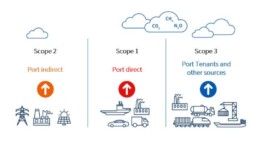

In order to reduce emissions, all ships in the port must switch to environmentally friendly energy sources (Port of Tallinn CO2 calculations)
The Port of Tallinn’s goal is to achieve climate neutrality in all its port activities by 2050 at the latest. In the case of the port, the action with the most significant positive impact for the environment is to supply the energy needs of moored ships with green electricity, instead of diesel engines, or to switch ships to alternative, more environmentally friendly fuels, which would reduce emissions by up to half.
In cooperation with the Estonian Maritime Academy of Tallinn University of Technology, the Port of Tallinn has calculated the total amount of greenhouse gases based on data from 2019. The total was 27,069 tons of CO2 equivalent for the Port of Tallinn Group companies (Port of Tallinn, TS Laevad, TS Shipping). The Port of Tallinn parent company together with terminal operators and other traffic through them corresponded to 97,426 tonnes of CO2 equivalent.
According to Valdo Kalm, Chairman of the Management Board of the Port of Tallinn, slowing down the acceleration of climate change in the coming decades will depend on every company’s current activities. “As an important transport and logistics hub in Estonia and by the Baltic Sea, we have a clear responsibility to ensure that the air is cleaner in the future and that we use resources as efficiently as possible. Our goal is also to contribute to the sustainable development of the entire Baltic Sea,” said Kalm.
He added that the assessment of greenhouse gas emissions will help the Port of Tallinn to implement solutions that have the greatest impact first. According to data from 2019, the largest share of greenhouse gas emissions from port activities (incl. terminal operators and tenants) in the area of the Port of Tallinn was accounted for by shipping (53%), followed by electricity consumption (23%), emissions from mobile vehicles (11), heat consumption (10%) and stationary equipment (3%).
“Considering that emissions from moored passenger and cargo ships and tankers make up the majority of our environmental footprint, we are already implementing solutions to reduce emissions. Last year, we installed shore-side electrical equipment on five quays in the Old City Harbour , with which ships at berth in the port can use shore-side electricity to reduce emissions, noise pollution and fuel consumption from ship engines,” explained Kalm.
If, in addition to the Old City Harbour , shore-side electricity produced from green energy is also offered in all other ports, emissions from shipping would be reduced by 47,646 tonnes of CO2 equivalent.
Last year, TS Laevad, a subsidiary of the Port of Tallinn, took an important step towards giving up fossil fuels and reaching zero emissions, when the ferry Tõll, which was converted into Estonia’s first hybrid passenger ship, started serving passengers on the Virtsu-Kuivastu route. The Port of Tallinn will continue to transfer its fleet to alternative fuels and will not exclude hydrogen, for example, in the future. This would reduce emissions by 20,563 tonnes of CO2 equivalent. “We are already thinking with a longer perspective so that we can move more vigorously towards meeting our goal of climate neutrality,” said Kalm.
In order to reduce the ecological footprint of electricity consumption, the Port of Tallinn entered into an agreement with Eesti Energia this year to purchase renewable energy and now consumes only green electricity produced in Estonia. This will reduce a total of almost 7,000 tonnes of CO2 emissions per year.
In order to assess the GHG emissions of the Port of Tallinn, the existing data on direct and indirect sources of pollution were compiled, a survey was conducted among Port of Tallinn operators and tenants, a request was made to the Transport Administration for data on mobile vehicles, information on train traffic was collected and data from various international maritime databases were used to identify emission of ships in the port water area.
The Port of Tallinn has linked its strategy to the UN Sustainable Development Goals. In addition to climate neutrality, the aim is to achieve zero emissions for ships at berth and divert 70% of ship-generated waste to the circular economy, thus sustaining a cleaner Baltic Sea.



Related News.
Intelligent Skies, Secure Seas: Navigating Connectivity, Cyber Resilience, and AI Liability at the 5th CSN Greece ICT Conference
The 5th CSN Greece ICT Conference, held on 19th November 2026 at the Ploes Floating Venue in Paleo Faliro, Athens, successfully convened maritime…

EU moves to ban tankers insured in Russia, repair services at Russian refineries
EU targets Russian-insured tankers, refineries Von der Leyen announces 22nd sanctions package All 27 member states must approve new…
IMO tackling fraudulent registries together
Strong national systems and international information sharing are crucial to tackling fraudulent registries and fraudulent ship registration…
Open letter on freedom of navigation and the protection of seafarers
Dear High Representative Kallas, Dear Foreign Affairs Ministers, European Shipowners | ECSA, BIMCO, the Cruise Lines International Association…

Davies Turner warns of Rising Asia-UK Container Disruption and European Port Congestion
Davies Turner, one of the UK’s largest independent freight forwarding and logistics companies, says that disruption to container shipments from Asia…
Disruptions still dominate tanker market outlook
"This year, tanker markets have been affected by disruption to transits through the Strait of Hormuz, the Houthi blockade of Saudi Arabian Red Sea…
Panama’s President called on to match COP31 Heroism with action at shipping climate talks
As a series of crucial meetings tasked with cutting greenhouse gas emissions from global shipping takes place this week and next, environmental NGOs…

Trafigura appoints Helio Cumbi as Executive Director, Mozambique
Trafigura has appointed Helio Cumbi as Executive Director, Mozambique, and Business Development Lead for East and Southern Africa Oil. Helio is a…

“K” LINE holds FY2026 Global Dry Bulk Meeting
Kawasaki Kisen Kaisha, announces that it held a global meeting for its dry bulk business at the company’s head office on November 9 and 10. The…
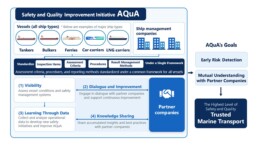
MOL launches ‘AQuA’ safety and quality improvement initiative
Standardizing Group-wide Safety and Quality Assessment Criteria to Enhance Vessel Safety and Quality Mitsui O.S.K. Lines, announced the launch of…
Subscribe to our newsletter!
if you dont want to swim alone in the ocean of news, sign up for the newsletter, and you will receive daily all the important news of world shipping!
