Global ferry digitalisation report confirms huge transformation opportunities for operators
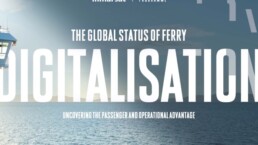

New report finds cost saving and revenue imperatives coincide with safety, security and sustainability pressures, crystallising distinct drivers for more robust ferry connectivity
Inmarsat, the world leader in global, mobile satellite communications, has published a new report on attitudes to digitalisation in the ferry market drawing on interviews with ten leading ferry owners by consultancy JG Maritime Solutions. This essential insight comes at a moment when the sector faces a major change in expectations on connectivity from passengers, crew and vessel operators.
The new Global Status of Ferry Digitalisation Report – Uncovering the Passenger and Operational advantage, authored by Ogilvy also includes passenger ship findings from Digitalisation Uncovered – the Inmarsat-sponsored research project into digitalisation in global shipping that was launched in December 2020.
The new report’s findings provide unique insights into the distinct pressures driving ferry digitalisation and an assessment of why and how higher-capacity satellite services can help control costs, create revenue, improve the passenger experience and help restore confidence in a sector severely affected by Covid-19.
“Previously, bandwidth limitations meant that the full potential of satellite technology had not been realised in the ferry sector,” says Les Shortall, Director of Market Development – Yachting and Passenger, Inmarsat. “This report demonstrates there are good reasons for owners to evaluate the flexible and affordable broadband services already serving tens of thousands of vessels worldwide and providing operational and safety benefits such as real-time situational awareness. Continuous connectivity and unlimited data are the keys to unlocking further cost reduction, enhancing the passenger experience and boosting revenues.”
Digitalisation Uncovered found that one in four passenger ship owners said new revenues were a top 3 reason for digital investment, against a lower one in six for all ship owners. Similarly, 18% of passenger ship owners see creating new value for customers as a number 1 reason for digitalisation, versus only 13% of all owners. Furthermore, whilst 30% of all ship owners value digitalisation as a means of supporting compliance with regulations and certification, the figure for passenger ship owners is much higher at 43%.
Four out of 10 of the owner/operator interviewees in the report mentioned revenue generation as a primary investment driver. In North Europe, point of sale payment for duty free goods offers a promising revenue stream post-Brexit, for example, best enabled by continuous connectivity.
Ferry owners have been early adopters of the ‘smart’ technologies behind always-on emissions monitoring, voyage planning, predictive maintenance and situational awareness to enhance sustainability, efficiency, reliability and safety. Decarbonisation goals are accelerating the adoption of electric-hybrid propulsion technology that works especially cost effectively when combined with IoT-based decision-making via satellite connectivity.
Interest is also high in how broadband capacity can be used to enable situational awareness to transform ferry safety and move from simple reactive distress reporting to real-time proactive safety services. The in-depth interviews also highlight networked cyber security as a priority and welcome the introduction of IMO 2021 Cyber Security regulations. Meanwhile, interviewees recognised drivers to utilise digital solutions in implementing new Covid-19 protocols and inspire confidence with ’biosafe’ contactless transactions. In addition, customers returning to sea post pandemic now have very different connectivity expectations.
“Staying connected is not a nice-to-have, but a must-have,” the report says, with poor or patchy connectivity now having the potential to damage a ferry operator’s brand. Today, “passengers will likely expect ferry operators to match the onboard experience they receive in the air or by rail or bus”. If digital solutions enhance operational efficiencies, meanwhile, “these same solutions can help grow much-needed revenue via heightened passenger loyalty and boosting ancillary revenues”, the report adds, going on to explore whether and how owners should monetise connectivity itself both from a passenger and operational perspective.
“Inmarsat knows from its aviation experience that some passengers prioritise Wi-Fi access over inflight meals or entertainment when choosing airlines,” Shortall continued. “Digitalisation can create new revenues but also expedite customer loyalty to help ensure ferries remain a preferred transport option. Robust new satellite technology and the advent of digital platforms can enable ferry operators to become leaner, increase their agility to deliver a safe travel experience and secure the opportunities offered by ancillary revenues.”



Related News.

Navigating the Multi-Orbit Era: In Conversation with Intellian’s Jon Harrison at SMM 2026
At SMM 2026 in Hamburg, the rapid evolution of maritime satellite communications took centre stage. Across the exhibition halls, discussions among…

Cyprus ports need joint energy and investment strategy, shipping agents chief says
Cyprus needs a coordinated strategy for shipping, energy and environmental protection to support port investment and modernisation, Cyprus shipping…

MASO Public Affairs introduces MASO Regulatory Intelligence
A new subscription service helping businesses understand what is changing and what it means for them MASO Public Affairs introduces MASO Regulatory…

Anglo-Eastern helps turn CMBTECH’s ammonia ambition into an operational reality
From early feasibility study and risk-based design to newbuilding supervision, crew readiness and technical management, Anglo-Eastern drew on its…

Escalation of attacks threatens to derail recovery in Middle East oil exports
World oil demand is forecast to fall by 2.5 mb/d y-o-y in 4Q26 and 2.6 mb/d on average in 2026. As the Iran war manifests itself through restricted…

New study finds shipping pays twice its share to EU ETS earmarked revenues should triple to help build market for sustainable fuels and technologies
Shipping is responsible for around 10% of EU ETS emissions but pays almost 20% of the ETS bill. Unlike other sectors, it has never received free…

MSARC strengthens maritime mass rescue readiness through training and national live exercise off Dakar, Senegal
Joint MSARC–FHAS programme combines three days of SAR training with a national multi-agency live exercise The Maritime Search and Rescue Council ,…

Sogese report deliveries are still being delayed as container freight rates fluctuate
FOR IMPORTERS Spot rates into the Mediterranean are back at January levels, Far East to Europe reliability sits at pandemic lows, and nearly…

Glencore begins trading on Australian Securities Exchange
Glencore has begun trading on the Australian Securities Exchange under the ASX code GLC. Gary Nagle, Glencore’s CEO, said it was an exciting day for…

BIMCO Shipping Number of the Week
Suez Canal container ship transits exceed 50% of pre-disruption levels "During the first two weeks of October, weekly container ship capacity…
Subscribe to our newsletter!
if you dont want to swim alone in the ocean of news, sign up for the newsletter, and you will receive daily all the important news of world shipping!
