Informal discussions focus on lifecycle GHG/carbon intensity of cleaner fuels for shipping
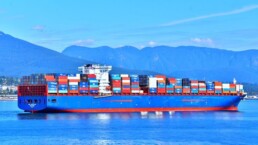

IMO has facilitated virtual informal discussion sessions (14-15 April) on lifecycle GHG/carbon intensity for potential future fuels for shipping.
Shipping will need new fuels to achieve the levels of ambition of the IMO’s Initial GHG Strategy. This includes a reduction in the carbon intensity of international shipping by at least 40% by 2030 and a significant further reduction in carbon intensity to achieve the 2050 level of ambition – cutting GHG emissions by 50%, in line with IMO’s vision to ultimately phase out GHG emissions as soon as possible in this century.
Carbon intensity refers to CO2 emissions per transport work, and therefore links carbon emissions to the amount of cargo transported and the distance sailed for a specific ship.
The sessions provided a platform for all IMO Member States and organizations in consultative status with IMO to exchange views and share updated information on how to assess and potentially regulate the lifecycle of carbon emissions. The webinar-like discussion sessions, attended by more than 280 participants, contributed to increasing the understanding of the carbon lifecycle of various fuel options and how these might be considered in future.
A candidate measure in the IMO Initial GHG Strategy refers to developing “robust lifecycle GHG/carbon intensity guidelines for all types of fuels, in order to prepare for an implementation programme for effective uptake of alternative low-carbon and zero-carbon fuels”.
The lifecycle refers to the assessment of greenhouse gas emissions from the fuel production to the ship (Well-to-Wake); from primary production to carriage of the fuel in a ship’s tank (Well-to-Tank, also known as upstream emissions) and from the ship’s fuel tank to the exhaust (Tank-to-Propeller or Tank-to-Wake, also known as downstream emissions).
Candidate future low-carbon and zero-carbon fuels for shipping have diverse production pathways (for example, different generations of biofuels, hydrogen-based fuels, etc.) entailing significant differences in their overall environmental footprint.
IMO’s Marine Environment Protection Committee (MEPC 76), to meet remotely from 10-17 June is expected to consider the way forward for discussions on this matter.
The MEPC is also expected to adopt the important short-term measure to cut the carbon intensity of all ships, as approved at the last session.
The recent Low and Zero-carbon Alternative Fuel Symposium identified lifecycle assessments as a priority issue for the Organization to work on to further facilitate the development and uptake of alternative marine fuels.



Related News.

Navigating the Multi-Orbit Era: In Conversation with Intellian’s Jon Harrison at SMM 2026
At SMM 2026 in Hamburg, the rapid evolution of maritime satellite communications took centre stage. Across the exhibition halls, discussions among…

Cyprus ports need joint energy and investment strategy, shipping agents chief says
Cyprus needs a coordinated strategy for shipping, energy and environmental protection to support port investment and modernisation, Cyprus shipping…

MASO Public Affairs introduces MASO Regulatory Intelligence
A new subscription service helping businesses understand what is changing and what it means for them MASO Public Affairs introduces MASO Regulatory…

Anglo-Eastern helps turn CMBTECH’s ammonia ambition into an operational reality
From early feasibility study and risk-based design to newbuilding supervision, crew readiness and technical management, Anglo-Eastern drew on its…

Escalation of attacks threatens to derail recovery in Middle East oil exports
World oil demand is forecast to fall by 2.5 mb/d y-o-y in 4Q26 and 2.6 mb/d on average in 2026. As the Iran war manifests itself through restricted…

New study finds shipping pays twice its share to EU ETS earmarked revenues should triple to help build market for sustainable fuels and technologies
Shipping is responsible for around 10% of EU ETS emissions but pays almost 20% of the ETS bill. Unlike other sectors, it has never received free…

MSARC strengthens maritime mass rescue readiness through training and national live exercise off Dakar, Senegal
Joint MSARC–FHAS programme combines three days of SAR training with a national multi-agency live exercise The Maritime Search and Rescue Council ,…

Sogese report deliveries are still being delayed as container freight rates fluctuate
FOR IMPORTERS Spot rates into the Mediterranean are back at January levels, Far East to Europe reliability sits at pandemic lows, and nearly…

Glencore begins trading on Australian Securities Exchange
Glencore has begun trading on the Australian Securities Exchange under the ASX code GLC. Gary Nagle, Glencore’s CEO, said it was an exciting day for…

BIMCO Shipping Number of the Week
Suez Canal container ship transits exceed 50% of pre-disruption levels "During the first two weeks of October, weekly container ship capacity…
Subscribe to our newsletter!
if you dont want to swim alone in the ocean of news, sign up for the newsletter, and you will receive daily all the important news of world shipping!
