Independent study confirms LNG reduces shipping GHG emissions by up to23%
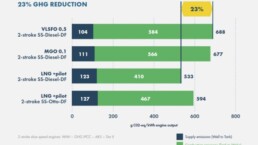

Peer-reviewed well-to-wake study updates definitive figures for GHG emissions from LNG as a marine fuel
An independent study has reconfirmed that greenhouse gas (GHG) reductions of up to 23% are achievable now from using LNG as a marine fuel, depending on the marine technology employed. This is compared with the emissions of current oil-based marine fuels measured from Well-to-Wake (WtW)[1]. The 2nd Lifecycle GHG Emission Study on the use of LNG as a Marine Fuel from Sphera(formerly thinkstep) revisits its 2018/2019 research, using the latest available engine and supply chain data to bring the study fully up to date.
The study, commissioned by industry coalitions SEA-LNG and SGMF, was conducted according to ISO standards. It was also reviewed again by a panel of leading independent academic experts from key institutions in France, Germany, Japan and the USA. The analysis concluded that, in addition to the considerable air quality benefits it delivers, LNG can “beyond question” contribute significantly to the International Maritime Organisation’s (IMO) GHG reduction targets.
Commenting on the research, SEA-LNG Chairman Peter Keller said: “The updated Sphera study ensures that the industry has access to comprehensive research that is fully up to date. It is clear that LNG plays an important role in decarbonisation today with benefits available now. As we look ahead, it is essential that detailed emissions analysis from Well to Wake such as those performed for LNG are available for all alternative fuels contemplated, enabling shipowners to make the right decisions for their fleet.”
This comprehensive report uses the latest primary data to assess all major types of marine engines and global sources of supply with quality data provided by original equipment manufacturers including Caterpillar MaK, Caterpillar Solar Turbines, GE, MAN Energy Solutions, Rolls Royce (MTU), Wärtsilä, and Winterthur Gas & Diesel, as well as from ExxonMobil, Shell, and Total on the supply side. Methane emissions from the supply chains as well as methane released during the onboard combustion process (methane slip) have been included in the analysis.
Keller added: “Often based on outdated data, methane slip has become an overused argument for those wishing to justify inaction. The Sphera study underlines the advances being made to counteract this concern. Its analysis provides independent confirmation that, by 2030, methane slip will have been virtually eliminated as technological improvements continue. The facts consistently confirm that there is no deep-sea alternative fuel in the short to medium term other than LNG. LNG remains the clear starting point for a carbon-neutral future for shipping, especially as the pathway forward includes bio and synthetic products. Waiting is not an option. The industry must act now to capture the benefits that are clearly there for the taking by using LNG.”
Importantly, the study also reaffirms that the use of LNG as a marine fuel has significant air quality benefits, with local emissions, such as sulphur oxides (SOx), nitrogen oxides (NOx) and particulate matter (PM), all close to zero.
Samir Bailouni, chairman, Society for Gas as a Marine Fuel (SGMF), added: “It is important the industry has the best information to make often complex choices between fuels. This study provides authoritative, high-quality data on Well-to-Wake emissions for LNG.
“We are confident this work will provide IMO with solid information contributing to its regulatory decisions. SGMF will continue to provide up-to-date data not only for LNG but for all candidate gaseous fuels under its remit, including ammonia and hydrogen.
“Today, the clear choice for an immediate and significant reduction in emissions is LNG, which is widely available and fully compliant with existing regulations. This is reflected in the rapidly increasing adoption of LNG in the deep-sea container, bulk and tanker sectors, a trend we expect to accelerate even as the more challenging horizon fuels are brought safely and sustainably into the mix.”
Recognition for LNG and its pathway to a decarbonised future for shipping is accelerating. The transition to bio and eventually synthetic LNG is straightforward, as the existing infrastructure and engine technology remain the same. The standards, guidelines and operational protocols are already in place. It also provides an asset base that can be used by other alternative fuels, when and if they become commercially viable.
Dr Oliver Schuller, Director Sustainability Consulting, Sphera stated: “The aim of the study was to provide an update to the research conducted in 2018 / 2019. Using the latest available engine and supply chain data, including planned developments for the reduction of methane emissions along the entire supply chain, Sphera has analysed the implications for well-to-wake GHG emissions. Being conducted to international ISO standards and peer-reviewed by four genuine experts, we are confident that this represents the definitive view of lifecycle analysis for LNG as a marine fuel available today.”
The full 2nd Lifecycle GHG Emission Study on the use of LNG as a Marine Fuel study can be accessed here.
[1] Well to wake – the measurement of emissions from fuel production to fuel consumption onboard a vessel.
DOWNLOAD THE KEY FINDINGS DOCUMENT



Related News.
RINA’s Hellenic Technical Committee puts energy-efficient newbuilding design and AI in focus
Project Mermaid, battery integration and practical AI applications highlight opportunities for more efficient ship design and fleet operations…
From mine to market – NORDEN connects Comilog’s manganese ore with global markets
NORDEN’s dedicated transhipment operation in Gabon, run under a long term contract with long-standing customer Comilog, has loaded more than 54…
Oldendorff reflags two capesize vessels to Germany
Oldendorff Carriers is reflagging two of its Capesize bulk carriers to Germany, underlining the company’s long standing ties to the country and its…

AskChief surpasses 100-vessel milestone in under a year and opens its specialised maritime AI to the wider market
Putting each company’s own knowledge to work for maritime Technical and HSQE teams. AskChief, Specialised AI for maritime Technical and HSQE…
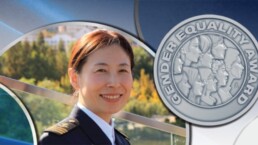
Dalian Maritime University’s Yu Jiajia receive 2027 IMO Gender Equality Award
From the bridge to the classroom, Ms Yu has helped build a more inclusive maritime sector in China, serving as a role model for the global maritime…
“K” LINE releases video update on forecasts for FY2026 and progress of the medium-term management plan
Kawasaki Kisen Kaisha, has released a video on its official website explaining its forecasts for FY2026 and progress of its Medium-Term Management…
 …
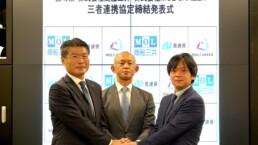
MOL and MOL CAREER sign 3-way deal with Nagasaki Prefecture to promote recruitment and retention of foreign workers
Mitsui O.S.K. Lines, and MOL CAREER, have entered into a tripartite partnership agreement with Nagasaki Prefecture to promote the revitalization of…
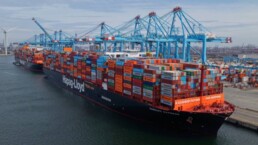
Hapag-Lloyd completes acquisition of 25% stake in APM Terminals Maasvlakte II
Transaction successfully completed following antitrust approval Investment strengthens Hapag-Lloyd’s terminal portfolio and position in Rotterdam…
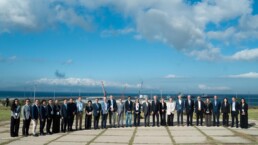
11th chainPORT annual meeting at Tanger Med Focuses on scaling AI in ports
Representatives from leading ports around the world gathered in Tangier, Morocco, on 29 and 30 October for the 11th chainPORT Annual Meeting, hosted…
Subscribe to our newsletter!
if you dont want to swim alone in the ocean of news, sign up for the newsletter, and you will receive daily all the important news of world shipping!
