30 countries join global initiative to tackle marine litter

Countries from across the oceans team up to tackle marine plastic litter under the ambitious GloLitter Partnerships Project.
A major international project that will help reduce marine plastic litter from maritime transport and fishing sectors is up for a successful start, after getting 30 countries on board. Five regions will be represented in this global effort: Asia, Africa, the Caribbean, Latin America and the Pacific.
The GloLitter Partnerships Project is implemented by the International Maritime Organization (IMO) and the Food and Agriculture Organization of the United Nations (FAO), with initial funding from the Government of Norway via the Norwegian Agency for Development Cooperation (Norad).
The project aims to help the maritime transport and fishing sectors move towards a low-plastics future. To achieve this goal, this initiative will assist developing countries to apply best practices for prevention, reduction and control of marine plastic litter from those sectors.
Plastic litter has devastating effects on our oceans, marine life and human health. It also has measurable impacts on the fishing and shipping industries.
Discarded fishing gear can pose a serious risk to fishers as the nets or lines can become entangled in boat propellers or cause engine damage. There is also an economic impact when fishers or fisheries lose their gear or fish species are caught in discarded gear.
Lost containers might also pose a collision hazard for ships. Reducing and preventing marine plastic litter is vital to safeguard coastal and global marine resources.
Jose Matheickal, Chief, IMO Department for Partnerships and Projects, welcomed the countries on board: “Marine litter is a scourge on the oceans and on the planet. I am delighted that we have 30 countries committed to joining this initiative and working with IMO and FAO to address this growing issue. Their experience and the development of best practices will serve as a model throughout the world and I look forward to seeing results as the project moves ahead,” Mr. Matheickal said.
“Plastic litter has a devastating impact on marine life and human health,” said Manuel Barange, FAO’s Director of Fisheries and Aquaculture. “This initiative is an important step in tackling the issue and will help protect the ecosystem as well as the livelihoods of those who depend on the ocean.”
Lead and Partnering Countries
Ten countries have been confirmed as Lead Partnering Countries (LPCs) and a further twenty countries have been selected as Partnering Countries (PCs) of the GloLitter Project.
LPCs will take lead roles in their respective regions to champion national actions in the context of supporting the IMO Action Plan on Marine Litter and the FAO Voluntary Guidelines for the Marking of Fishing Gear. The LPCs and PCs will work together, via a twinning working arrangement, to build regional support for the project.
The 10 Lead Partnering Countries are: Brazil, Costa Rica, Cote d’Ivoire, India, Indonesia, Jamaica, Kenya, Madagascar, Nigeria and Vanuatu.
The 20 Partnering Countries are: Argentina, Cabo Verde, Columbia, Ecuador, Gambia, Mozambique, Nicaragua, Panama, Peru, Philippines, Senegal, Sri Lanka, Solomon Islands, Sudan, United Republic of Tanzania, Thailand, Timor-Leste, Togo, Tonga and Viet Nam.
Tangible global action
In the coming months, the Project Coordination Units at IMO and FAO will work with LPCs to develop National Work Plans tailored to the needs of each country, provide necessary technical assistance and training to implement those plans, and facilitate twinning arrangements between LPCs and PCs.
The GloLitter Project will equip the partner countries with knowledge and tools that will include guidance documents, training material and methodologies to help enforce existing regulations. These include IMO’s International Convention for the Prevention of Pollution from Ships (MARPOL) Annex V regulations on the prevention of pollution by garbage, which prohibits the discharge of plastics (including fishing gear) into the sea from ships. Another treaty regime, the IMO London Convention/London Protocol, regulates the dumping of wastes from ships, permitting only certain types of non-harmful waste to be dumped.
The project will also promote compliance with relevant FAO instruments, including the Voluntary Guidelines for the Marking of Fishing Gear, and enhance existing initiatives, such as the Global Ghost Gear Initiative (GGGI).
The project will also look at the the availability and adequacy port reception facilities and their connectivity to national waste management systems and develop a “model port waste management plan” including the concept of the circular economy, to be piloted by selected ports from participating countries.
The project will address how to deal with abandoned, lost or otherwise discarded fishing gear. There will be pilot initiatives with women-led organizations active in fisheries to reduce the use of plastic in fisheries, fish processing/marketing, and to collect plastic for recycling.
The project will facilitate the establishment of public-private partnerships to spur the development of cost-effective management solutions for marine plastic litter, including examining how to decrease the use of plastics in these industries and looking at opportunities to re-use and recycle plastics.
This work to reduce plastic litter is in line with IMO’s Action Plan to address marine plastic litter from ships.
Materials developed by the project will be made available on the GloLitter webpage.



Related News.
Where Cyprus fits in the India–Europe Maritime Corridor
On 6 October, the Cyprus Ports Authority joined shipping, logistics and government representatives in New Delhi to work on the India–Middle…
Mediterranean and Black Sea countries adopt 11 binding decisions to sustainably manage their fisheries
Twenty-five countries met this week in Rome to advance the sustainable exploitation of key stocks and promote responsible aquaculture across the…

Boluda Shipping signs agreement to acquire Samskip joining forces to build europe’s leading short-sea network
Boluda Shipping and Samskip have signed an agreement under which Boluda Shipping will acquire Samskip, including all its assets and operations.…

European gas touches €100 for first time since 2022 energy crisis as consumers, industry feel the pain
Europe's benchmark natural gas contract briefly touched €100 per megawatt hour (MWh) on Wednesday as disruptions to Middle East shipping…
South Korea targets Autonomous Ship Dominance
South Korea’s seas are set to become smarter with artificial intelligence. The government plans to secure fully unmanned autonomous navigation vessel…
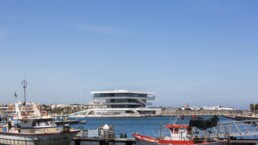
Valenciaport awards the contract for the elevated seafront promenade at the Port of Valencia’s Marina
The aim of this project is to improve the elevated walkway on the northern breakwater at La Marina. The project, with a budget of €2,257,841.15 (VAT…

MOL holds FY2026 Safe Operation Liaison Meeting for Shipowners and Ship Management Companies
Mitsui O.S.K. Lines, announced that on October 27, it held the FY2026 Safe Operations Liaison Meeting in Osaka for Japanese and overseas shipowners…
DORIC WEEKLY INSIGHT 30 OCTOBER 2026
Please find below the DORIC Market Insight for the week ending 30 October 2026. Weekly Report 30.10.2026

ABP acquires leading Humber port logistics player Global Shipping Services
Associated British Ports , the UK’s largest port operator, is delighted to announce it has acquired Global Shipping Services , a leading provider of…
Ballast Water: BIMCO seeks clearer guidance for ships facing challenging water quality
BIMCO has co-sponsored a submission to MEPC 85 making the case for revising the IMO guidance related to ballast water management for…
Subscribe to our newsletter!
if you dont want to swim alone in the ocean of news, sign up for the newsletter, and you will receive daily all the important news of world shipping!
