ExxonMobil outlines plans to grow Long-Term Shareholder Value in Lower Carbon Future
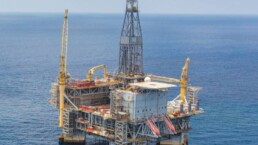

ExxonMobil today outlined its plans through 2025 to increase earnings and cash flow to sustain and grow its dividend, reduce debt and fund advantaged projects, while working to commercialise lower emission technologies in support of the goals of the Paris Agreement.
- Industry-leading investment portfolio profitable at low prices and flexible to market conditions
- Plans through 2025 increase earnings, cash flow to sustain and grow dividend, reduce debt and advance advantaged projects
- Technology leadership to develop lower carbon solutions and create future value
“Our investment portfolio is the best we’ve had in over 20 years, and will grow earnings and cash flow in the near term while remaining flexible to market conditions and benefiting from ongoing cost-reduction efforts. Looking ahead, we’re working to reduce our emissions and develop solutions, such as carbon capture and low-carbon hydrogen, needed to de-carbonize the highest emitting sectors of the economy – a critical requirement for society to achieve its net zero ambition.”
ExxonMobil plans capital spending of $16-$19 billion in 2021 and $20-$25 billion per year through 2025 on high-return, cash-accretive projects. Spending plans can be modified to reflect market conditions, as illustrated by successful efforts to preserve the value of investment opportunities while reducing capital spending by more than 30 percent in 2020 as a result of the pandemic. The company also reduced cash operating expenses by 15 percent in 2020 and expects permanent structural savings of $6 billion a year by the end of 2023 versus 2019.
Future spending plans take into account potential market volatility as the economy recovers from the pandemic.
“Our investments are expected to generate returns of greater than 30 percent,” said Woods. “And 90 percent of our upstream investments in resource additions, including in Guyana, Brazil and the U.S. Permian Basin, generate a 10 percent return at $35 per barrel or less. Downstream investments improve net cash margin by 30 percent and our Chemical investments grow high-value performance products by 60 percent.”
To grow shareholder value through the transition to a lower carbon economy, ExxonMobil has focused its extensive research and development portfolio on technologies to address hard to de-carbonize sectors of the economy responsible for approximately 80 percent of energy-related emissions — commercial transportation, power generation and heavy industry.
The company’s newly created business, ExxonMobil Low Carbon Solutions, was established to commercialize low-emission technologies, and will initially focus on carbon capture and storage (CCS), the process of capturing CO2 that would otherwise be released into the atmosphere from industrial activity, and injecting it into deep geologic formations for safe, secure and permanent storage.
ExxonMobil is the industry leader in CCS technology and has more than 30 years of experience capturing carbon. The company has an equity share in about one-fifth of global CO2 capture capacity and has captured approximately 40 percent of all the captured anthropogenic CO2 in the world. ExxonMobil also produces about 1.3 million tonnes of hydrogen per year and is developing technology that could significantly lower the cost of both CCS and low-carbon hydrogen.
The International Energy Agency projects that CCS could mitigate up to 15 percent of global emissions by 2040 and the authoritative U.N. Intergovernmental Panel on Climate Change (IPCC) estimates that global de-carbonization efforts could be twice as costly without CCS.
Using estimates and demand projections, including from IPCC Lower 2 degree Celsius scenarios, the market for CCS and other low-emission technologies and products is expected to grow significantly by 2040.
“Our development of next-generation technologies and existing businesses positions us well to capitalize on the growing demand for de-carbonization and market opportunities that are increasingly coming together to support lower-carbon energy solutions,” said Woods.
ExxonMobil met its 2020 emission reduction goals that included 15 percent reduction in methane emissions versus 2016 levels, and a 25 percent reduction in flaring versus 2016 levels.
The company’s 2025 emission reduction plans include a 15 to 20 percent reduction in upstream greenhouse gas intensity versus 2016 levels, supported by a 40 to 50 percent reduction in methane intensity and 35 to 45 percent reduction in flaring intensity.
The plans are expected to reduce absolute greenhouse gas emissions by an estimated 30 percent for the Upstream business. Absolute flaring and methane emissions are expected to decrease by 40 to 50 percent under the plans. The company also aims for industry-leading greenhouse gas performance and to eliminate routine flaring in line with the World Bank initiative by 2030.



Related News.
RINA’s Hellenic Technical Committee puts energy-efficient newbuilding design and AI in focus
Project Mermaid, battery integration and practical AI applications highlight opportunities for more efficient ship design and fleet operations…
From mine to market – NORDEN connects Comilog’s manganese ore with global markets
NORDEN’s dedicated transhipment operation in Gabon, run under a long term contract with long-standing customer Comilog, has loaded more than 54…
Oldendorff reflags two capesize vessels to Germany
Oldendorff Carriers is reflagging two of its Capesize bulk carriers to Germany, underlining the company’s long standing ties to the country and its…

AskChief surpasses 100-vessel milestone in under a year and opens its specialised maritime AI to the wider market
Putting each company’s own knowledge to work for maritime Technical and HSQE teams. AskChief, Specialised AI for maritime Technical and HSQE…

Dalian Maritime University’s Yu Jiajia receive 2027 IMO Gender Equality Award
From the bridge to the classroom, Ms Yu has helped build a more inclusive maritime sector in China, serving as a role model for the global maritime…
“K” LINE releases video update on forecasts for FY2026 and progress of the medium-term management plan
Kawasaki Kisen Kaisha, has released a video on its official website explaining its forecasts for FY2026 and progress of its Medium-Term Management…
 …
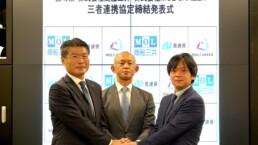
MOL and MOL CAREER sign 3-way deal with Nagasaki Prefecture to promote recruitment and retention of foreign workers
Mitsui O.S.K. Lines, and MOL CAREER, have entered into a tripartite partnership agreement with Nagasaki Prefecture to promote the revitalization of…
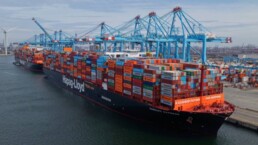
Hapag-Lloyd completes acquisition of 25% stake in APM Terminals Maasvlakte II
Transaction successfully completed following antitrust approval Investment strengthens Hapag-Lloyd’s terminal portfolio and position in Rotterdam…
11th chainPORT annual meeting at Tanger Med Focuses on scaling AI in ports
Representatives from leading ports around the world gathered in Tangier, Morocco, on 29 and 30 October for the 11th chainPORT Annual Meeting, hosted…
Subscribe to our newsletter!
if you dont want to swim alone in the ocean of news, sign up for the newsletter, and you will receive daily all the important news of world shipping!
