Industry leaders join forces to develop a standard design for a Methanol-powered product tanker

Hyundai Mipo Dockyard, MAN Energy Solutions, and the Methanol Institute worked together to develop a design that meets all prevailing safety requirements with minimal loss of cargo capacity and low additional build costs. DNV GL reviewed the designs for the vessels in accordance with the relevant rules and regulations and provided technical advice and recommendations to help enhance the design development.
The resulting design – Low Emission Advanced Products Tanker (LEAP) – has been granted Approval in Principle by classification society DNV GL, which acted as verification body to the project, assessing and approving the design in conformity to its rules and the latest amendments to the IMO IGF Code.
The vessel has a service speed of 14.5 knots and effective range of 17,400 nautical miles using Methanol as primary fuel and an effective range of 21,900 nautical miles using very low sulfur fuel oil (VLSFO). Cargo capacity is 54,000 cu m – a reduction of just 300 cu m compared to a diesel-only vessel.
The LEAP design has additional newbuild costs of just 10% compared to additional capex of 22% for LNG-dual fuel, and using Methanol as fuel would have daily CO2 emissions of 54.7 tonnes per day at service speed, compared to 64.7tpd for diesel. The ship would have an approximate 6% improvement in its EEDI Phase 3 rating compared to a diesel-only vessel.
The design uses two slop tanks of 2,600 cu m to store Methanol as fuel, positioned aft of the cargo tanks, protected by a cofferdam, with the fuel supply system connecting to the engine room via an on-deck service tank. Methanol is bunkered by an independent manifold and the design includes tanks for VLSFO and MDO storage to provide complete operational flexibility.
“HMD is pleased to have provided initial and detailed design for the LEAP vessel design using the experience accumulated from successful dual fuel methanol carriers for numerous international owners,” said YH Chung, Head of Initial Design Department, Hyundai Mipo Dockyard. “This design results in estimated cargo loss of 0.5% for a low construction premium, providing shipowners with the ability to build a low emissions vessel today.”
MAN Energy Solutions provided input to the arrangement of the fuel supply and propulsion system, based on application of its proven ME-LGIM two-stroke Methanol-capable main engine. There is no significant additional ‘footprint’ for the Methanol fuel system as the service tank, methanol pipelines and methanol fuel supply room are located on deck.
“Methanol ticks the boxes from an emissions point of view, with no sulfur, very low PM and carbon dioxide emissions around 15% lower than conventional marine fuel oil,” says Kjeld Aabo, Head of Marine and Offshore Sales, 2 and 4 stroke engines, MAN Energy Solutions. “To meet IMO NOx Tier III requirements, Methanol can be blended with water which brings the ship into compliance without the need for expensive exhaust gas after treatment.”
DNV GL’s Approval Center verified the design in accordance with its rules and applicable international regulation including the latest amendments to the IGF Code which include guidelines on the use of methyl/alcohol fuels.
“DNV GL has assessed this design in accordance with its rules and all international standards and is pleased to provide Approval in Principle for a vessel which can make a significant contribution to lower emissions,” says Vidar Dolonen, Regional Manager of DNV GL Korea and Japan. “In the drive to decarbonize shipping, DNV GL has identified an important role for methanol produced from biomass or renewable energy sources.”
The Methanol Institute believes the next few years will be crucial ones for the adoption of fuels that can begin to have an impact on global carbon emissions from shipping. Huge investment will be required to produce renewable fuels and owners may have to demonstrate that they have taken steps to address their environmental performance in order to access fresh capital in future.
“Governments, NGOs, policy-makers, academics and technical experts all agree that conventional Methanol provides a safe, clean and practical pathway to short term emissions reductions,” says Chris Chatterton, Chief Operating Officer, The Methanol Institute. “This vessel design demonstrates that newbuild or conversion can be straightforward and cost effective and extends the trading life of the asset as it can use renewable Methanol as more becomes available.”

Figure 1: LEAP Product Tanker Design – General View

Figure 2: LEAP Product Tanker – MeOH Service Tank and Fuel Supply Room

Figure 3: LEAP Product Tanker – Cofferdam and Methanol Storage Tank

Figure 4: LEAP Product Tanker – Methanol/Slop Line



Related News.

Beyond Technical Skills: WISTA Cyprus explores the human side of leadership
WISTA Cyprus hosted The Art of Leadership & Emotional Mastery, an interactive workshop held on 15 October at the Alasia Hotel in Limassol,…
The human cost of sending merchant mariners into war zones extends far beyond the immediate danger of missiles and drones. It raises a harder question: who is really protecting the seafarer?
Who protects the seafarer? I have spent much of my professional life at sea. I am a Master Mariner. I have stood on the bridge, made decisions…
Loss of bridge control: Human failure is normal – context is key
When bridge control is lost in a functioning system, it can be easy to blame human error. But accidents rarely happen because of one mistake…
Danish Shipping announces the transport of live animals by sea new rules should improve safety for animals, seafarers and the environment
Revised rules on the transport of live animals by sea are being negotiated in the EU. Danish Shipping wants to ensure good animal welfare,…

Japan’s flawed shipping proposal leaves developing countries adrift
A new analysis by Opportunity Green warns governments of the wide-ranging risks posed by Japan’s proposal at the International Maritime Organization…

Intermodal Report Week 42 2026
Pls find below the Intermodal Report - Week 42 2026 Intermodal Report Week 42 2026
Allied Weekly Market Review Week 42
Pls find below the Allied - Weekly Market Review - Week 42 ALLIED - Weekly Market Report- Week 42
EU Arctic Strategy NGOs welcome EU ambition on on cutting shipping’s Arctic Black Carbon Emissions
Responding to today’s publication of the EU’s Arctic Strategy, which definitively states the EU’s intention to support International Maritime…
The final quarter of 2026 is expected to see softer bauxite flows
Chinese front-loading is expected to have run its course, pointing to softer bauxite flows in 2026 Q4. Global bauxite flows increased by 2.8% y/y…
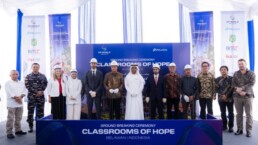
DP World Foundation and Belewan new container terminal mark groundbreaking of AED 3.7 million school project in Indonesia
Classrooms of Hope initiative expands to Belawan, Medan with a new junior high school designed to provide modern learning facilities and greater…
Subscribe to our newsletter!
if you dont want to swim alone in the ocean of news, sign up for the newsletter, and you will receive daily all the important news of world shipping!
