Emerging economies at crossroads as state role set to grow in wake of Covid-19


As the coronavirus pandemic sparks calls for more state intervention, emerging economies face tough choices to determine whether an increased role for government will have positive or negative long-term consequences.
The latest Transition Report from the European Bank for Reconstruction and Development (EBRD) says 45 per cent of people in the EBRD’s post-communist economies now favour higher levels of state ownership.
Citizens also increasingly expect the state to be able to reduce the health and economic risks they face.
Past epidemics have been shown to leave a large dent in people’s trust in the economic and political institutions that underpin democracy and the market economy.
The new report shows that individuals reaching adulthood during major recessions tend to have more positive views of public ownership and income redistribution.
In her foreword to the publication, entitled The State Strikes Back, the EBRD’s Chief Economist Beata Javorcik says the ability of emerging economies to deliver successful policies against a backdrop of increasing state influence depends crucially on the quality of institutions and public governance.
“The economies of the EBRD regions stand at a crossroads, with decisions on policies and institutions that are taken now potentially determining their paths for decades to come. The current period of crisis and upheaval triggered by the global pandemic represents a valuable opportunity to lay the foundations for a wealthier, fairer and greener future,” says Javorcik.
Weak institutions would allow the “grabbing” hand of the state to siphon off resources meant for people in need, give jobs to friends and family and let state banks be used for political gain.
Firms that could not operate profitably in a low-carbon economy may be kept alive as “zombie companies”, and firms that are nationalised during the pandemic may never be privatised.
On the other hand, good governance would allow the “caring” hand of the state to guide economies through the transition to a green economy, transparently providing essential support and adopting forward-looking policies.
Javorcik notes that privatisation, deregulation and measures to reduce state interference in the economy were the dominant trend following the collapse of communism in the late 1980s.
The EBRD was created at this time precisely to promote a smooth transition to private-sector-driven market economies.
Since then, however, the 2008-09 global financial crisis and subsequent recession have demonstrated that market forces alone will not always provide socially optimal outcomes and government intervention is needed to combat climate change and to deal with the increasing challenge of economic inequality.
The EBRD combines its investments across 38 emerging economies with support for policy reform that fosters good governance, economic inclusion and sustainable development.
The new report notes that state-owned enterprises continue to play an important role in the EBRD regions, providing almost half of all public-sector employment. It says they can be a stabilising force for economies, providing employment during downturns and in disadvantaged regions.
However, governments are not particularly effective in the management of state enterprises, which are likely to be less innovative than their private-sector counterparts.
State-owned banks have grown in importance across the EBRD regions since the mid-2000s and become major competitors to the private sector, because many have less stringent lending standards, lower net interest rate margins and a higher tolerance of non-performing loans.
A willingness of state banks to assume risks can help soften the impact of economic shocks. On the downside, however, firms that borrow from the state financial sector tend to be less innovative and show weaker productivity growth.
This is partly a reflection of the fact that state-owned banks may be more susceptible to political interference in their lending decisions and so channel finance away from more productive firms.
The report also says that EBRD economies are falling behind in the enforcement of policies that help reduce carbon emissions, in the wake of the 2015 Paris Agreement.
In the short term, the EBRD regions have to build transition to a green economy into post-Covid-19 recovery plans. In the medium term, the state must address the market and policy failures that are impeding the transition to a green economy, with an emphasis on effective carbon-pricing strategies.
In the longer term, the state will have to facilitate the “creative destruction” that the low-carbon transition will inevitably unleash. This will involve supporting workers and communities that will suffer from the economic transformation.



Related News.

Beyond Technical Skills: WISTA Cyprus explores the human side of leadership
WISTA Cyprus hosted The Art of Leadership & Emotional Mastery, an interactive workshop held on 15 October at the Alasia Hotel in Limassol,…

The human cost of sending merchant mariners into war zones extends far beyond the immediate danger of missiles and drones. It raises a harder question: who is really protecting the seafarer?
Who protects the seafarer? I have spent much of my professional life at sea. I am a Master Mariner. I have stood on the bridge, made decisions…
Loss of bridge control: Human failure is normal – context is key
When bridge control is lost in a functioning system, it can be easy to blame human error. But accidents rarely happen because of one mistake…
Danish Shipping announces the transport of live animals by sea new rules should improve safety for animals, seafarers and the environment
Revised rules on the transport of live animals by sea are being negotiated in the EU. Danish Shipping wants to ensure good animal welfare,…
Japan’s flawed shipping proposal leaves developing countries adrift
A new analysis by Opportunity Green warns governments of the wide-ranging risks posed by Japan’s proposal at the International Maritime Organization…
Intermodal Report Week 42 2026
Pls find below the Intermodal Report - Week 42 2026 Intermodal Report Week 42 2026
Allied Weekly Market Review Week 42
Pls find below the Allied - Weekly Market Review - Week 42 ALLIED - Weekly Market Report- Week 42
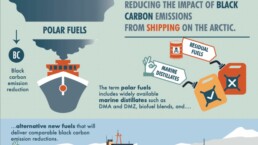
EU Arctic Strategy NGOs welcome EU ambition on on cutting shipping’s Arctic Black Carbon Emissions
Responding to today’s publication of the EU’s Arctic Strategy, which definitively states the EU’s intention to support International Maritime…
The final quarter of 2026 is expected to see softer bauxite flows
Chinese front-loading is expected to have run its course, pointing to softer bauxite flows in 2026 Q4. Global bauxite flows increased by 2.8% y/y…

DP World Foundation and Belewan new container terminal mark groundbreaking of AED 3.7 million school project in Indonesia
Classrooms of Hope initiative expands to Belawan, Medan with a new junior high school designed to provide modern learning facilities and greater…
Subscribe to our newsletter!
if you dont want to swim alone in the ocean of news, sign up for the newsletter, and you will receive daily all the important news of world shipping!
