COVID-19 will drastically change travel habits forever, reveals biggest airline passenger confidence survey from Inmarsat
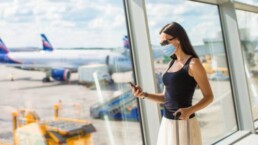

Inmarsat’s ‘Passenger Confidence Tracker’ is the largest global survey since the pandemic began, revealing attitudes of almost 10,000 airline passengers
Eight in ten air passengers say their travel habits will change as a result of COVID-19, with 41 per cent planning to travel less frequently by any means
Study reveals significant variance across the world when it comes to passengers’ confidence about flying in light of the pandemic
Flying habits are set to change drastically for the long-term, with eight in ten airline passengers (83%) not expecting to return to their previous travel routines once the COVID-19 pandemic is over. This is just one of the key findings from a new global passenger survey commissioned by Inmarsat, the world leader in global mobile satellite communications.
The ‘Passenger Confidence Tracker’ is the world’s largest survey of airline passengers since the pandemic began. It reflects the views and attitudes of 9,500 respondents from 12 countries across the globe about the future of flying.
While the majority of passengers (60%) feel satisfied with the aviation industry’s response to the challenges of COVID-19, the survey reveals areas of opportunity for airlines to encourage passengers back to the skies.
Improve confidence
Philip Balaam, President of Inmarsat Aviation, said: “With safety and reputation becoming even more important to today’s flyers, there is a clear need for airlines to differentiate themselves in order to encourage passengers back onto their flights. Digitalisation lies at the heart of both; minimising critical touchpoints in the passenger journey to improve confidence, all the while keeping passengers connected and entertained.”
Only a third (34%) of passengers surveyed have taken a commercial flight since the pandemic began, and this appears to have sparked a shift in attitudes to flying. Four in ten passengers (41%) expect to travel less by any means and a third (31%) plan to fly less. This sentiment is even higher among Asian passengers, with 58 per cent in India and 55 per cent in South Korea planning to travel less in the future.
Despite this change, there are early signs that travellers are beginning to feel confident about flying again; almost half (47%) of passengers surveyed expect to feel ready to fly within the next six months.
Significant variance
The study reveals significant variance across the world when it comes to passenger confidence about flying in light of the pandemic[1]. Hungarian and British fliers are most confident, with 26 per cent and 16 per cent respectively saying they would get on a flight today. Asian passengers are less so; over a third (35%) of South Koreans expect not to fly again until COVID-19 disappears.
Travel confidence broadly correlates to levels of public concern about COVID-19. For example, South Koreans and Singaporeans are twice as likely to describe their behaviour in relation to the virus as ‘highly cautious’ than Britons[2].
Passengers are currently more fearful of catching the virus abroad than on the plane[3]. In fact, many think they are at a greater health risk in other environments, such as the gym and public transport[4]. Recent IATA research supports this, suggesting people are more likely to be struck by lightning than catch COVID-19 on a plane.[5]
Personal safety
While passengers largely feel confident at passport control, security and communicating with cabin crew, they are less comfortable visiting the toilet inflight, and being in close proximity with others. The study indicates that solutions that minimise touchpoints and reduce interactions would go furthest in addressing pain points – such as contactless payments inflight (83%) and staggered security queues (84%).
When it comes to ensuring personal safety, passengers have disregarded the automatic 14-day quarantine[6]. Instead, the results show a desire for a consistent set of measures to make the journey safer – such as mandatory face coverings, or a 48-hour test before travel.[7]
Almost half of passengers (44%) say that reputation is now a more significant factor when choosing an airline than it was pre-pandemic. It has therefore never been more vital for airlines to differentiate and gain a competitive edge.
Digital solutions
The research highlights that improving inflight experience is one way to achieve this. From extra legroom (43%) to free baggage (39%), value added services are becoming increasingly important to passengers returning to the skies.

Digital solutions are fast-becoming essential to an enjoyable inflight experience, with almost four in ten (39%) agreeing that onboard Wi-Fi matters more today than ever before. This is most significant for Indian and Brazilian passengers.[8] Destination status alerts, real time luggage tracking and pre-clearing immigration on the plane – all enabled by cabin connectivity – are among the top new aspects of the journey passengers want to keep post-pandemic.[9]
Inmarsat is transforming the global aviation industry by bringing complete connectivity to every aircraft and flight path in the world. Passengers can browse the internet, stream videos, check social media and more during flights, with an onboard connectivity experience on par with broadband services available on the ground. In addition, Inmarsat’s flight deck solutions combine cutting-edge satellite technology with secure IP broadband connectivity for enhanced operational efficiency and safety.
The ‘Passenger Confidence Tracker’ will be explored in greater detail at FlightPlan, the aviation industry’s largest virtual convening, hosted by Inmarsat and the Airline Passenger Experience Association (APEX). To find out more, register now at flightplan.wavecast.io.
[1] See full country rankings in Table 1
[2] 58% of Singaporean and 54% of South Koreans say their behaviour to avoid COVID-19 is highly cautious, versus 29% in the UK.
[3] 61% are more worried about catching the virus abroad, versus 55% worried about catching it on the plane
[4] Percentage of people that think they are more at risk of catching COVID-19 in other public places – gym 30%, public transport 36% and school 31%
[5] IATA, Journal of Medicine, Research Points to Low Risk for COVID-19 Transmission Inflight
[6] Only 9% say quarantining is the most effective method for personal safety
[7] 62% would like to see a consistent set of worldwide safety standards. The most popular choice for ensuring personal safety is wearing a mask on the plane (19%) followed by only being allowed to fly after a 48-hour test (17%).
[8]55% of Indian and 51% of Brazilian passengers say inflight Wi-Fi is more important to the enjoyment of their experience since COVID-19
[9] 79% would like to see destination alerts, 78% pre-immigration clearance and 43% real-time luggage
Table 1. Passenger Confidence Country Ranking
| Country ranking | Fly today | Next month | Within six months | Within a year | More than a year | Not until COVID-19 disappears | Not until there’s a vaccine |
| 1 | Hungary 26% | India 18% | India 43% | Singapore 24% | Singapore 17% | South Korea 35% | Brazil 17% |
| 2 | UK 16% | Brazil 14% | UAE 43% | Germany 22% | South Korea 11% | Finland 14% | Germany 17% |
| 3 | US 14% | US 14% | Brazil 36% | UK 22% | Spain 10% | Hungary 14% | Finland 16% |
| 4 | Brazil 13% | UAE 13% | Spain 32% | Australia 20% | Australia 9% | Singapore 14% | UK 13% |
| 5 | Finland 11% | Spain 11% | US 32% | Finland 20% | Finland 9% | Germany 11% | Australia 12% |
| 6 | Australia 8% | Germany 9% | Australia 29% | Spain 20% | Germany 8% | Australia 10% | Singapore 12% |
| 7 | Germany 8% | Australia 7% | Singapore 22% | Hungary 19% | UK 8% | Spain 10% | South Korea 12% |
| 8 | India 4% | Singapore 7% | UK 20% | UAE 19% | Hungary 7% | US 10% | Hungary 10% |
| 9 | UAE 4% | Hungary 5% | Germany 19% | India 16% | India 6% | India 8% | US 8% |
| 10 | Singapore 2% | South Korea 5% | South Korea 17% | South Korea 16% | UAE 6% | UAE 7% | Spain 7% |
| 11 | South Korea 1% | UK 5% | Finland 16% | US 14% | US 5% | UK 7% | UAE 6% |
| 12 | Spain 1% | Finland 2% | Hungary 15% | Brazil 10% | Brazil 3% | Brazil 6% | India 5% |



Related News.

Beyond Technical Skills: WISTA Cyprus explores the human side of leadership
WISTA Cyprus hosted The Art of Leadership & Emotional Mastery, an interactive workshop held on 15 October at the Alasia Hotel in Limassol,…

The human cost of sending merchant mariners into war zones extends far beyond the immediate danger of missiles and drones. It raises a harder question: who is really protecting the seafarer?
Who protects the seafarer? I have spent much of my professional life at sea. I am a Master Mariner. I have stood on the bridge, made decisions…
Loss of bridge control: Human failure is normal – context is key
When bridge control is lost in a functioning system, it can be easy to blame human error. But accidents rarely happen because of one mistake…

Danish Shipping announces the transport of live animals by sea new rules should improve safety for animals, seafarers and the environment
Revised rules on the transport of live animals by sea are being negotiated in the EU. Danish Shipping wants to ensure good animal welfare,…

Japan’s flawed shipping proposal leaves developing countries adrift
A new analysis by Opportunity Green warns governments of the wide-ranging risks posed by Japan’s proposal at the International Maritime Organization…

Intermodal Report Week 42 2026
Pls find below the Intermodal Report - Week 42 2026 Intermodal Report Week 42 2026

Allied Weekly Market Review Week 42
Pls find below the Allied - Weekly Market Review - Week 42 ALLIED - Weekly Market Report- Week 42
EU Arctic Strategy NGOs welcome EU ambition on on cutting shipping’s Arctic Black Carbon Emissions
Responding to today’s publication of the EU’s Arctic Strategy, which definitively states the EU’s intention to support International Maritime…

The final quarter of 2026 is expected to see softer bauxite flows
Chinese front-loading is expected to have run its course, pointing to softer bauxite flows in 2026 Q4. Global bauxite flows increased by 2.8% y/y…

DP World Foundation and Belewan new container terminal mark groundbreaking of AED 3.7 million school project in Indonesia
Classrooms of Hope initiative expands to Belawan, Medan with a new junior high school designed to provide modern learning facilities and greater…
Subscribe to our newsletter!
if you dont want to swim alone in the ocean of news, sign up for the newsletter, and you will receive daily all the important news of world shipping!
