COVID-19 permanently alters global energy outlook but buys little time to reach Paris climate goals
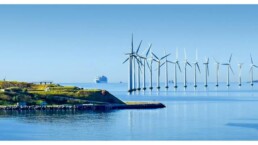

DNV GL Energy Transition Outlook 2020
The behavioural and economic ramifications of COVID-19 will permanently reduce global energy demand, according to DNV GL’s newly published Energy Transition Outlook.
Compared to the pre-pandemic forecast, energy demand will be lowered 6-8% each year to the middle of the century. COVID-19 has prompted major behavioural shifts important to energy consumption, as demonstrated by reduction in long distance travel and the increase in home office, both of which are responsible for the peak in transport energy demand and oil demand in 2019. DNV GL believes these trends are likely to have lasting societal effects, which will a have major impact on energy demand from transport and commercial buildings.
Carbon dioxide emissions are set to fall 8% this year, making 2019 the year of peak carbon dioxide emissions. However, we will still blow past the carbon budget for a 1.5-degree future in 2028, and if we are to meet this target, we must repeat the 2020 emissions saving every year until the middle of the century.

“COVID-19 has changed the global energy outlook, yet the global climate crisis remains as urgent as before the pandemic,” said Remi Eriksen, Group President and CEO of DNV GL. “Early optimism about decreased air pollution has been replaced by the cold reality that it is not because of a more decarbonized energy mix but because of short term changes unique to the pandemic. We can transition faster with the technology at hand, but now more than ever before, we require national and sectorial policy incentives to bring us to the ambitions of Paris.”
The technology exists to create a Paris compliant future. With gas set to become the largest energy source in 2026, it has a crucial role to play, yet DNV GL forecasts only 13% of the gas will be decarbonized by the middle of the century. Hydrogen has been given a boost by policy developments in the European Union, but it will still only contribute 6% of energy demand by 2050. Decarbonized gas, including hydrogen, is vitally important for reducing emissions from hard to abate industries, such as building heating and industries with high heating demand, but requires a massive boost from policy to achieve a meaningful impact.
Whilst we must transition faster to create to a more sustainable future, it should be noted that the current pace of the energy transition is already fast. Within a generation, renewables and fossil fuels will have roughly an equal share of the energy mix compared to an approximately 20-80 split today. The share of electricity in the final energy mix is expected to double by mid-century, with solar PV and wind contributing 31% each. Floating offshore wind will grow rapidly, by 2050 DNV GL expects a large new industry with 250GW installed.

And despite these significant shifts in the energy system, the transition is affordable; as a proportion of GDP, humanity will be spending less on energy in 2050 (1.6% of global GDP) compared to 2018 (3% of GDP). As the world will spend an ever-smaller share of GDP on energy, it allows policy makers additional room to take the extraordinary actions required to decarbonize the energy mix.
The rapid rise of electric vehicles is perhaps the shining example of how policymakers can transform an industry. DNV GL forecasts that by 2032 half of new car sales will be electric. This will cause a steep reduction in oil demand from road transport, which DNV GL forecasts will decrease by 56% from 2018 to 2050. The same policy levers must be applied to stimulate other technologies that are vital to reduce energy use and emissions. Carbon Capture and Storage (CCS), for example, is a vital component in decarbonizing natural gas, including the production of blue hydrogen, but a lack of policy coordination means that by 2050 CCS will only capture 11% of carbon emissions despite elements of the technology first appearing in the 1970s.
“We can’t empty the airliners twice, so we need all hands on deck to find practical solutions to the climate crisis – now. The rapid rise of solar PV, wind and battery technologies in recent years gives me hope that humanity has solutions at hand, however the so called hard to abate sectors need strong policy incentive to move the needle on decarbonization. Decarbonized natural gas, including hydrogen, will play a key role in the transition to the energy future humanity wants and needs,” said Eriksen.



Related News.

5th CSN Greece ICT Conference, Athens 19th November 2026 “Intelligent Skies, Secure Seas: The AI Impact on ICT” – Save the date
About the Conference The 5th CSN Greece Shipping ICT Conference, titled “Intelligent Skies, Secure Seas: The AI Impact on ICT”, will take place on…
Maritime piracy incidents remain at historic lows despite Somali piracy concerns
The ICC International Maritime Bureau (IMB) has reported the lowest level (51) of piracy and armed robbery incidents since 1992 in the first nine…

Piraeus Port Authority main sponsor of Ferry Shipping Summit 2026
With the participation of more than 200 delegates from several European countries, the Ferry Shipping Summit 2026 took place on 8–9 October 2026 in…

EuroDry announces order for the construction of a third modern 82,000 DWT Kamsarmax Bulk Carrier
EuroDry , an owner and operator of drybulk vessels and provider of seaborne transportation for drybulk cargoes, announced that it has signed a…

India urges Russia, Ukraine to protect Black Sea shipping
India has urged both Russia and Ukraine to ensure safe passage for commercial shipping through the Black Sea as attacks on merchant vessels put…

PD Ports strengthens its commitment to the River Tees with multi-million pound Marine investment
PD Ports has officially opened a new multi-million-pound Marine facility on the banks of the River Tees, reinforcing its long-term commitment to the…

Maritime leaders head to Shanghai for the Annual Summit 2026
Shared seas, shifting horizons Maritime trade stands at a turning point. The rules-based order on which shipping has long depended is under…

Indian Register of Shipping grants type approval to Medha Energy’s 92 kWh LTO Lithium-Ion battery system
Indian Register of Shippinghas successfully completed the Type Approval process for the 92 kWh Lithium-Ion Battery System developed by M/s Medha…

KLine opens a Singapore New Hub for Consolidated Ship Management and Maritime Talenτ
Three Companies, One Roof — Singapore's New Hub for Consolidated Ship Management and Maritime Talenτ A ceremony for around 280 guests sets the stage…
ASA explores measures to Safeguard Free and Safe Navigation at Critical International Maritime Chokepoints
The Asian Shipowners’ Association which accounts for 56% of the world’s fleet capacity and consists of China, Cook Islands, Hong Kong, Japan, Korea…
Subscribe to our newsletter!
if you dont want to swim alone in the ocean of news, sign up for the newsletter, and you will receive daily all the important news of world shipping!
