The Ocean Cleanup completes mission one in great Pacific garbage patch, announces plans to make products from plastic catch

Partnership with DNV GL will provide certainty about origin of ‘ocean plastic’
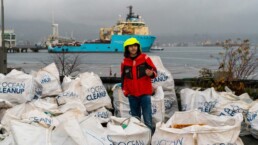
The Ocean Cleanup, the Dutch non-profit organization developing advanced technologies to rid the world’s oceans of plastic, has brought the first batch of ocean plastic to shore following their first mission in the Great Pacific Garbage Patch.
Boyan Slat, Founder and CEO of The Ocean Cleanup, announced that this plastic trash will be transformed into sustainable products, that will be sold to help fund the continuation of the cleanup operations. To confirm the origin of these future plastic products, The Ocean Cleanup has worked with DNV GL, an international classification society, to verify plastic that is removed from the ocean.
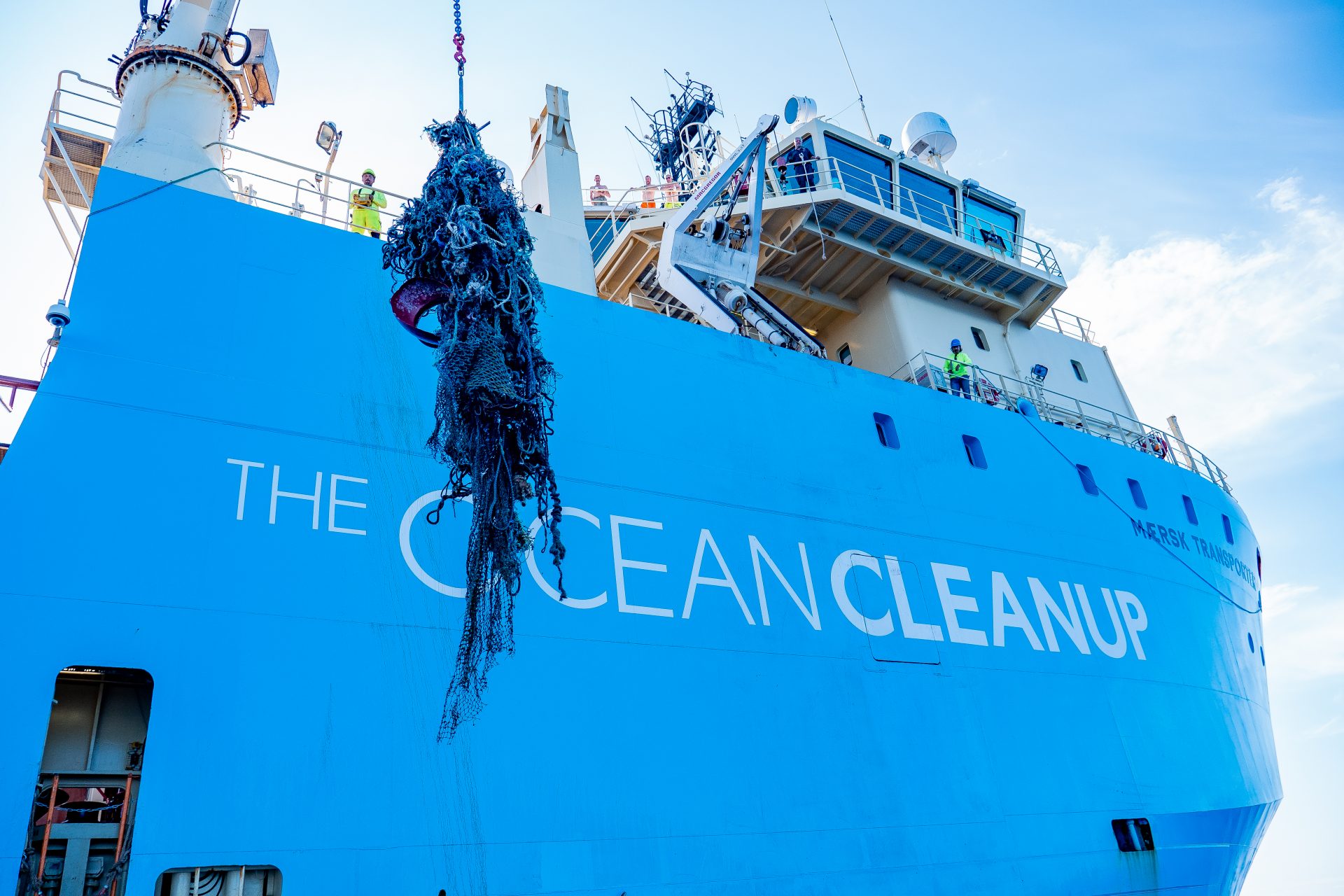
END OF MISSION ONE
The purpose of The Ocean Cleanup’s first mission in the Great Pacific Garbage Patch was to confirm the concept of passive plastic collection by means of the natural forces of the ocean. After several ups and downs, in October 2019 The Ocean Cleanup announced that the system is capturing and collecting plastic debris, from massive ghost nets down to microplastics one millimeter in size.
Since the launch of the first cleanup system, System 001, in September 2018, most items on the long list of deliverables for the technology could be checked one-by-one. Early reports showed, however, that System 001 was not retaining plastic as it should, and despite attempts to remedy this and successful design confirmations, the system suffered a fatigue fracture, resulting in a need to return the system to shore in January 2019.
The engineering team performed a root cause analysis, redesigned a modified system, and, in record time, The Ocean Cleanup deployed the upgraded system, System 001/B, in June 2019. After several months of trialing modifications, the concept’s ability to capture plastic was confirmed.
FROM POLLUTION TO PRODUCT
The Ocean Cleanup has, from its start, planned to create a value chain on the basis of their collected debris, with the aim of funding continued cleanup operations. Today, The Ocean Cleanup announces its intention to develop attractive, sustainable products made from material collected in the Great Pacific Garbage Patch. The return to shore of the first plastic catch marks the beginning of this journey.
As this will be the first time it will be attempted to produce products fully made from plastic taken out of the ocean, the road ahead for the catch is likely going to be challenging. If all goes well, the organization expects to launch this premier product made from material collected in the Great Pacific Garbage Patch in September 2020. Details of the product, pricing, and quantity are also set to be announced at this time.
The Ocean Cleanup wants to give its supporters the opportunity to get on board now and, through a 50 EUR/USD donation get first access to the first product ever made of our verified plastics from the Great Pacific Garbage Patch when it’s ready. This donation will already contribute to the removal of more ocean plastic. To join the journey, go to products.theoceancleanup.com.
“Welcoming the first catch of plastic on land is the moment we have been looking forward to for years. I believe we can use this trash to turn a problem into a solution by transforming this unique material into a beautiful product. As most people will never go to the Great Pacific Garbage Patch, through these products, we aim to give everyone the opportunity to take part in the cleanup”, Slat remarked on the upcoming plans of The Ocean Cleanup.
VERIFYING OCEAN PLASTIC
Currently, it is not compulsory for an independent, third party to verify that the material has been sourced from the ocean, and products labeled as “ocean plastic” may not be entirely sourced from the ocean. To add further transparency to the work, the origin of the material used in The Ocean Cleanup’s products will be verified by DNV GL, a leader in industry certifications. Over the last year and a half, DNV GL has been developing a standard that allows the highest level of traceability possible, clarifies how ocean plastic is defined, and will bring transparency to this fast-growing market. This new standard will be open to all parties interested in ocean-plastic product certification and will ensure that the origin of recovered plastics is defined and verified, allowing consumers to have trust that the product they are purchasing was made from material removed from the ocean.
“Building trust through standards and independent verification has been DNV GL’s work and mission for more than 155 years. Our objective has always been to address challenges at hand, contributing to safer and more sustainable outcomes in a transparent way. When purchasing products verified by DNV GL, consumers can fully trust that it is an ocean plastic product and that they are contributing to the solution.” – Luca Crisciotti, CEO of DNV GL-Business Assurance.
SYSTEM 002 AND LOOKING TOWARDS 2020
With the conclusion of Mission One, The Ocean Cleanup has begun preparations for their next system, System 002. The aim of this new design is to create a full-scale, fully operational system. The engineering team has initiated the development phase by addressing the essential remaining design challenges – long-term durability and sustained plastic retention – and will test updated features, once completed. System 002 will be a key stepping stone to full-scale cleanup of the Great Pacific Garbage Patch.



Related News.

Greece has the most to lose from delays in shipping’s green transition, new analysis finds
UCL and WWF Greece report finds the IMO Net-Zero Framework offers Greek ship owners the clarity they need, and the best protection against a…

Snow Land joins Cool Carriers as the world’s first reefer with a gate rudder, a new chapter for sustainable and efficient reefer shipping
Cool Carriers, the world’s largest operator of specialised reefer vessels, took delivery of Snow Land from Kitanihon Shipbuilding in Japan on 12…

IBIA launches Marine Energy Outlook Survey as Annual Convention in New York
IBIA - The International Bunker Industry Association officially launched its Marine Energy Outlook Survey during the IBIA Annual Convention in New…

Why did ITF staff vote to strike again?
Staff at the International Transport Workers’ Federation (ITF) headquarters in London have voted to give their union a strike mandate. According to…

Nearly half of maritime crew tickets booked a week ahead are cancelled
Two new C Teleport reports show when maritime and aircrew teams book crew flights, how often they cancel, and what late booking costs, with a…

Kpler completes $1.5bn+ Sixth Street investment and continues accelerating growth
Investment backs Kpler's bold ambition to shape the future of global trade intelligence. Kpler, a leading provider of global physical trade…

How SAL and DNV are strengthening heavy-lift shipping
From classification and newbuilding support to operational tools and advisory expertise, SAL and DNV have been collaborating for decades. The…

PSA Singapore breaks ground on Tuas Port Phase Two to strengthen Global Trade Connectivity
PSA Singapore marked the groundbreaking of Tuas Port Phase Two, a significant step in the development of the world’s largest fully automated…

 …

BIFA welcomes UK–EU trade progress and calls for clarity on implementation
The British International Freight Association (BIFA) has welcomed progress made at today's UK–EU Summit in Brussels, highlighting the potential…
Subscribe to our newsletter!
if you dont want to swim alone in the ocean of news, sign up for the newsletter, and you will receive daily all the important news of world shipping!
